Meta Description: Shopping for your first screen printing machine? Our 2026 beginner guide breaks down entry-level presses, budget ranges, must-have tools, and common mistakes to help you start your screen printing business the right way.
Introduction
Breaking into the screen printing industry can feel overwhelming for new operators. With dozens of machine types, confusing technical specs, and price points ranging from under $200 to tens of thousands of dollars, it’s easy to overspend on equipment you don’t need — or buy a cheap unit that fails to deliver usable results.
The good news is that starting a screen printing operation no longer requires a huge upfront investment. Today’s entry-level presses deliver professional-grade basics at accessible prices, making it possible to launch from a garage, spare room, or small studio with modest capital.
In this beginner-focused guide, we cover everything first-time buyers need to know:
- Key factors to evaluate before you buy
- The 3 best machine types for new operators
- Essential accessories you can’t start without
- The most common beginner mistakes and how to avoid them
- Realistic budget breakdowns for different startup goals
Whether you’re launching a side hustle, testing a new product line, or building a small print shop, this guide will help you choose the right first machine and avoid costly missteps.
5 Key Factors for First-Time Buyers
Before comparing specific models, start by defining your basic requirements. These five criteria will narrow down your options dramatically.
1. Realistic Startup Budget
Your total budget should include not just the press itself, but also supporting equipment and consumables. As a rule of thumb, allocate 60–70% of your budget to the press and reserve 30–40% for accessories like exposure units, dryers, ink, and screens.
Common beginner budget tiers:
- Hobby / trial tier: $300 – $800 total
- Small commercial startup: $1,000 – $2,500 total
- Growth-ready small shop: $3,000 – $6,000 total
2. Daily Production Volume
Be honest about how many pieces you expect to print per day. Overbuying a high-capacity machine wastes money; underbuying leads to burnout and missed deadlines.
- < 50 pieces/day: Basic manual tabletop press
- 50 – 200 pieces/day: 4-color manual press with a flash dryer
- 200+ pieces/day: Entry-level semi-automatic machine
3. What You Will Print Most
Screen printing machines are built for specific substrate shapes. Most beginners start with flat items:
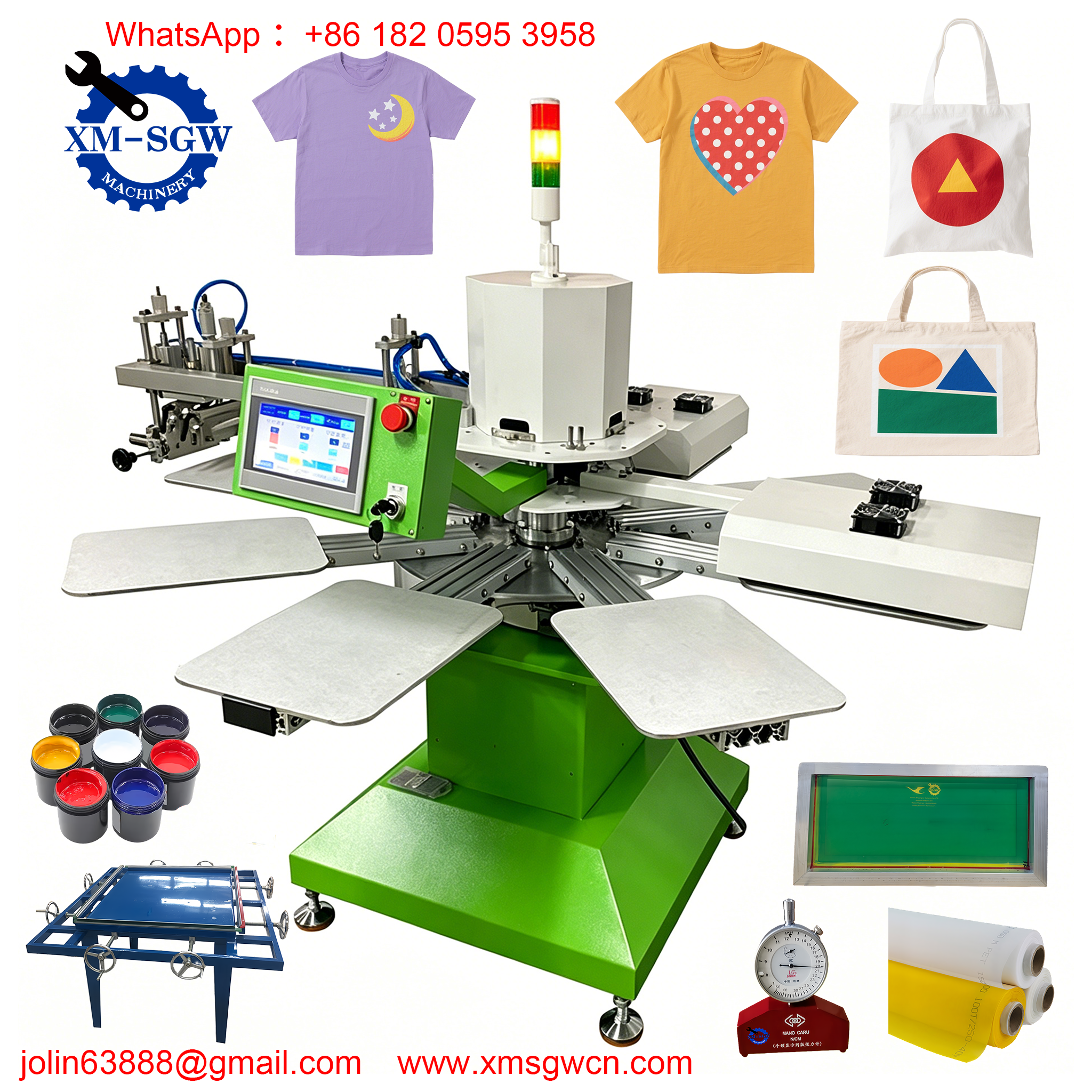
- Textiles: T-shirts, hoodies, tote bags → carousel / t-shirt press
- Flat rigid goods: Signs, acrylic, paper → flatbed screen printer
- Curved items: Mugs, bottles → curved screen printer (not recommended as a first machine)
4. Available Workspace
Nearly all beginners start in limited space — a garage, basement, or spare room. Tabletop models are designed for standard workbenches and require minimal floor space. Floor-standing carousel presses need more room but offer higher productivity. Measure your space before ordering.
5. Ease of Setup & Maintenance
As a new operator, you want a machine that assembles easily, adjusts simply, and doesn’t require specialized technical knowledge to maintain. Look for models with clear documentation and accessible customer support.
Top 3 Screen Printing Machine Types for Beginners
Based on 2026 market data, these three configurations cover 90% of startup use cases, from hobbyists to growing small businesses.
1. Manual Tabletop Screen Printing Presses
Manual tabletop presses are the universal starting point for new screen printers. They mount to a standard workbench, have a simple mechanical design, and teach you the fundamentals of the craft.
Most Popular Starter Configurations
-
1-color 1-station: $120 – $350
- Best for absolute beginners learning squeegee technique and single-color logos
- Lowest price point, smallest footprint
- Limitation: cannot print multi-color designs efficiently
-
4-color 1-station: $300 – $600
- The most versatile entry-level choice
- Supports multi-color registration practice while remaining compact
- Ideal for small custom orders and sample making
-
4-color 2-station: $500 – $1,200
- The recommended sweet spot for commercial beginners
- Second station lets you load/unload one garment while printing another
- Doubles your throughput compared to a single-station model
Key advantages for beginners
- Low upfront cost with no compressed air or electricity required
- Teaches core printing skills that transfer to larger machines
- Easy to disassemble, move, and store
- Minimal maintenance requirements
Limitations
- Physically demanding for long production runs
- Multi-color registration takes practice to master
- Lower output compared to automated options
Once you have consistent order volume, an entry-level semi-automatic press is the natural next step. These machines automate the print stroke while you still load and unload parts manually.
- Price range: $1,500 – $5,000
- Production speed: 100 – 300 pieces per hour
- Typical configuration: 1–2 colors for flat substrates
Why upgrade to semi-automatic
- Consistent print pressure and ink deposit every cycle
- Far less physical fatigue than fully manual operation
- More accurate registration than most manual presses
- Scales your business without hiring extra labor
Who should start with semi-automatic
If you already have confirmed daily orders of 100+ pieces and you’re confident screen printing is your long-term business, starting with a semi-automatic unit can save you from upgrading 6–12 months later.
3. All-In-One Beginner Screen Printing Kits
Starter kits bundle a basic press with essential supplies like screens, squeegees, ink, emulsion, and sometimes a small exposure unit.
- Price range: $200 – $800
- Best for: Hobbyists and trial users who want everything in one package
Pros
- True “unbox and start” convenience
- No guesswork about which supplies to buy first
- Low financial risk for testing the craft
Cons
- Included consumables are usually entry-grade
- Press quality is often lower than standalone models
- May need upgrades sooner than expected
Must-Have Accessories for New Screen Printers
Buying just the press will not get you into production. These are the non-negotiable tools you’ll need to actually start printing.
Pre-Press Equipment
- UV exposure unit: $200 – $800 — required to burn your design onto screens. Tabletop LED units are the best choice for beginners.
- Screen frames & mesh: Start with 3–5 frames in 110–160 mesh count, the most versatile range for general textile and graphic printing.
- Photo emulsion & sensitizer: Pre-sensitized beginner emulsions are recommended for new users, as they reduce mixing errors and deliver more consistent results.
Production Tools
- Squeegees: 2–3 durometers (soft, medium, hard) for different ink types and substrates.
- Flash dryer / curing unit: Absolutely critical for apparel printing. Cures ink between colors and after printing.
- Washout booth & pressure washer: For cleaning screens after use.
Consumables
- Plastisol or water-based ink starter pack (primary colors + white)
- Screen tape, spatulas, and cleaning chemicals
- Registration guides and alignment tools
5 Common Beginner Mistakes (And How to Avoid Them)
Most new buyers make predictable errors. Avoid these five pitfalls to save money and frustration.
1. Buying the absolute cheapest press available
A $120 press may look like a bargain, but flimsy construction, poor registration, and short lifespan often lead to wasted materials and early replacement. A slightly higher investment in a well-built 4-color unit will deliver far more value long-term.
2. Starting with too many colors and stations
It’s tempting to buy a 6-color 4-station press “for future growth.” But for a beginner, more stations mean more complexity, more setup time, and more things that can go wrong. 4-color 2-station is the maximum recommended for first-time buyers.
3. Forgetting accessory and supply costs
New operators often budget only for the press and are shocked when they need to spend hundreds more on exposure equipment, ink, and screens before they can print a single item. Always build accessory costs into your initial budget plan.
4. Skipping practice and taking orders too early
Screen printing is a skill. Expect to waste 10–20 test garments while you learn squeegee pressure, registration, and curing. Master single-color printing before accepting paid multi-color orders.
5. Ignoring after-sales support
A cheap press from an unknown seller becomes a liability when parts break and no one can help you. Prioritize suppliers that provide setup guidance, spare parts availability, and responsive technical support — especially as a beginner.
Quick Start Tips for New Operators
- Master screen making first. Poor screen quality is the #1 cause of bad prints for beginners. Spend time practicing coating and exposing screens before worrying about printing.
- Start with single-color jobs. Build your skills and confidence with simple logos before moving to multi-color work.
- Document your settings. Write down squeegee angle, pressure, and cure time for every successful job. This creates a reference library you can rely on.
- Follow a daily cleaning routine. Clean ink from screens and the press at the end of every session. This prevents dried ink from causing problems and extends equipment life.
Frequently Asked Questions
Q: How much should a beginner spend on a screen printing setup?
A: For a functional small commercial starter setup (4-color 2-station press + basic exposure unit + flash dryer + starter supplies), plan on $1,200 – $2,500 total. Hobbyists can start for $300 – $800 with a simpler kit.
Q: Is manual or semi-automatic better for beginners?
A: Start with a manual press if you’re still learning the craft and testing the business model. The hands-on practice will make you a better printer long-term. Upgrade to semi-automatic once you have consistent daily volume.
Q: What can I print with an entry-level machine?
A: Most beginners start with t-shirts, hoodies, tote bags, and fabric items. With the right fixtures, entry-level flatbed presses can also print paper, signs, acrylic, plastic sheets, and other flat promotional goods.
Q: How long does it take to learn basic screen printing?
A: You can produce usable single-color prints in 1–3 days. Mastering consistent multi-color registration and professional-grade quality typically takes 2–4 weeks of regular practice.
Q: Can I start a real business with a beginner machine?
A: Yes. Many successful print shops began with a 4-color manual press in a garage. Start small, build a customer base, and upgrade equipment as your order volume grows.
Conclusion
The best screen printing machine for a beginner is not the fanciest or the cheapest — it’s the one that matches your current volume, fits your space, and leaves room to grow. For most new operators, a well-built 4-color 2-station manual tabletop press offers the best balance of affordability, versatility, and upgrade potential.
Take the time to learn the fundamentals on entry-level equipment before investing in larger automated machines. The skills you build on a manual press will serve you at every stage of your business growth.
Ready to launch your screen printing operation?
Download our free Beginner Screen Printing Startup Checklist to make sure you don’t miss any essential equipment or supplies. Or contact our technical team today for a personalized equipment recommendation tailored to your products and budget.