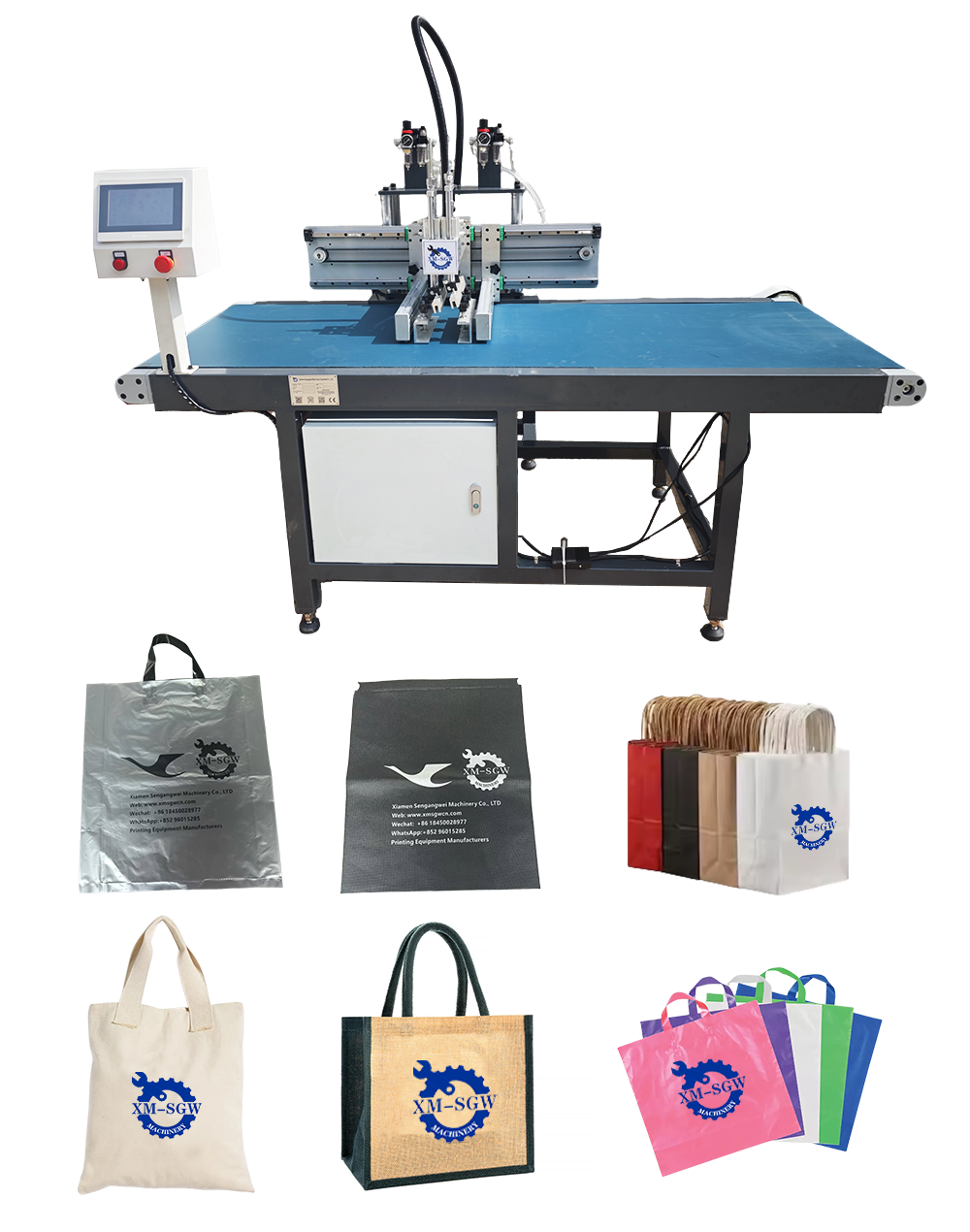
Driven by global plastic bans and rising demand for eco-friendly packaging, non-woven bags have become one of the fastest-growing promotional and retail product categories in 2026. For print shops and small manufacturing businesses, custom printed non-woven bags represent a high-volume, high-margin revenue stream with steady B2B demand from retailers, event organizers, brands, and educational institutions.
Among all decoration methods, screen printing remains the industry standard for non-woven bag production. It delivers bold, long-lasting prints at the lowest per-unit cost for bulk orders, with equipment entry points accessible even for small startup operations.
In this guide, we cover everything you need to build a profitable non-woven bag screen printing service:
- Why screen printing outperforms other decoration methods for non-woven fabrics
- The step-by-step production process for professional results
- 3 tiered equipment packages matched to small business budgets
- Core business benefits and target customer segments
- Pro tips to avoid common quality issues
- Realistic profit margin and pricing guidance
Whether you’re adding bag printing to an existing print shop or launching a dedicated eco-packaging business, this guide will help you set up efficiently and maximize returns.
Why Screen Printing Is the Best Method for Non-Woven Bags
Non-woven polypropylene (PP) fabric has unique surface properties — porous, slightly textured, and low surface energy — that make some decoration methods unreliable. Screen printing is universally preferred for this material for five key reasons:
1. Superior Color Opacity & Vibrancy
Screen printing deposits a thick, uniform ink layer that penetrates the top layer of the fabric, producing solid, opaque colors even on colored or black non-woven bags. This is critical for brand logos and promotional graphics, where bold, consistent color is a core customer requirement.
2. Unmatched Cost Efficiency for Bulk Orders
For runs of 100 pieces or more, screen printing has the lowest per-unit cost of any decoration method. Setup costs are spread across large production runs, and ink consumption per bag is minimal, making it ideal for the large corporate and retail orders that dominate the non-woven bag market.
3. Exceptional Durability
Properly cured screen-printed ink bonds with the non-woven fibers rather than sitting on top of the surface. Prints resist rubbing, folding, and light washing far better than heat transfer vinyl or digital prints, which can crack, peel, or fade with regular use.
4. Eco-Friendly Compatibility
Water-based screen printing inks produce minimal VOC emissions and contain no harsh solvents, aligning perfectly with the eco-friendly positioning of reusable non-woven bags. This is a major selling point for sustainable brands and environmentally conscious clients.
5. Simple, Low-Maintenance Production
Screen printing lines for non-woven bags require less complex equipment and fewer consumables than digital or transfer printing. Operators can be trained quickly, and routine maintenance is straightforward — a major plus for small teams.
Comparison: Screen Printing vs. Other Decoration Methods
| Feature |
Screen Printing |
Heat Transfer Vinyl |
Direct-to-Garment Digital |
| Best for |
Bulk orders, solid color logos |
Small runs, multi-color graphics |
Ultra-short runs, full-color photos |
| Color opacity |
Excellent |
Good |
Fair on dark fabrics |
| Durability |
Excellent (fiber-bonded) |
Moderate (prone to peeling) |
Moderate |
| Per-unit cost (bulk) |
Lowest |
Medium |
Highest |
| Setup time |
Moderate |
Short |
Very short |
| Typical minimum order |
50–100 pcs |
10–20 pcs |
1–5 pcs |
How Screen Printing Works on Non-Woven Fabrics
Producing consistent, high-quality prints on non-woven bags follows a standardized 6-step workflow:
-
Artwork Preparation & Color Separation
Designs are converted to vector format and separated into individual color layers. Most non-woven bag orders use 1–2 spot colors to keep costs low and production fast.
-
Screen Making & Exposure
Each color is burned onto a mesh screen coated with photosensitive emulsion. For non-woven fabrics, mesh counts of 110–160 are standard: 110–135 mesh for large solid areas, and 150–160 mesh for fine text and detail.
-
Machine Setup & Registration
Screens are mounted on the press and aligned precisely. The bag is held flat on the print table, usually with a vacuum hold-down system to prevent shifting during printing.
-
Print Stroke & Ink Deposition
A squeegee forces ink through the mesh onto the fabric. For non-woven materials, medium pressure and a medium-durometer squeegee (70 shore) produce the best balance of coverage and minimal ink bleed-through.
-
Ink Curing
After printing, bags pass through a conveyor dryer set to 130–150°C to fully cure the ink. Proper curing is the single most important factor for long-lasting print adhesion.
-
Quality Inspection & Finishing
Each bag is inspected for misregistration, ink smudges, or incomplete coverage before being stacked and packaged.
Recommended Equipment Packages for Small Businesses
Below are three realistic, field-proven equipment setups for non-woven bag screen printing, scaled to different business sizes and production volumes.
1. Micro Startup Kit (1–2 Operators)
Daily production capacity: 100 – 300 pieces
Best for: New startups, home-based businesses, and shops testing the non-woven bag market
| Category |
Equipment |
Purpose |
| Core press |
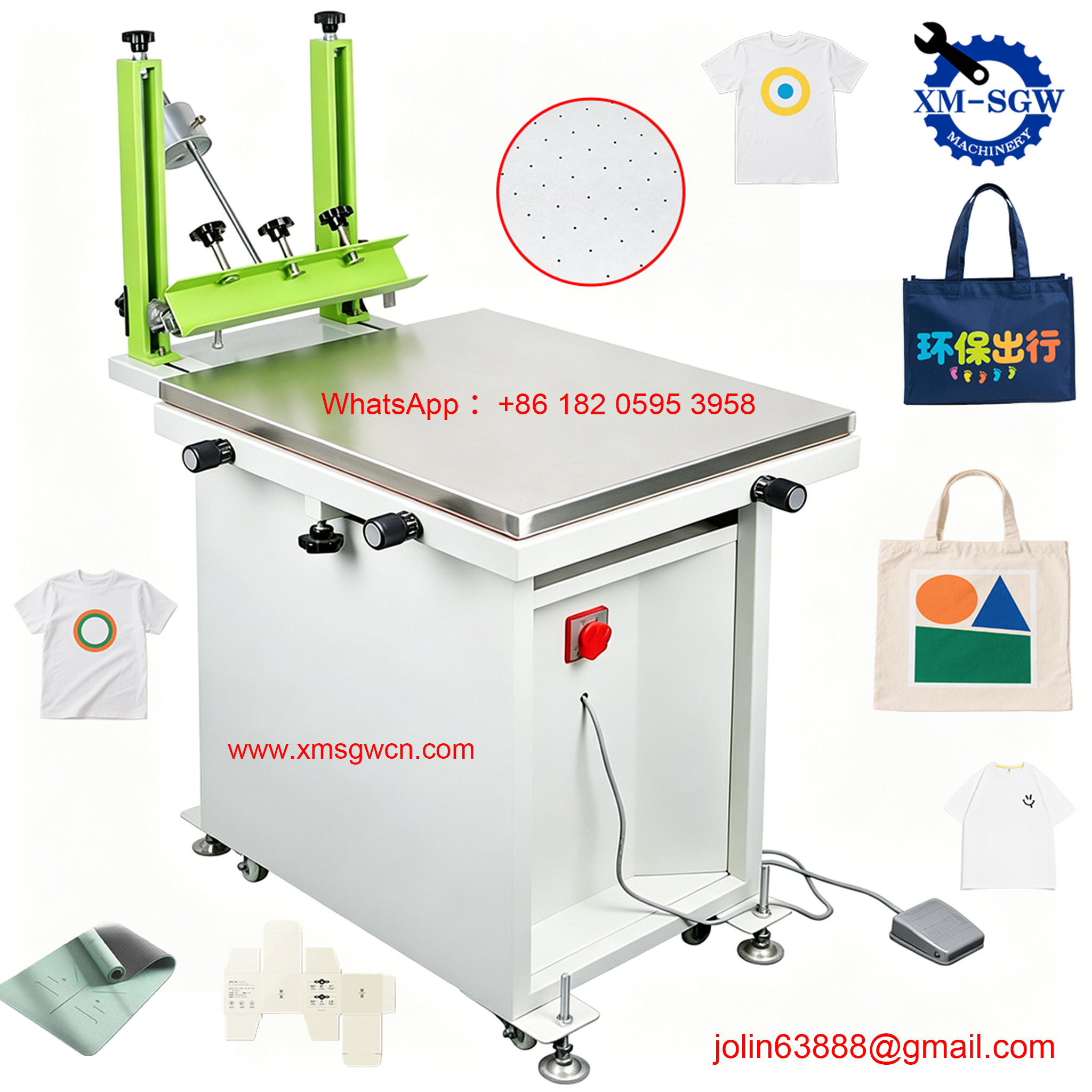
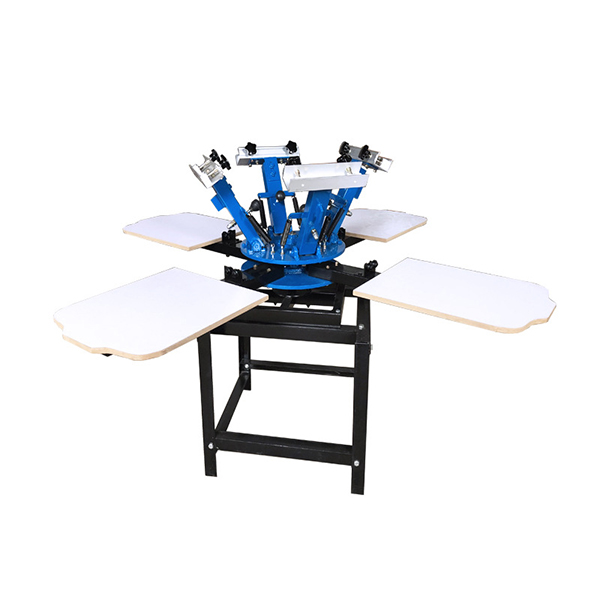
1-color manual flatbed screen printing press |
Handles standard tote bag sizes with simple single-color logos |
| Pre-press |
Compact LED UV exposure unit + 5 aluminum screen frames |
In-house screen making for fast job turnaround |
| Curing |
Infrared flash dryer or small tabletop curing unit |
Cures water-based ink between colors and for final production |
| Tooling |
2 squeegees, water-based ink starter set, registration tape |
Core production consumables |
| Workholding |
Simple jig set for standard tote bag sizes |
Keeps bags aligned for consistent print placement |
2. Growing Small Business Kit (2–3 Operators)
Daily production capacity: 400 – 1,000 pieces
Best for: Established print shops with regular bag orders, promotional product suppliers
| Category |
Equipment |
Purpose |
| Core press |
2–4 color manual flatbed press with vacuum table |
Supports multi-color designs and faster production with secure substrate hold-down |
| Pre-press |
Vacuum LED exposure unit + 15 screen frames + screen drying rack |
Faster, higher-quality screen production for frequent job changes |
| Curing |
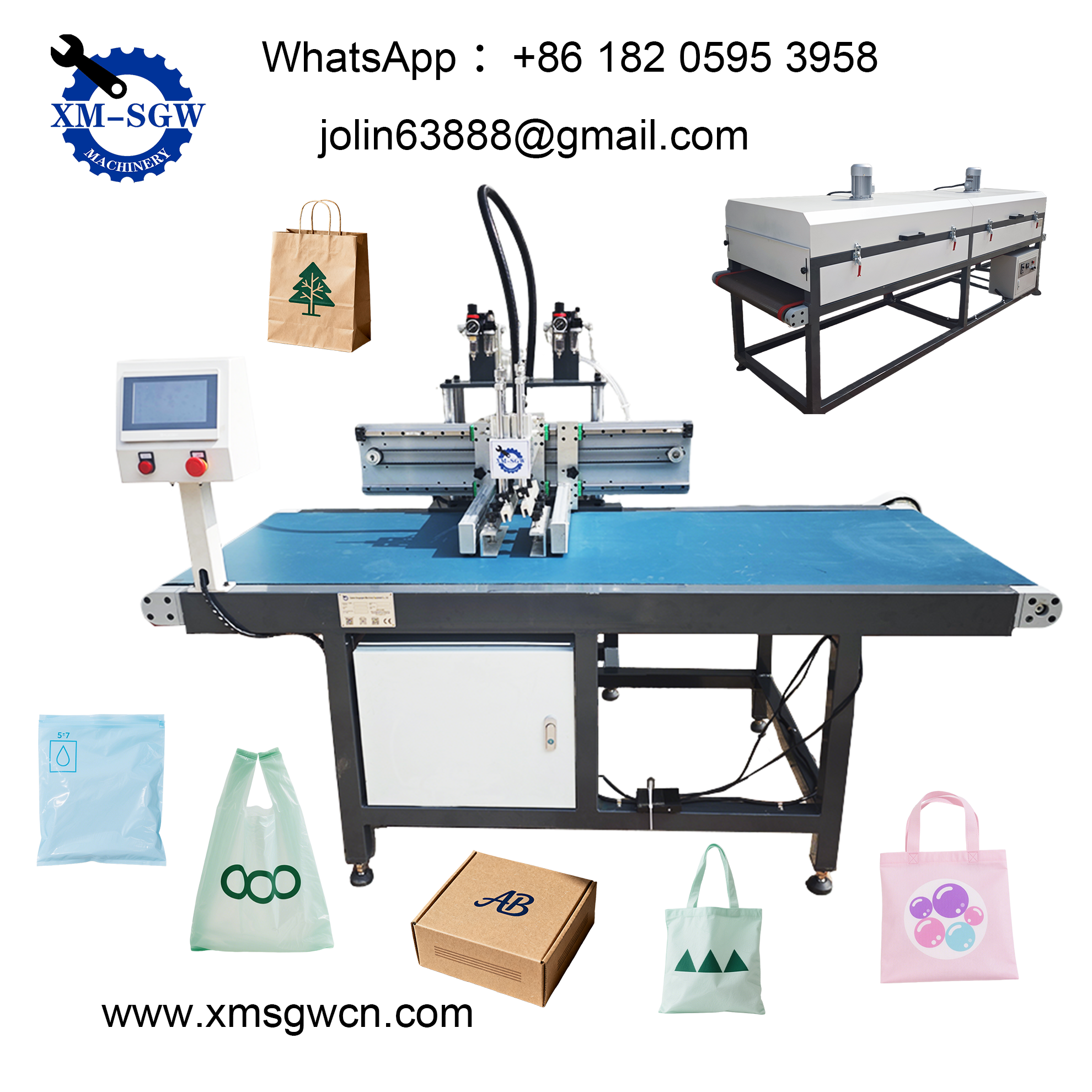
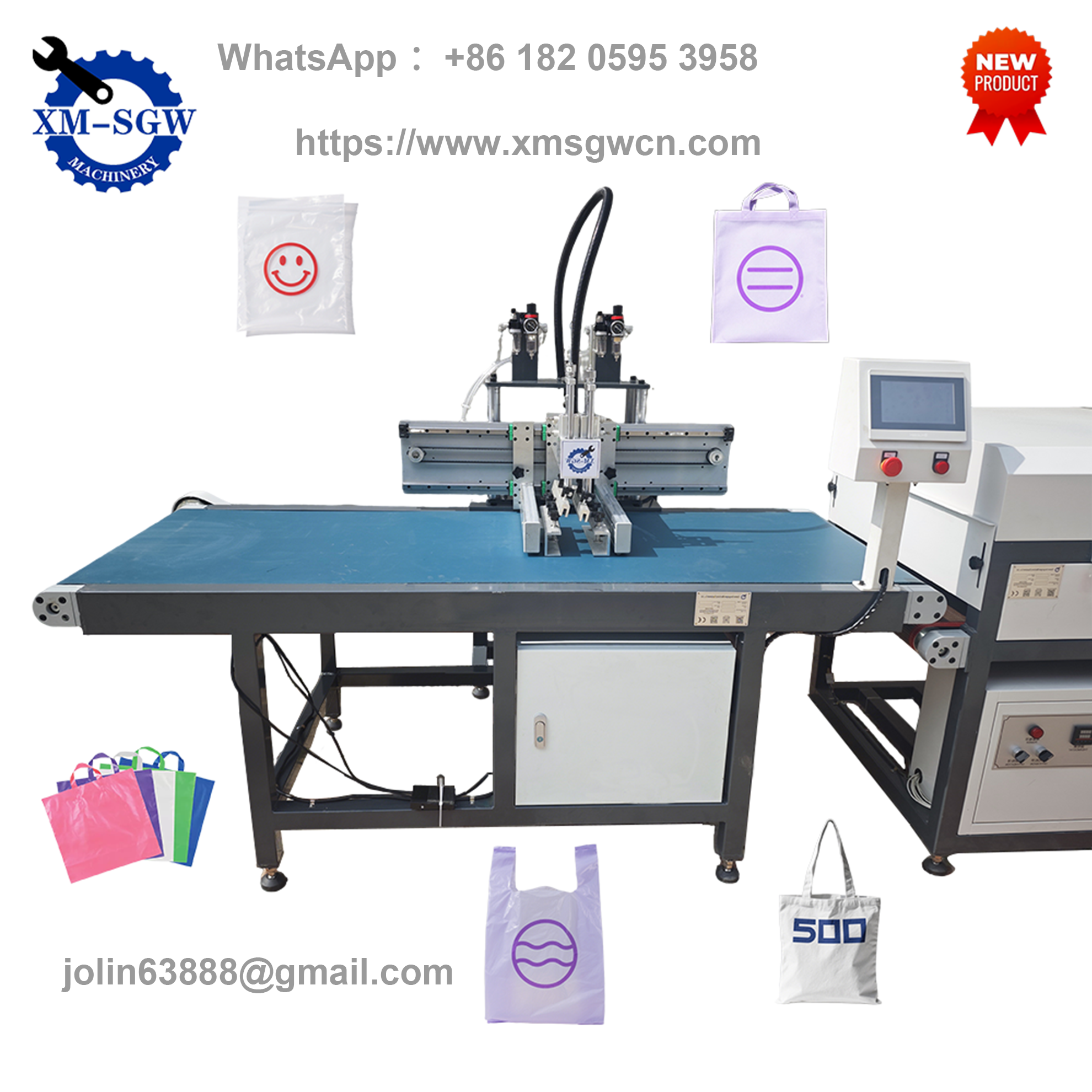
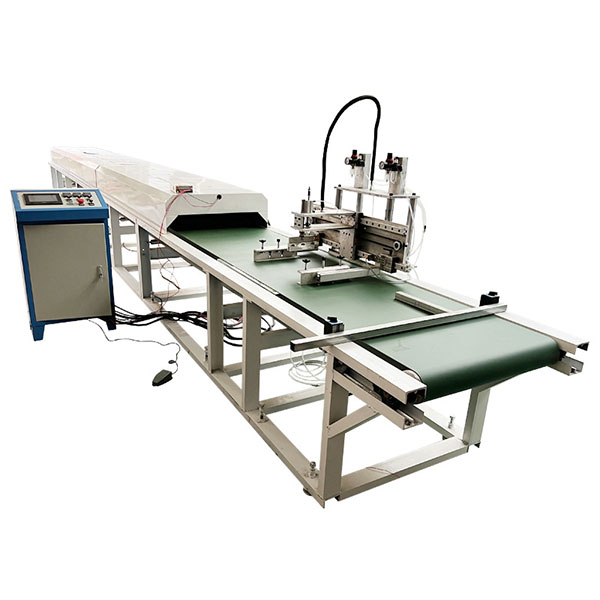
24” wide conveyor belt dryer |
Continuous inline curing for consistent ink adhesion and bulk output |
| Tooling |
Multiple squeegee durometers, bulk ink supply, bag folding station |
Streamlined production workflow |
| Workholding |
Adjustable jigs for multiple bag sizes |
Quick changeover between different bag dimensions |
3. Mid-Volume Production Kit (3–5 Operators)
Daily production capacity: 1,200 – 2,500 pieces
Best for: Dedicated bag manufacturers, contract printers with large recurring orders
| Category |
Equipment |
Purpose |
| Core press |
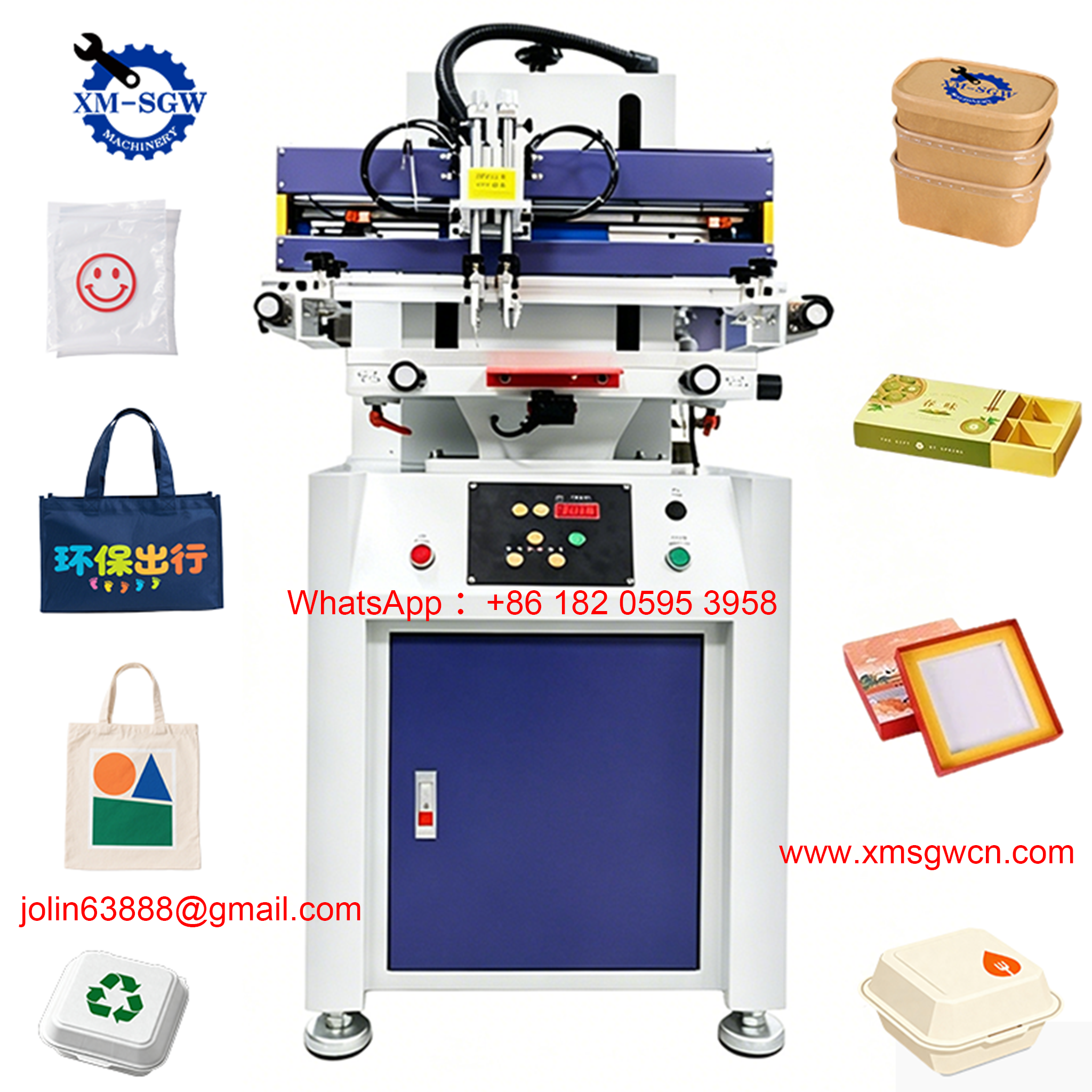
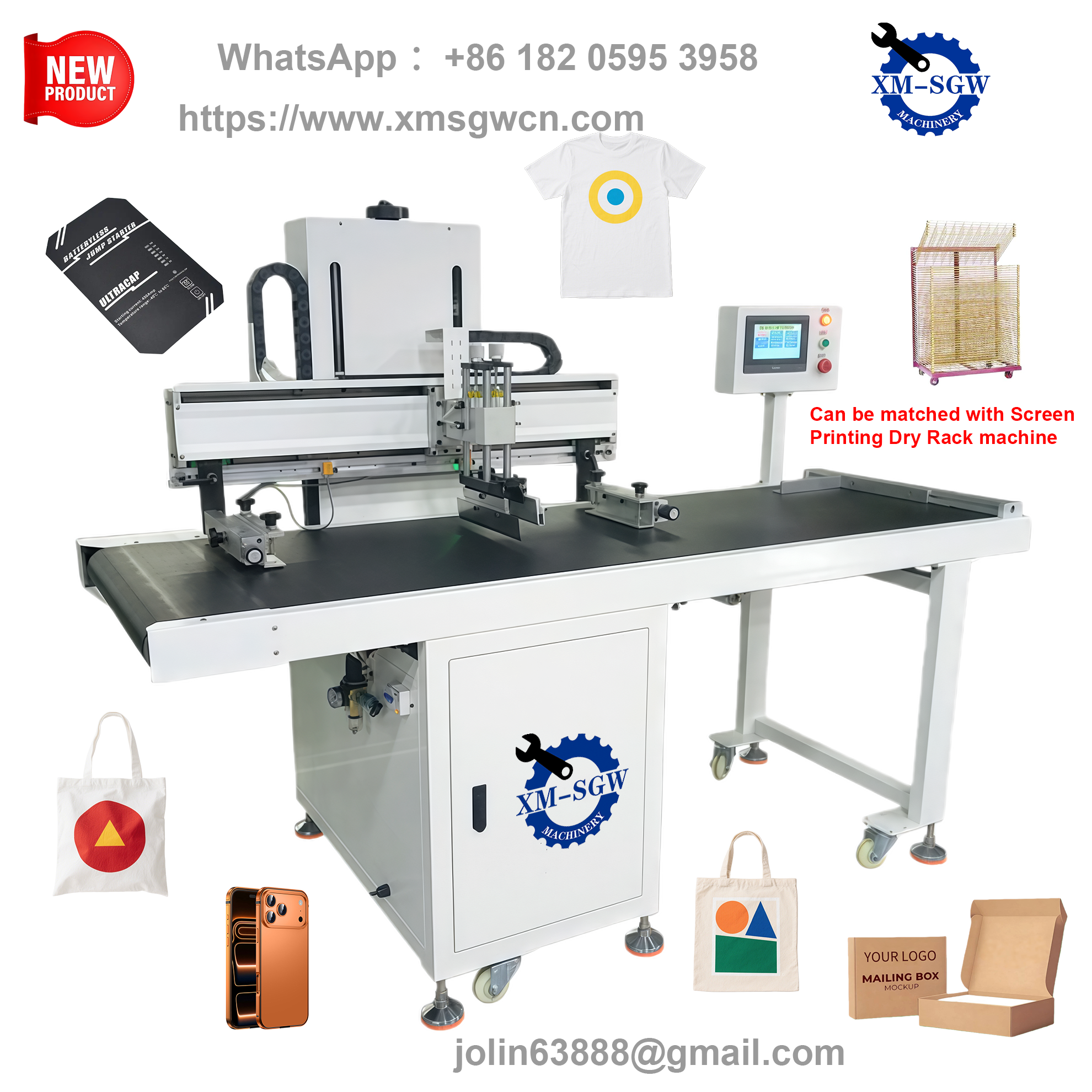
Semi-automatic flatbed screen printing machine |
Automated print stroke for consistent pressure and 2x faster output vs. manual |
| Pre-press |
High-precision exposure unit + automatic screen coater |
Sharp, repeatable screens for fine detail and multi-color registration |
| Curing |
Industrial conveyor dryer (36” belt width) |
Matches production line speed for uninterrupted bulk production |
| Automation |
Pneumatic bag hold-down, auto feed assist |
Reduces operator fatigue and increases throughput |
| Supporting |
Screen reclaim system, bulk ink mixing station |
Lower long-term consumable costs |
Business Benefits of Offering Non-Woven Bag Screen Printing
1. Strong, Stable Profit Margins
Gross margins for custom screen-printed non-woven bags typically range from 40% to 65%. Blank non-woven bags are low-cost, ink consumption is minimal, and production scales efficiently — making this one of the most profitable product categories for small print shops.
2. Recurring B2B Demand
Non-woven bags are a repeat-purchase item. Supermarkets, trade show organizers, educational institutions, and brand marketers order new batches on a monthly or quarterly basis, creating predictable, steady revenue.
3. Low Barrier to Entry
You don’t need industrial-scale equipment to start. A basic manual setup fits on a standard workbench and requires no specialized facility upgrades, making this an accessible way to expand your service menu.
4. Eco-Friendly Selling Proposition
Pairing reusable non-woven bags with water-based screen printing creates a fully sustainable product that resonates with modern consumers and meets corporate ESG requirements. This eco angle lets you charge a premium over plastic or single-use alternatives.
5. Easy to Cross-Sell
If you already offer apparel or promotional product printing, non-woven bags are a natural add-on sale. Many clients that order custom t-shirts for events also need branded tote bags — you can increase average order value without adding entirely new customer acquisition costs.
Popular Applications & Target Customers
Non-woven bags serve a huge range of industries and use cases. These are the highest-demand customer segments:
- Retail & supermarkets: Branded reusable shopping bags
- Trade shows & corporate events: Conference swag bags and giveaway totes
- Education & nonprofits: Student welcome bags, fundraising merchandise
- Food & beverage: Takeout bags, bakery packaging, gift sets
- Beauty & personal care: Product packaging and gift with purchase bags
- Real estate & hospitality: Welcome bags for guests and new homeowners
Pro Tips for Consistent, High-Quality Results
Avoid the most common beginner mistakes with these best practices:
- Match mesh count to your design: Use 110–135 mesh for large solid color fills, and 150–160 mesh for small text and fine lines.
- Use water-based inks formulated for PP non-woven: General-purpose fabric inks may not adhere properly. Look for inks specifically designed for polypropylene non-woven substrates.
- Avoid excessive squeegee pressure: Too much pressure forces ink through the back of the bag, creating a messy reverse side. Medium, even pressure produces the cleanest results.
- Verify cure temperature with a temperature strip: Under-curing is the #1 cause of peeling prints. Test the first batch of every run to confirm ink is fully cured.
- Pre-test on production material: Non-woven fabric absorbency varies by weight and manufacturer. Always run test prints on the actual bag material before starting a full production run.
Frequently Asked Questions
Q: Can you screen print on all types of non-woven bags?
A: Screen printing works reliably on standard spun-bond PP non-woven fabrics from 50g to 120g, the most common bag weight range. Laminated or coated non-woven bags require specialized inks and pre-treatment for proper adhesion.
Q: How many colors can I print on non-woven bags?
A: Manual presses typically handle 1–4 colors, while semi-automatic production lines can support 6+ colors. Most commercial bag orders use 1–2 spot colors for cost efficiency, but full multi-color branding is possible for premium projects.
Q: How long do screen-printed non-woven bags last?
A: With proper curing, prints will last the entire usable life of the bag — typically hundreds of uses and dozens of light washes — without significant fading or peeling.
Q: What is the typical profit margin on printed non-woven bags?
A: Industry average gross margins range from 40% to 65%. Larger bulk orders have lower per-unit pricing but also lower production costs, delivering strong total profit per job.
Q: Is screen printing on non-woven bags environmentally friendly?
A: Yes, when paired with water-based inks. The process produces very low waste, and the finished reusable bags replace hundreds of single-use plastic bags over their lifetime — making it a genuinely sustainable decoration solution.
Conclusion
Screen-printed non-woven bags are one of the most reliable, high-margin product categories a small print or packaging business can add in 2026. Driven by global plastic reduction policies and growing corporate demand for sustainable promotional products, the market shows no signs of slowing down.
For most small businesses, starting with a 1–2 color manual setup and upgrading to a conveyor dryer and semi-automatic press as volume grows is the lowest-risk, highest-ROI path. With minimal upfront investment and strong recurring demand, non-woven bag screen printing is an excellent way to diversify your service offering and build stable B2B revenue.