Handheld Fiber Laser Marking Machine: The Ultimate Guide for 2026

Table of Contents


In the fast-paced world of manufacturing, warehousing, and customization, precision marking is no longer a luxury—it’s a necessity. From serial numbers on automotive parts to logos on jewelry, and QR codes on electronic components, businesses need a marking solution that is accurate, efficient, and flexible enough to adapt to diverse work scenarios. Enter the handheld fiber laser marking machine: a revolutionary tool that combines portability with industrial-grade precision, redefining how we approach on-site and mobile marking tasks.
Unlike traditional desktop laser markers that require moving workpieces to the machine, handheld fiber laser marking machines bring the marking capability directly to the product—whether it’s a large, immovable metal frame, a delicate plastic component, or an on-site asset. This portability, paired with the superior performance of fiber laser technology, makes them an indispensable asset for businesses across industries. In this comprehensive guide, we’ll break down everything you need to know about handheld fiber laser marking machines, from how they work to their key benefits, applications, and how to choose the right one for your needs.

What Is a Handheld Fiber Laser Marking Machine?

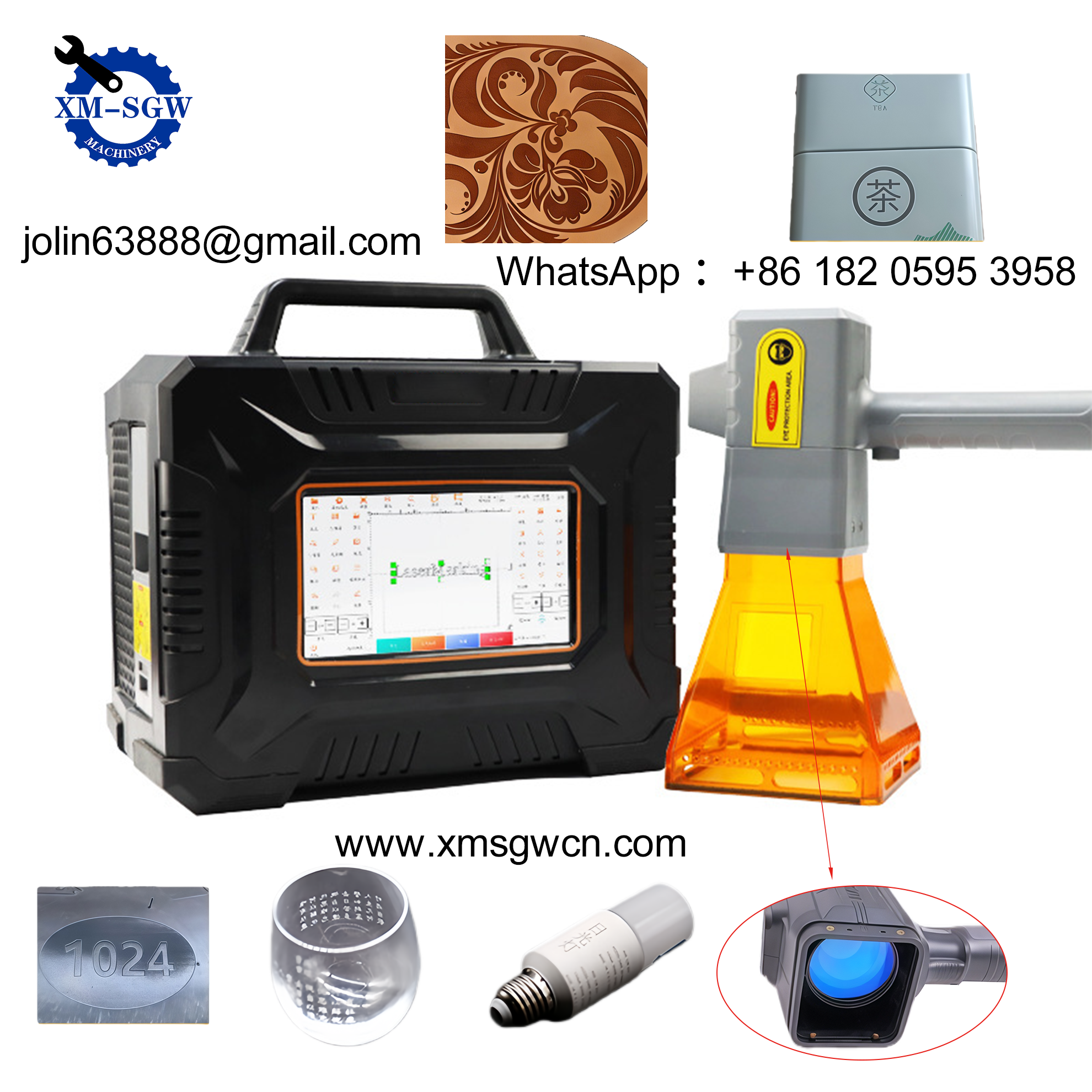
A handheld fiber laser marking machine is a portable, compact marking device that uses fiber laser technology to create permanent, high-precision marks on a wide range of materials. At its core, it features a fiber laser source that generates a concentrated laser beam (operating at a wavelength of 1064 nm, the industry standard for fiber lasers), which is then directed through a lightweight handheld scanning head to the target surface.

The marking process works by either evaporating the surface layer of the material, causing a chemical or physical change in the material’s surface, or removing a thin layer to reveal a contrasting mark—all without contact, ensuring no damage to the workpiece. Unlike CO2 lasers, fiber lasers are optimized for marking metals and non-metals alike, offering superior beam quality, faster marking speeds, and lower energy consumption.

Modern handheld models are designed with ergonomics and usability in mind: most weigh between 5.5 kg and 6 kg (with handheld heads as light as 0.8 kg), feature intuitive touchscreen controls. They also come equipped with integrated air-cooling systems to maintain stable performance during extended use, and built-in safety features like emergency stop buttons and material detection software to protect operators.

Key Benefits of Handheld Fiber Laser Marking Machines


What sets handheld fiber laser marking machines apart from traditional marking methods (such as inkjet, engraving pens, or desktop lasers) is their unique combination of portability, precision, and efficiency. Here are the top advantages that make them a smart investment for businesses:


1. Unmatched Portability & Flexibility

The biggest advantage of handheld models is their ability to mark objects anywhere—no need to move large, heavy, or immovable workpieces to a fixed machine. This is a game-changer for industries like automotive (marking car frames or large pipes), construction (marking structural components), or field service (on-site asset marking). Most models also come with optional shoulder straps or rolling luggage for easy transport, and their compact size means they can fit into narrow workspaces that desktop lasers can’t reach.

2. Industrial-Grade Precision & Durability

Fiber laser technology delivers exceptional marking precision, with a positioning accuracy of ±0.003 mm, minimum line width of 0.015 mm, and minimum character height of 0.15 mm. This makes them ideal for marking intricate designs, small text, serial numbers, barcodes (Code 39, Code 128, QR codes), and logos with crisp, clear details that resist wear, fading, and environmental damage. The marks are permanent and tamper-proof, which is critical for compliance, traceability, and brand authenticity.

3. High Efficiency & Speed

Handheld fiber laser markers offer fast marking speeds—up to 7000 mm/s or more, making them suitable for high-volume production tasks. Unlike inkjet printers, they require no drying time, and unlike mechanical engravers, they have no moving parts that can wear out or slow down the process. This efficiency translates to reduced labor costs and increased productivity, especially for batch marking or on-site jobs where time is limited.

4. Low Maintenance & Operating Costs

Fiber lasers are solid-state devices with no consumables (such as ink, cartridges, or cutting tools) required for regular operation. They have a long lifespan—up to 100,000 hours of operation for high-quality laser sources (e.g., Raycus, JPT, IPG)—and are maintenance-free for most of their lifetime. Additionally, they consume significantly less energy than traditional marking methods, reducing long-term operating costs.

5. Versatility Across Materials & Industries

These machines can mark a wide range of materials, including all common metals (stainless steel, aluminum, copper, gold, silver, titanium), metal oxides, plated or anodized surfaces, and non-metals like plastics (ABS, epoxy resin), ceramics, glass, rubber, and leather. This versatility makes them suitable for industries such as electronics, jewelry, medical devices, aerospace, hardware tools, 3C electronics, handicrafts, and more.

6. User-Friendly Operation

Even for operators with no prior laser experience, handheld fiber laser marking machines are easy to use. Most models feature intuitive touchscreen interfaces with preset parameters for common materials and applications, red light preview for accurate positioning, and one-click marking functionality[2[6]. They also support multiple file formats (via USB or wireless) and bilingual control systems (Chinese/English), making them accessible to global users.

Common Applications of Handheld Fiber Laser Marking Machines


Thanks to their portability, precision, and versatility, handheld fiber laser marking machines are used in a wide range of industries and applications. Here are some of the most common use cases:

Automotive & Aerospace

Marking serial numbers, VIN codes, part numbers, and logos on car frames, engine components, brake parts, and aerospace components—even on-site or in production lines without moving heavy parts.

Electronics & 3C Industry

Marking QR codes, serial numbers, and brand logos on smartphones, tablets, electronic components (IC chips, resistors), batteries, and cables—with high precision to fit small, delicate surfaces.

Jewelry & Accessories

Engraving custom designs, names, dates, and logos on gold, silver, platinum, and stainless steel jewelry (rings, necklaces, bracelets) with intricate details that enhance product value.

Medical Devices

Marking traceability codes, serial numbers, and compliance information on medical instruments, implants, and plastic medical components—meeting strict industry standards for permanence and sterility.

Hardware & Tools

Marking brand names, model numbers, and safety information on drills, wrenches, screws, and other hardware tools—creating durable marks that resist corrosion and wear.

On-Site Asset Marking

Marking assets such as pipes, valves, machinery, and construction equipment with identification codes, maintenance dates, or company logos—eliminating the need to transport large assets to a marking facility.

How to Choose the Right Handheld Fiber Laser Marking Machine


With so many options on the market, choosing the right handheld fiber laser marking machine can be overwhelming. To make the best decision for your business, consider the following key factors:

1. Laser Power

Laser power (measured in watts) determines the marking speed, depth, and compatibility with different materials. Common power options are 20W, 30W, 50W, and 100W. For most small to medium-sized businesses, 20W or 30W is sufficient for marking metals and plastics. If you need deeper marks (e.g., on thick metal) or faster speeds for high-volume production, opt for 50W or higher.

2. Marking Range

The marking range (the size of the area the laser can mark) varies by model, typically ranging from 110×110 mm to 200×200 mm (with optional larger ranges available). Choose a marking range that fits your typical workpiece size—for small components, a 110×110 mm range is enough; for larger objects, opt for a wider range.

3. Portability & Ergonomics

Consider the weight and design of the machine, especially if you’ll be using it for extended periods or transporting it frequently. Look for lightweight models (≤6 kg) with ergonomic handheld heads and comfortable grips to reduce operator fatigue. Also, check if it comes with transport accessories (shoulder straps, rolling cases) for added convenience.

4. Laser Source Quality

The laser source is the heart of the machine—opt for reputable brands like Raycus, JPT, or IPG for reliability and long lifespan. Avoid low-quality laser sources, as they can lead to inconsistent marking quality, frequent breakdowns, and higher long-term costs.

5. Software & Connectivity

Choose a machine with user-friendly software that supports common file formats (AI, CorelDRAW, Photoshop) and allows for easy parameter adjustment (power, speed, depth). Wireless connectivity (Wi-Fi, Bluetooth) is a valuable feature for remote operation and quick file transfer.

6. Safety Features

Safety is critical when working with lasers. Look for machines with built-in safety features like emergency stop buttons, laser safety shields, eye protection, and material detection software to prevent accidents[2[7]. Ensure the machine meets international safety standards (e.g., FDA, CE) for laser equipment.

7. After-Sales Support & Warranty

Choose a supplier that offers comprehensive after-sales support, including technical assistance, spare parts, and training. A good warranty (1-2 years or more) will protect your investment and give you peace of mind in case of breakdowns.

FAQs About Handheld Fiber Laser Marking Machines


Here are answers to some of the most frequently asked questions about handheld fiber laser marking machines:

Q1: Can handheld fiber laser marking machines mark both metals and non-metals?

A1: Yes! Unlike CO2 lasers (which are better for non-metals) or diode lasers (which have limited metal compatibility), fiber lasers can mark all common metals and many non-metals, including plastics, ceramics, glass, and leather.

Q2: Do I need professional training to operate a handheld fiber laser marking machine?

A2: No—most modern models are designed for user-friendly operation with intuitive touchscreen controls, preset parameters, and red light preview. Operators can master basic operation in a few hours, though some training on safety and advanced features is recommended.

Q3: How long do handheld fiber laser marking machines last?

A3: With a high-quality fiber laser source, the machine can last up to 100,000 hours of operation—equivalent to over 11 years of continuous use (8 hours per day, 5 days per week). The lifespan is significantly longer than traditional marking machines.

Q4: Are the marks permanent and tamper-proof?

A4: Yes—fiber laser marks are permanent because they alter the surface or subsurface of the material (rather than adding ink or paint). They resist wear, fading, corrosion, and tampering, making them ideal for traceability and compliance.

Q5: What is the difference between a handheld and desktop fiber laser marking machine?

A5: The main difference is portability: handheld models are designed to be moved to the workpiece, while desktop models require moving the workpiece to the machine. Handheld models are better for large, immovable objects or on-site marking, while desktop models are ideal for small, uniform workpieces in a fixed location.

Conclusion: Why Invest in a Handheld Fiber Laser Marking Machine in 2026?

 

In 2026, businesses are increasingly prioritizing flexibility, efficiency, and precision—and handheld fiber laser marking machines deliver on all three fronts. They eliminate the limitations of traditional marking methods, allowing you to mark objects anywhere with industrial-grade precision, low maintenance costs, and high efficiency.
Whether you’re a small business owner looking to add custom engraving services, a manufacturer needing to improve traceability, or a field service provider requiring on-site asset marking, a handheld fiber laser marking machine is a versatile, cost-effective investment that will grow with your business.
When choosing a machine, focus on laser power, marking range, portability, and after-sales support—and opt for a reputable supplier to ensure quality and reliability. With the right handheld fiber laser marking machine, you’ll streamline your workflow, enhance product quality, and gain a competitive edge in your industry.
Picture of Jolin

Jolin

Foreign Executives

Get In Touch
Welcome To Share This Page:
Product Categories
Latest News
Get A Free Quote Now !
Contact Form Demo (#3)

Related Products

Related News

For packaging factories and F&B brand buyers, delivering consistent, high-quality printed cups on time isn’t just a goal—it’s a make-or-break

In the fast-paced world of manufacturing, warehousing, and customization, precision marking is no longer a luxury—it’s a necessity. From serial

In the realm of flat surface screen printing, the pursuit of high precision, broad adaptability, and operational efficiency has driven

In the realm of industrial marking and coding, precision, versatility, and efficiency are non-negotiable. CO₂ laser marking machines have emerged

When it comes to hot stamping applications, the quality of your finished product starts long before the stamping process itself—with

        In the competitive world of product packaging and branding, standing out from the crowd is more

In the fast-paced world of electronics manufacturing, Printed Circuit Boards (PCBs) serve as the backbone of nearly every electronic device—from

Tunnel Type Infrared Dryer: The Efficient, Energy-Saving Solution for Industrial Drying   In the realm of industrial manufacturing and processing,

Screen printing is a versatile and widely used printing technique, favored by businesses and hobbyists alike for its ability to

Scroll to Top

Get A Free Quote Now !

Contact Form Demo (#3)
If you have any questions, please do not hesitate to contatct with us.