Meta Description: Discover everything about pad printing machines in 2026. Compare types, learn the latest technologies, and find the perfect machine for your industrial marking needs with our comprehensive buyer’s guide.
Introduction
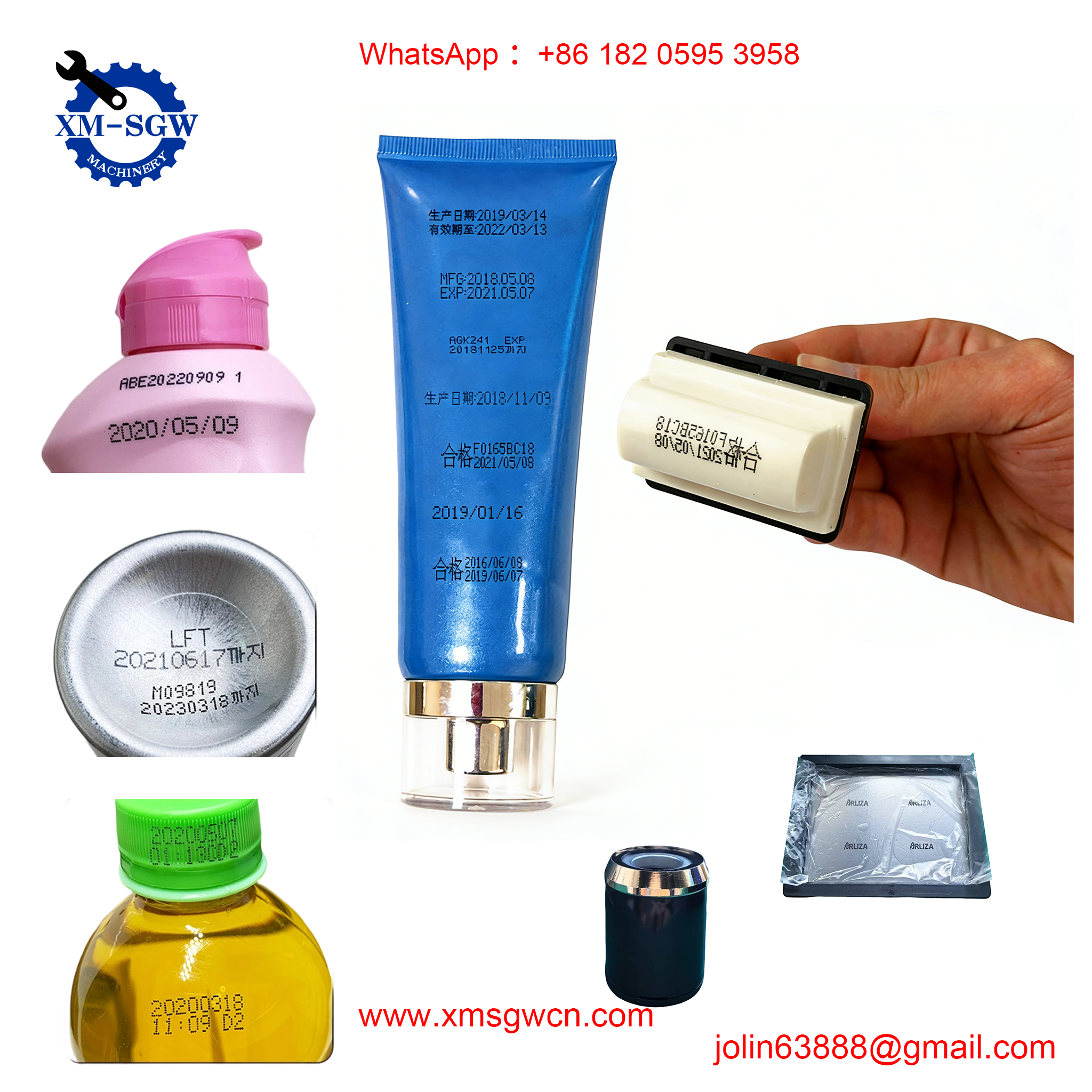
Pad printing (also known as tampography) has evolved from a niche decorative technique into an indispensable industrial marking technology in 2026. Its unique ability to transfer high-precision, full-color images onto irregular, curved, textured, or recessed surfaces makes it irreplaceable for industries where other printing methods simply cannot deliver .
From medical devices and automotive components to electronics and consumer goods, pad printing enables manufacturers to add branding, instructions, safety markings, and regulatory information to products that would be impossible to print with traditional methods.
In this complete guide, we’ll cover everything you need to know about pad printing machines in 2026, including:
- How modern pad printing machines work
- The different types available and their applications
- Pad printing vs. screen printing vs. laser marking: which is right for you
- The latest technological trends shaping the industry
- How to choose the perfect machine for your business
- Essential maintenance tips to maximize your investment
Whether you’re starting a new marking operation, upgrading your existing equipment, or evaluating different printing technologies, this guide will provide you with all the information you need to make informed decisions.
What is a Pad Printing Machine?
A pad printing machine is an indirect offset printing device that uses a flexible silicone pad to transfer a 2D image from an etched metal plate (called a cliché) onto a 3D object . The silicone pad conforms perfectly to the shape of the substrate, allowing printing on virtually any surface geometry, including spheres, cylinders, curves, edges, and recessed areas.
Why Pad Printing Still Matters in 2026
Despite advances in digital printing and laser marking, pad printing remains the gold standard for many industrial applications because:
- Unmatched surface adaptability: Prints on curved, irregular, textured, and recessed surfaces that no other technology can handle
- Extreme precision: Achieves registration accuracy down to ±0.01mm, making it ideal for tiny electronic components and medical devices
- Wide material compatibility: Works on plastic, metal, glass, ceramic, rubber, wood, and even fabrics
- Superior ink performance: Produces vibrant, opaque colors with excellent adhesion and durability
- Cost-effectiveness: Lower per-unit cost than laser marking for medium-to-high volume color applications
- Non-destructive process: Does not alter the substrate surface, unlike laser marking
How Pad Printing Machines Work
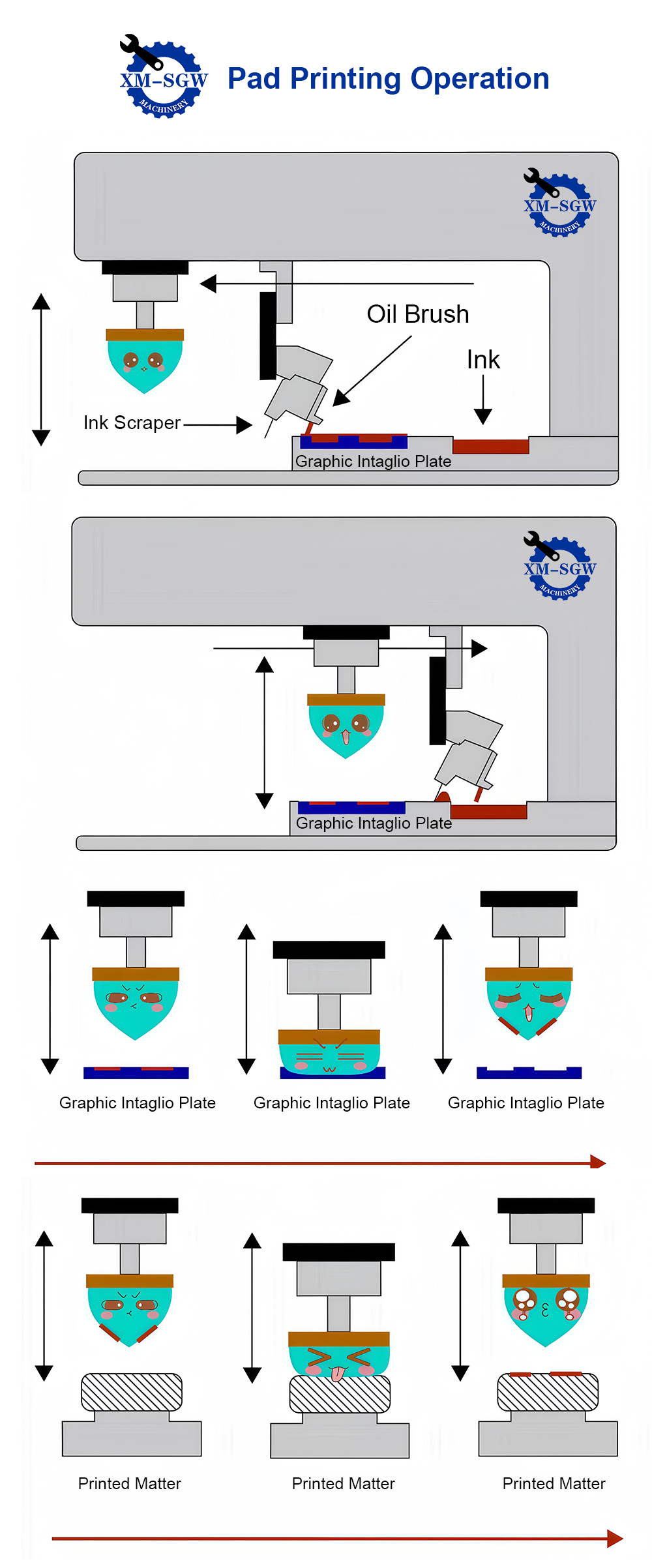
The modern pad printing process involves five core steps:
- Cliché preparation: The design is chemically etched onto a steel or aluminum plate to create recessed image areas
- Ink application: An ink cup or doctor blade fills the etched recesses with ink and removes excess from the plate surface
- Ink transfer: The silicone pad presses onto the cliché, picking up the ink from the recessed areas
- Printing: The pad moves over the substrate and presses down, conforming to its shape and transferring the ink
- Curing: The printed item is cured using air drying, heat, or UV light to ensure adhesion and durability
Modern machines automate these steps with precision servo drives, CCD visual alignment systems, and robotic handling, achieving consistent results at high speeds .
Types of Pad Printing Machines 2026
Pad printing machines come in various configurations designed for specific production volumes and applications. Here’s the definitive breakdown for 2026:
1. By Automation Level
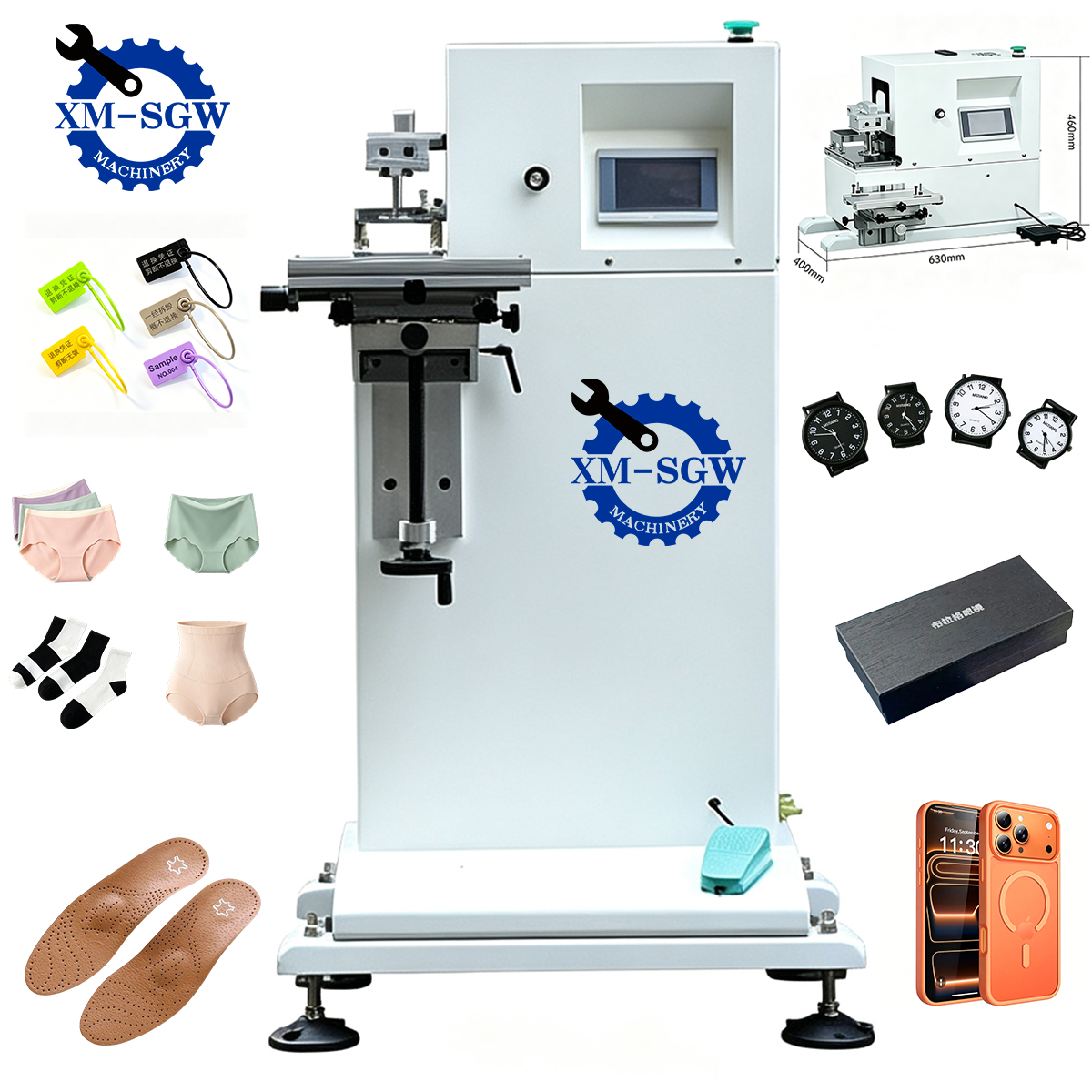
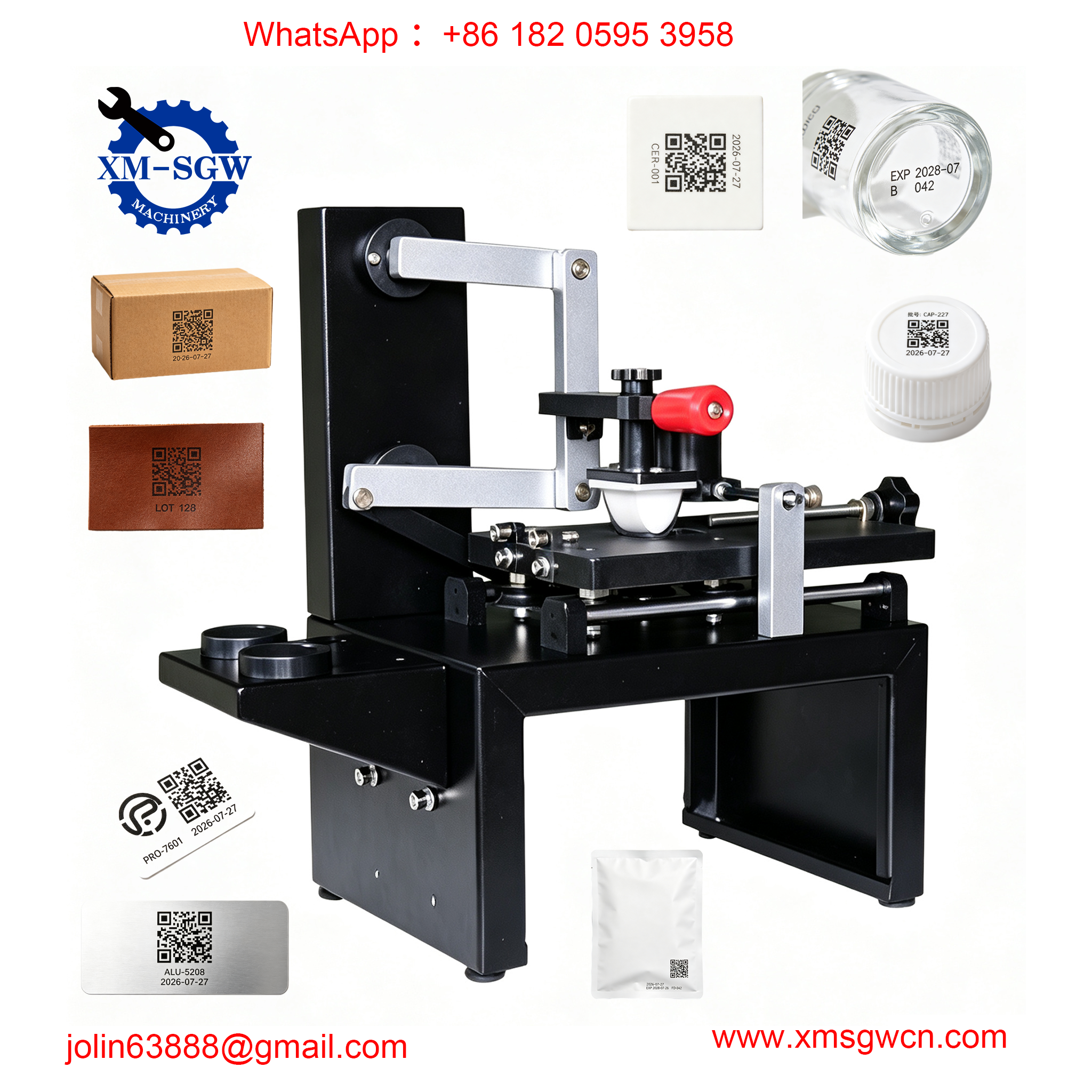
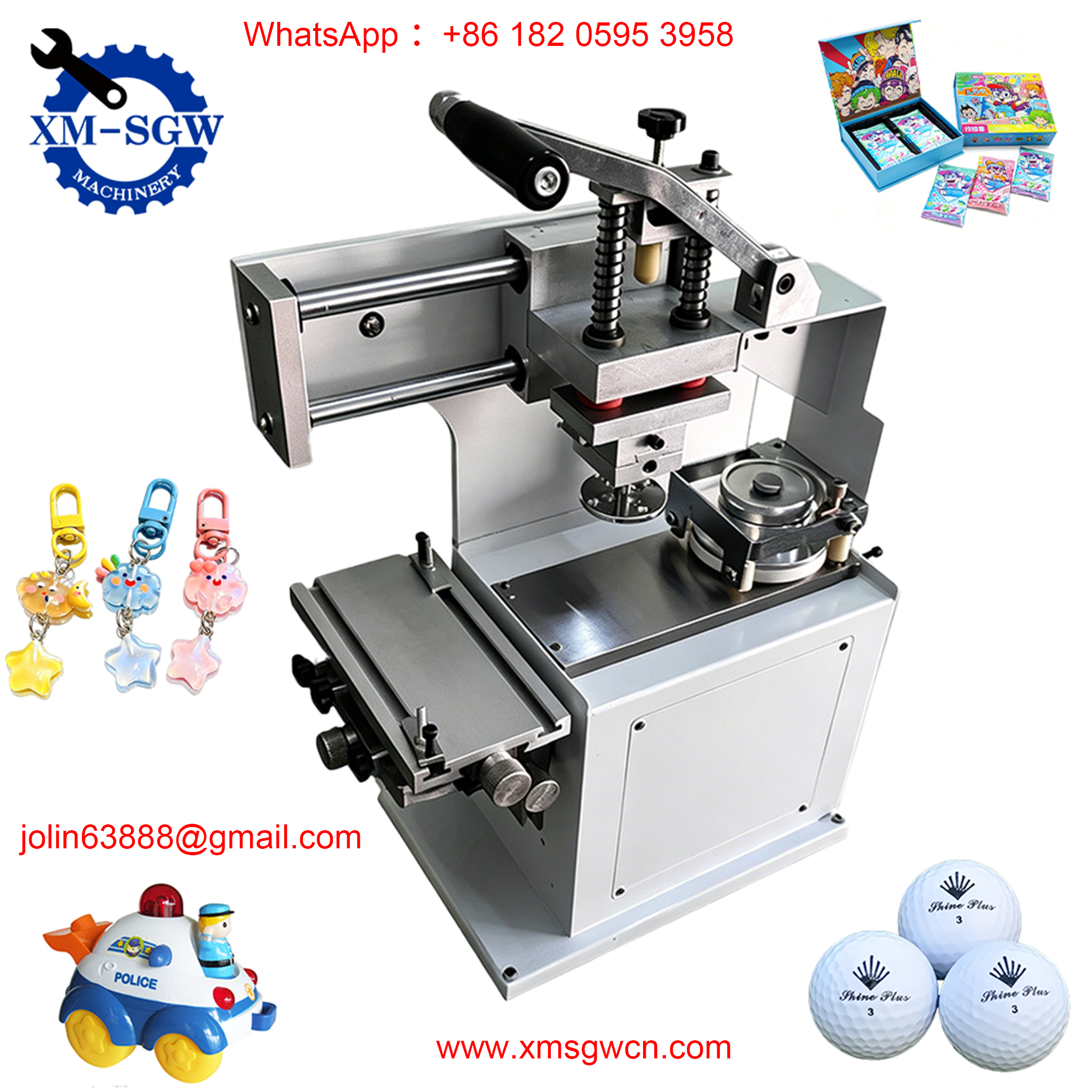
Manual Pad Printing Machines
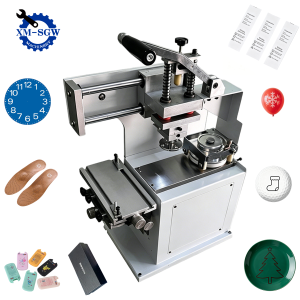
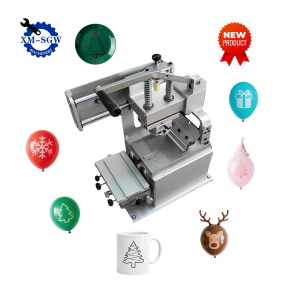
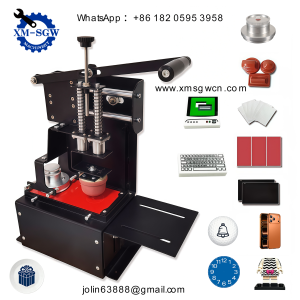
- Price range: $500 – $1,500
- Production capacity: 200-500 pieces per day
- Accuracy: ±0.1mm
- Best for: Prototyping, small-batch production, hobbyists, and very low-volume custom work
- Pros: Low initial investment, easy to operate, minimal maintenance
- Cons: Labor-intensive, slow production, inconsistent quality between operators
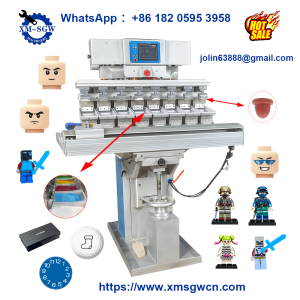
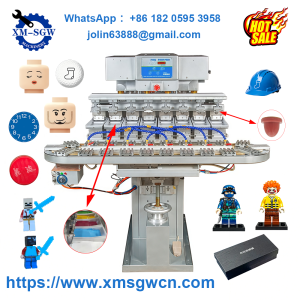
Semi-Automatic Pad Printing Machines
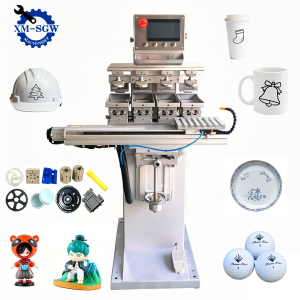
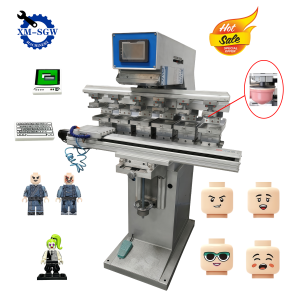
- Price range: $2,000 – $5,000
- Tabletop (1-2 colors): $5,000 – $20,000
- Industrial (1-6 colors): $20,000 – $75,000
- Production capacity: 500-2,000 pieces per hour
- Accuracy: ±0.02-0.05mm
- Best for: Small to medium businesses, promotional items, and industrial component marking
- Pros: Balances affordability and efficiency, consistent quality, fast setup for job changes
- Cons: Requires manual loading and unloading of parts
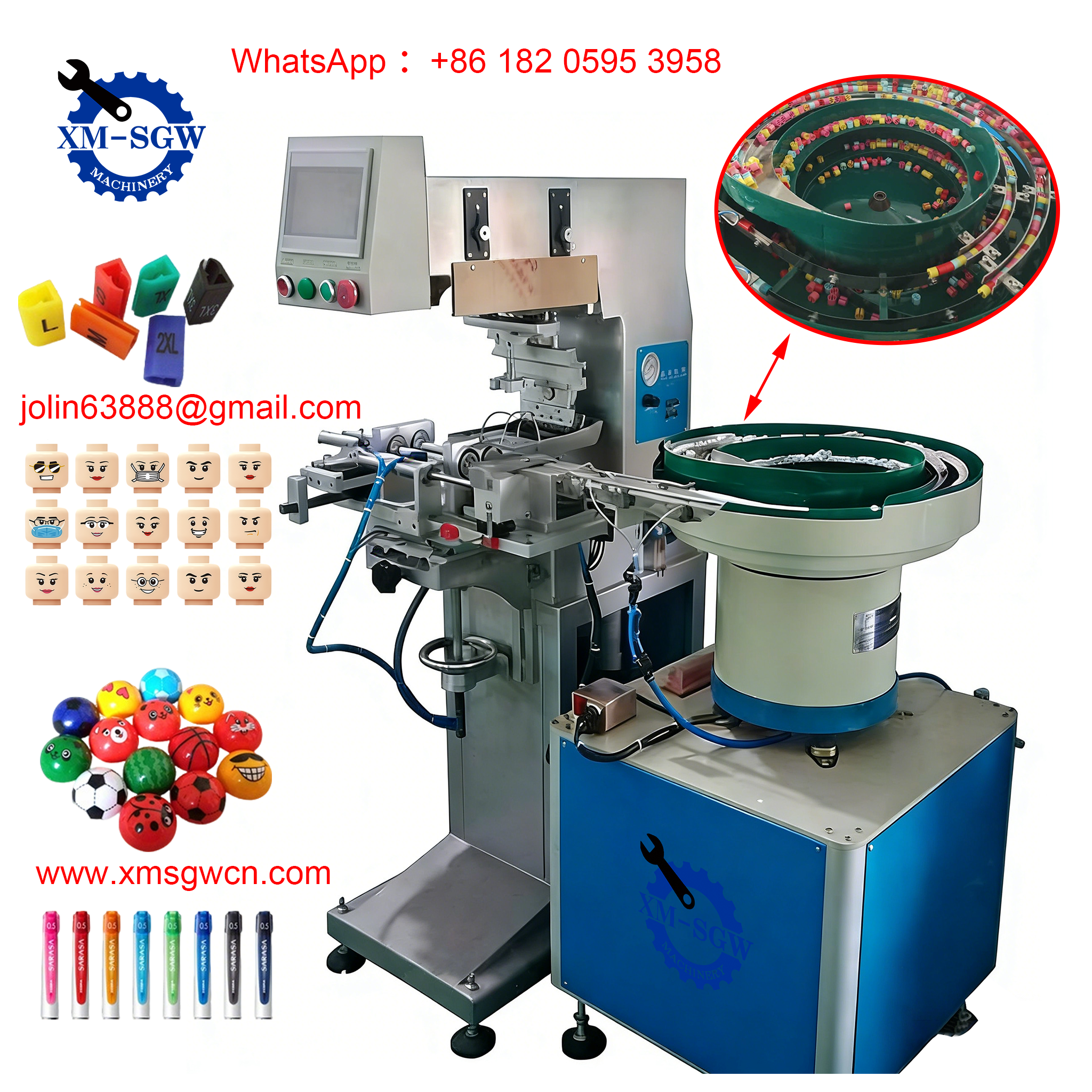
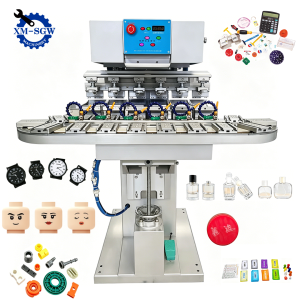
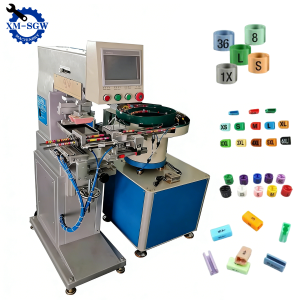
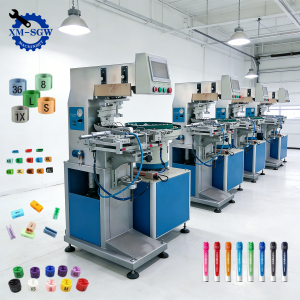
Fully Automatic Pad Printing Machines
- Price range: $5,000 – $150,000+
- Production capacity: 2,000-6,000 pieces per hour
- Accuracy: ±0.01mm
- Best for: High-volume mass production, integration into existing assembly lines
- Pros: 24/7 operation, minimal labor, maximum consistency, integrated quality control
- Cons: High initial investment, complex maintenance, longer setup times
2. By Configuration Type
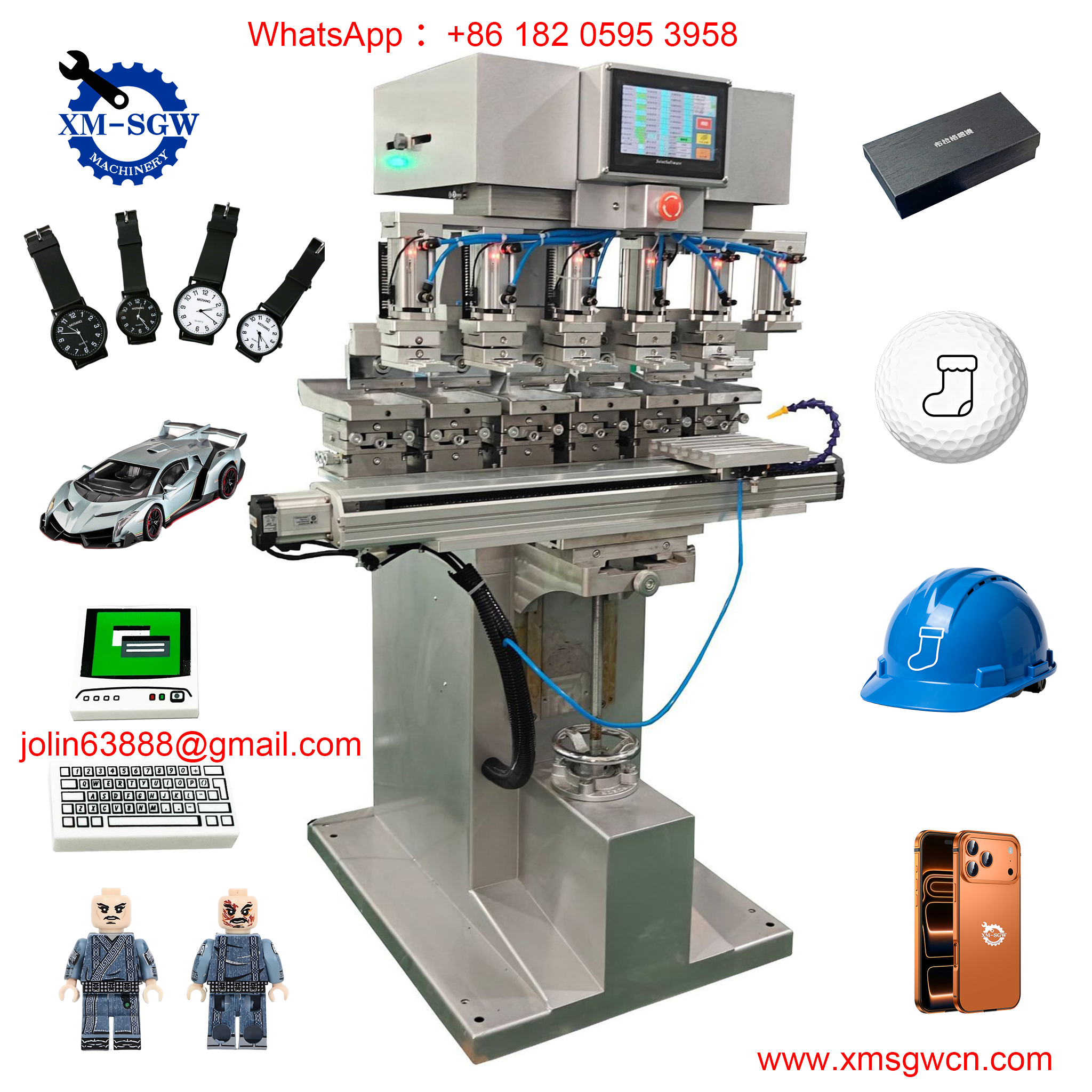
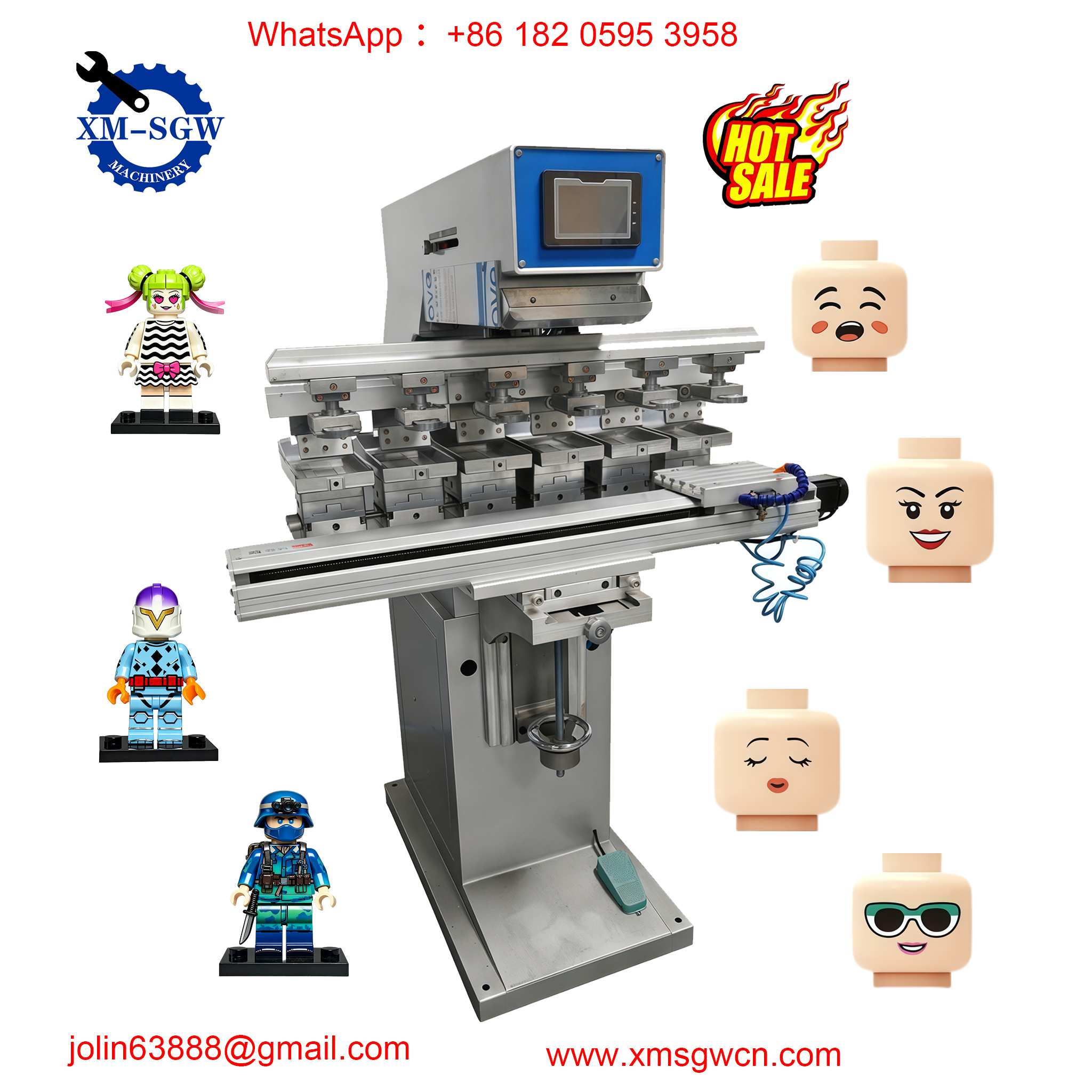
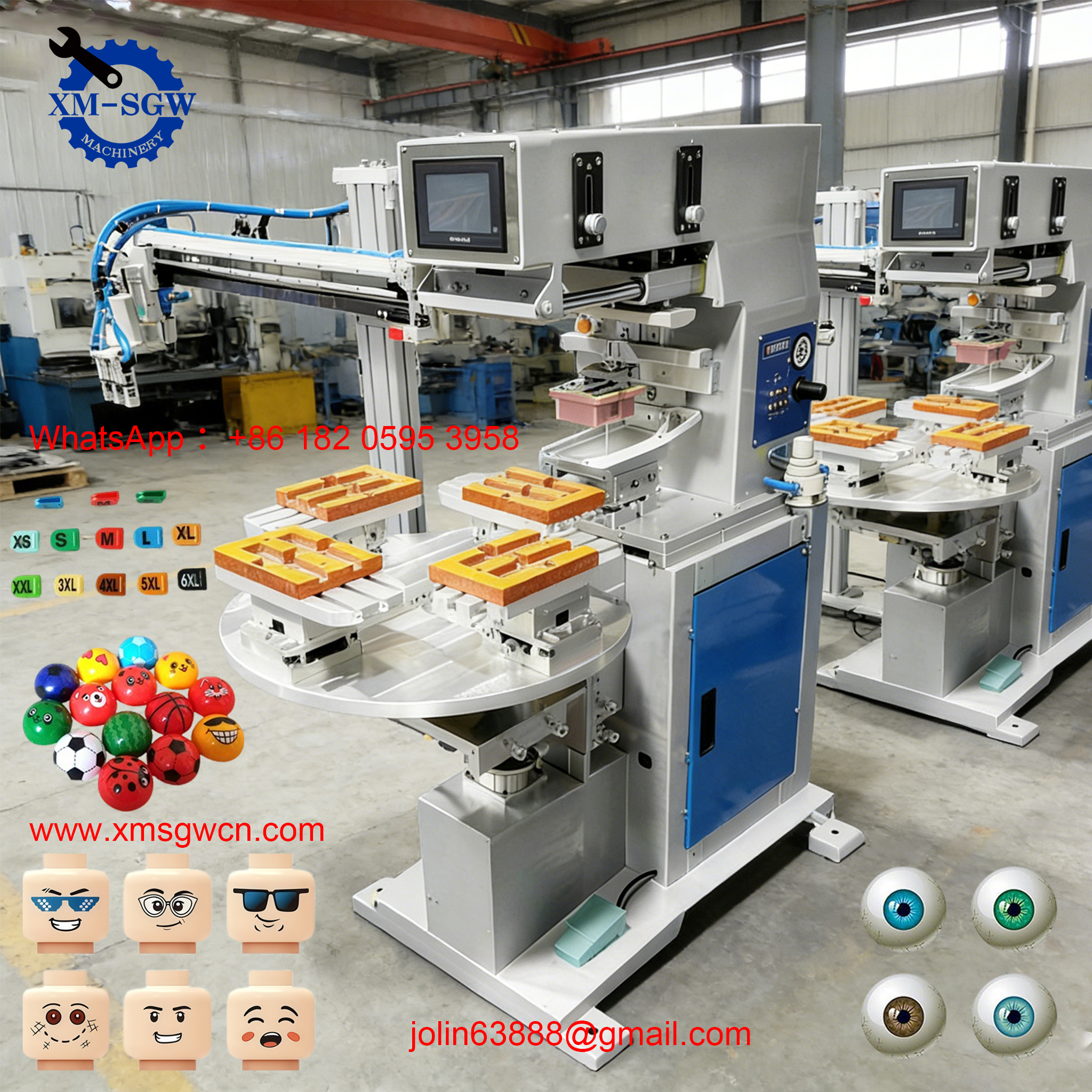
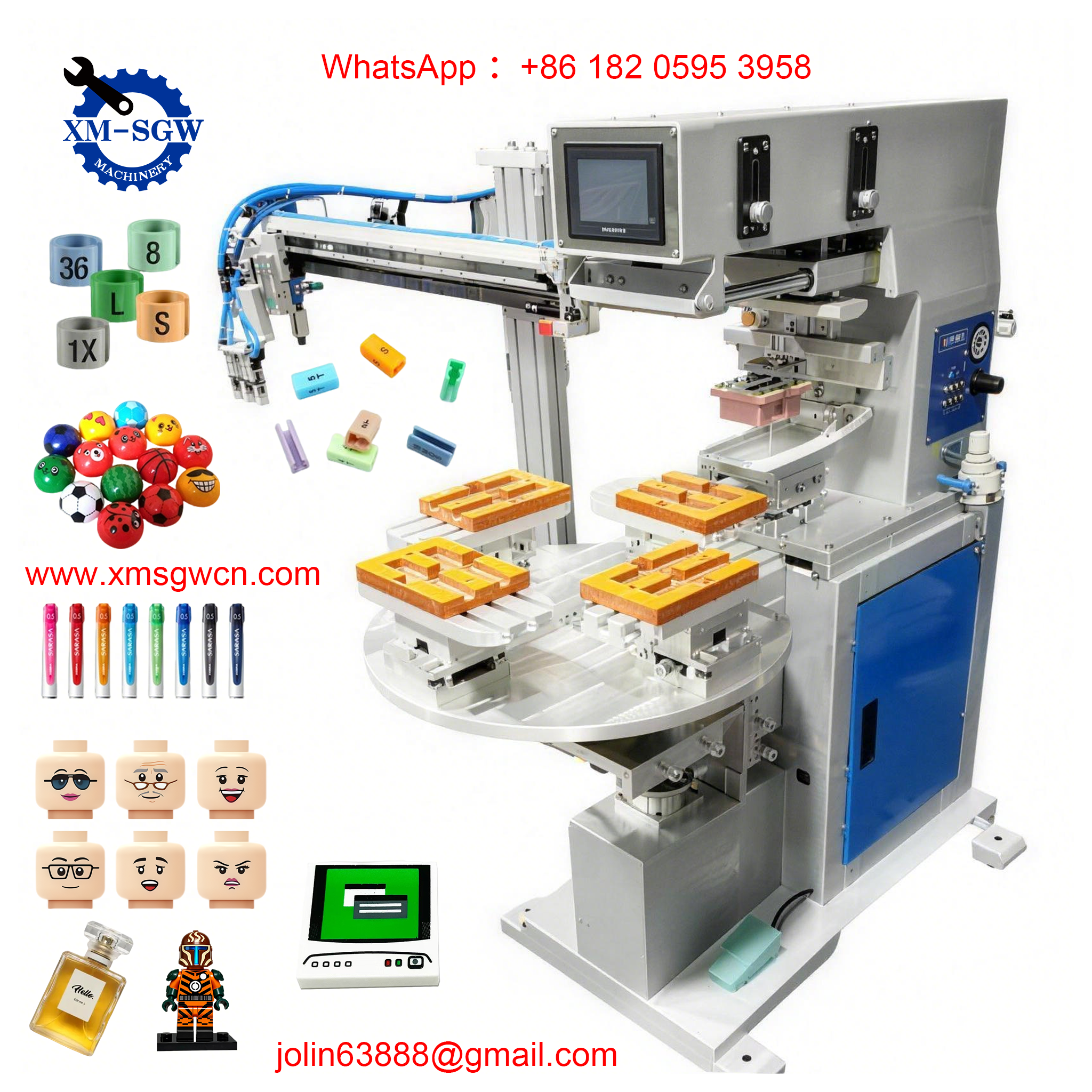
Rotary/Indexing Pad Printers
- Best for: Small parts that require multiple colors
- Features: Rotating carousel with multiple stations for loading, printing, and unloading
- Common configurations: 4-color, 6-color, and 8-color systems
Shuttle Pad Printers
- Best for: Larger parts or parts that require printing on multiple sides
- Features: The substrate moves between printing stations while the pads remain stationary
In-Line Conveyor Pad Printers
- Best for: Integration with automated production lines
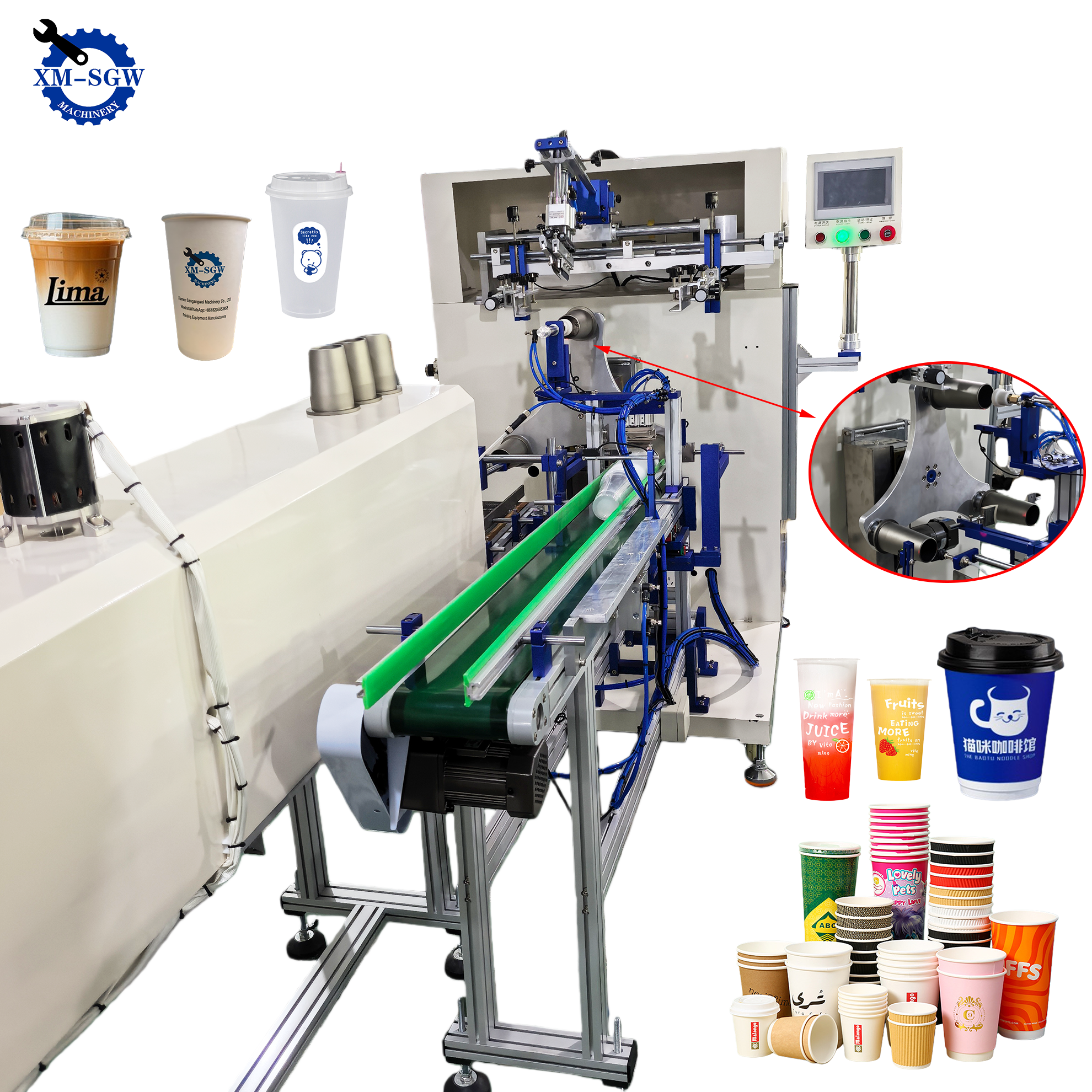
- Features: Continuous conveyor belt feeds parts through the printing process
Pad Printing vs. Other Printing Technologies 2026
Choosing between pad printing and competing technologies depends on your specific application requirements. Here’s a comprehensive comparison:
| Feature | Pad Printing | Screen Printing | Laser Marking | Digital Inkjet |
|---|---|---|---|---|
| Best for | Small parts, complex curves, multi-color markings | Large flat surfaces, bold designs | Permanent serialization, anti-counterfeiting | Full-color images, variable data |
| Surface capability | Excellent (any 3D shape) | Poor (flat or simple curves only) | Good (flat or slight curves) | Fair (flat or slight curves) |
| Print area | Small (typically <100mm) | Large | Small to medium | Medium to large |
| Accuracy | Excellent (±0.01mm) | Good (±0.1mm) | Excellent (±0.02mm) | Very Good (±0.05mm) |
| Color options | Full spectrum, multi-color | Full spectrum, multi-color | Limited (monochrome or heat-induced colors) | Full CMYK color |
| Durability | Excellent (with proper ink) | Excellent | Permanent (part of the substrate) | Good to Excellent |
| Setup time | Moderate (per design) | Long (per color) | Instant (digital) | Instant (digital) |
| Per-unit cost | Low for medium-high volumes | Low for high volumes | High for color applications | High for large volumes |
| Variable data | Not possible | Not possible | Excellent | Excellent |
Key Decision Points
- Choose pad printing if: You need to print on curved or irregular surfaces, require multi-color markings, or work with small, delicate parts.
- Choose screen printing if: You’re printing on large flat surfaces and need thick, opaque ink layers.
- Choose laser marking if: You need permanent, indelible marks for serialization or anti-counterfeiting, and don’t require color.
- Choose digital inkjet if: You need full-color photorealistic images or variable data printing for small batches.
2026 Pad Printing Machine Technology Trends
The pad printing industry is undergoing significant transformation in 2026, driven by Industry 4.0, sustainability demands, and the need for higher precision. Here are the most important trends:
1. Servo-Driven Technology Replaces Pneumatic
Electric servo-driven machines are rapidly replacing traditional pneumatic systems in industrial applications . Servo drives offer:
- Superior precision and repeatability
- Digital control over all printing parameters
- Lower energy consumption (up to 40% reduction)
- Cleaner operation (no compressed air required)
- Quieter performance
2. AI and Machine Learning Integration
- AI-powered visual inspection: Real-time defect detection with 99.7% accuracy, automatically rejecting defective parts
- Automatic registration: CCD cameras align parts and adjust printing position in real-time
- Predictive maintenance: Sensors monitor machine health and alert operators to potential issues before they cause downtime
3. Industry 4.0 and IoT Connectivity
Modern pad printing machines now feature full IoT integration, allowing:
- Remote monitoring and control from any device
- Real-time production data collection and analytics
- Integration with MES (Manufacturing Execution Systems)
- Automatic job scheduling and recipe management
4. Sustainability Innovations
- UV-curable inks: Zero VOC emissions, instant curing, and improved durability
- Closed-loop ink systems: Reduce ink waste by up to 35%
- Energy-efficient curing systems: LED UV curing uses 70% less energy than traditional mercury lamps
- Recyclable silicone pads and clichés
5. Specialized Machines for Regulated Industries
- Medical-grade machines: Designed for cleanroom environments, with FDA-compliant materials and documentation
- Food-contact machines: Meet strict EU and FDA regulations for printing on food packaging and utensils
- Automotive-grade machines: With enhanced durability and traceability features for automotive component marking
How to Choose the Right Pad Printing Machine for Your Business
Selecting the right pad printing machine is critical to your production efficiency and profitability. Follow this step-by-step guide:
Step 1: Define Your Application Requirements
- Substrate type: What materials will you be printing on? (Plastic, metal, glass, etc.)
- Surface geometry: Are your parts flat, curved, irregular, or recessed?
- Print size: What is the maximum image size you need to print?
- Regulatory requirements: Do you need to meet medical, food, or automotive industry standards?
Step 2: Determine Your Production Volume
- <500 pieces per day: Manual or entry-level semi-automatic machine
- 500-2,000 pieces per day: Mid-range semi-automatic machine
- 2,000-5,000 pieces per day: High-end semi-automatic or entry-level automatic machine
- >5,000 pieces per day: Fully automatic production line with robotic handling
Step 3: Evaluate Color Requirements
- Single color: Basic single-head machine
- 2-4 colors: Indexing rotary machine
- 5+ colors: Multi-station carousel machine with precise registration
Step 4: Compare Key Technical Specifications
- Registration accuracy: Look for ±0.05mm or better for industrial applications
- Print speed: Measured in cycles per hour
- Ink system: Sealed ink cups are preferred over open trays for reduced waste and better ink consistency
- Pad compatibility: Ensure the machine can accommodate the size and shape of pads you need
Step 5: Calculate Total Cost of Ownership (TCO)
Don’t just focus on the initial purchase price. Consider:
- Labor costs
- Consumable costs (ink, pads, clichés, solvents)
- Maintenance and repair expenses
- Energy consumption
- Training requirements
- Resale value
Step 6: Evaluate Supplier Support
- Does the supplier offer installation and training?
- Is technical support available 24/7?
- Do they stock spare parts locally?
- Do they provide ongoing service and maintenance contracts?
Essential Maintenance Tips
Proper maintenance is essential to keeping your pad printing machine running smoothly and extending its lifespan. Follow this schedule:
Daily Maintenance
- Clean silicone pads after each production run
- Wipe down ink cups and doctor blades
- Remove excess ink from the machine
- Check air pressure (for pneumatic machines)
- Inspect for any loose parts or leaks
Weekly Maintenance
- Lubricate moving parts according to the manufacturer’s specifications
- Clean the cliché holder and registration system
- Check and adjust belt tension
- Inspect electrical connections
Monthly Maintenance
- Deep clean the entire machine
- Replace worn squeegee blades and doctor blades
- Calibrate the registration system
- Back up machine settings and recipes
Annual Maintenance
- Have a professional technician perform a full inspection
- Replace major wear parts (bearings, seals, motors)
- Update machine software
- Perform a complete system calibration
Frequently Asked Questions
Q: How much does a good pad printing machine cost in 2026?
A: Entry-level manual machines start at around $1,500, semi-automatic machines range from $5,000 to $75,000, and fully automatic production lines start at $75,000 and can exceed $150,000 for complex industrial systems .
Q: What is the difference between pad printing and screen printing?
A: The main difference is that pad printing uses a flexible silicone pad to transfer images onto 3D surfaces, while screen printing uses a mesh stencil to print on flat surfaces. Pad printing is ideal for small, irregular parts, while screen printing is better for large flat items .
Q: How durable are pad printed marks?
A: With the right ink and curing process, pad printed marks can be extremely durable, resisting abrasion, chemicals, and UV exposure. They can last the entire lifetime of the product in most industrial applications.
Q: How long does it take to learn to operate a pad printing machine?
A: Basic operation of a semi-automatic machine can be learned in 1-2 days. However, mastering the process and achieving consistent, high-quality results takes several weeks of practice and experience.
Q: Is pad printing environmentally friendly?
A: Modern pad printing with UV-curable inks and closed-loop systems is much more environmentally friendly than traditional solvent-based processes. It produces zero VOC emissions and generates significantly less waste .
Conclusion
Pad printing remains an essential industrial technology in 2026, offering capabilities that no other printing or marking method can match. Its unique ability to print high-precision, multi-color images on virtually any surface geometry makes it indispensable for manufacturers across electronics, medical, automotive, and consumer goods industries.
The industry is evolving rapidly, with servo drives, AI, and IoT connectivity transforming how pad printing machines operate. These advances are improving precision, efficiency, and sustainability while reducing labor costs and downtime.
When choosing a pad printing machine, the most important factor is to match the machine’s capabilities to your specific application requirements. Consider your production volume, part geometry, color needs, and regulatory requirements before making a decision.
By investing in the right equipment and following proper maintenance procedures, you can ensure years of reliable, profitable operation for your marking business.
Ready to find the perfect pad printing machine for your business?
Download our free 2026 Pad Printing Machine Buyer’s Checklist to ensure you don’t miss any important features when evaluating machines. Or contact our team of experts today for a personalized recommendation based on your specific needs.