Introduction
Pad printing has become one of the most profitable value-added services for small print shops and product decoration businesses in 2026. Its unique ability to apply crisp, high-precision graphics onto irregular, curved, recessed, or textured surfaces fills a gap that screen printing and digital printing simply cannot cover — and it commands premium pricing with far less local competition.
For small business owners, the barrier to entry is surprisingly low. Compact, affordable pad printing systems fit on a standard workbench, require minimal floor space, and can be operated by 1–2 staff members. Whether you run an existing promotional product shop, a custom branding studio, or an industrial component fabrication business, adding pad printing opens doors to high-value B2B clients in cosmetics, electronics, automotive, and medical supplies.
In this guide, we break down everything small businesses need to build a profitable pad printing operation:
- Core machine types matched to small business volumes and budgets
- 3 tiered equipment packages with realistic 2026 pricing
- Critical selection criteria to avoid costly buying mistakes
- Space-optimized layout ideas and cost-saving strategies
- Common pitfalls new operators face and how to avoid them
Whether you’re launching a new niche service or expanding your existing decoration capabilities, this guide will help you choose the right equipment and start generating returns quickly.
Why Pad Printing Is a Smart Investment for Small Businesses
Unlike flat surface printing, pad printing targets a high-value, underserved market. For small operations, it delivers four key competitive advantages:
1. Premium pricing & strong profit margins
Because fewer shops offer high-quality irregular surface printing, pad printing typically generates gross margins of 50–75% — significantly higher than standard flat screen printing or digital printing. Clients will pay a premium for precise, durable markings on custom-shaped parts.
2. Extremely broad application scope
A single pad printer can serve dozens of industries and product categories:
- Promotional products: pens, keychains, lighters, drinkware lids
- Electronics: keypads, charger housings, connector parts
- Cosmetics & personal care: bottle caps, lipstick tubes, jar lids
- Industrial & automotive: small component marking, gauge faces, switch buttons
- Medical & laboratory: vials, syringes, instrument handles
3. Compact footprint & low space requirements
Most entry-level and mid-tier pad printers fit on a standard workbench. A complete single-station setup needs only 50–100 square feet, making it ideal for garages, small studios, or adding to an existing print shop without rearranging your entire floor plan.
4. Scalable, low-risk growth
You can start with a basic single-color manual unit to test the market, then upgrade to semi-automatic or multi-color equipment as order volume grows. There is no need to commit to a large upfront investment before you have proven customer demand.
Core Types of Pad Printing Machines for Small Operations
Pad printing machines are categorized by automation level and configuration. For small businesses, three configurations cover 99% of real-world use cases.
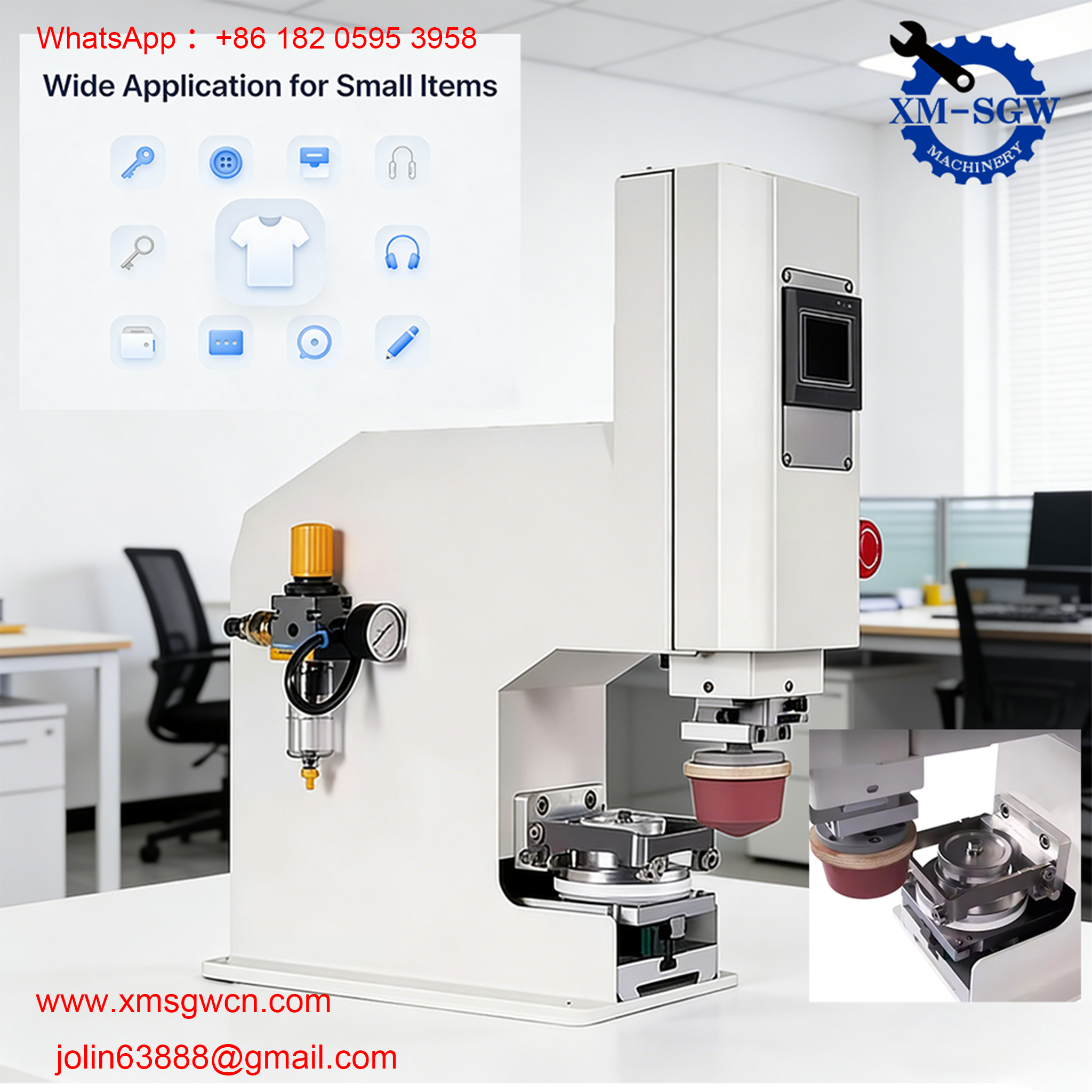
1. Manual Pad Printing Machines
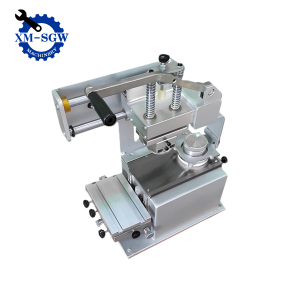
- Production speed: 500 – 1000 pieces per hour
- Registration accuracy: ±0.1mm
- Best for: Startups, prototyping, low-volume custom orders, and shops adding pad printing as a side service
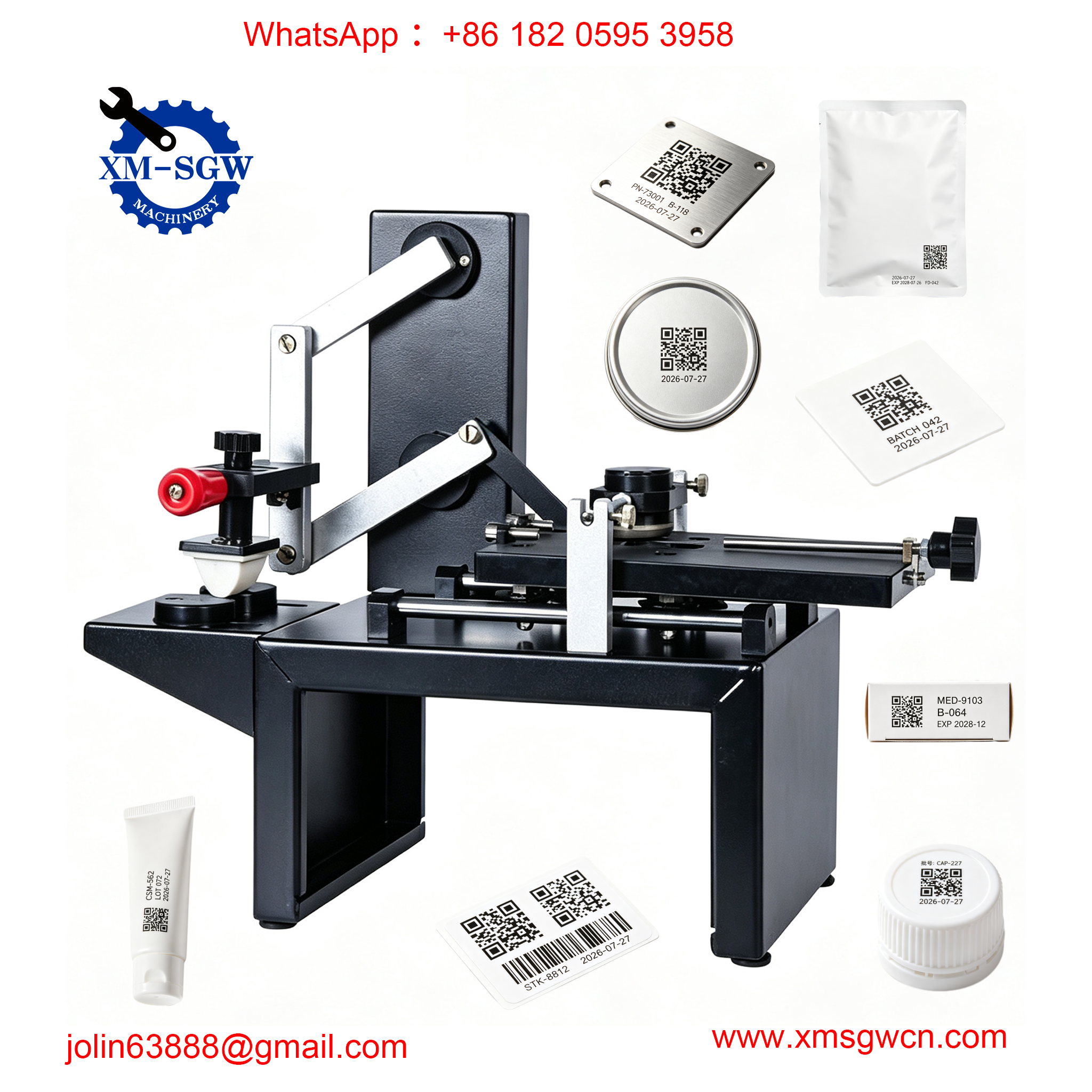
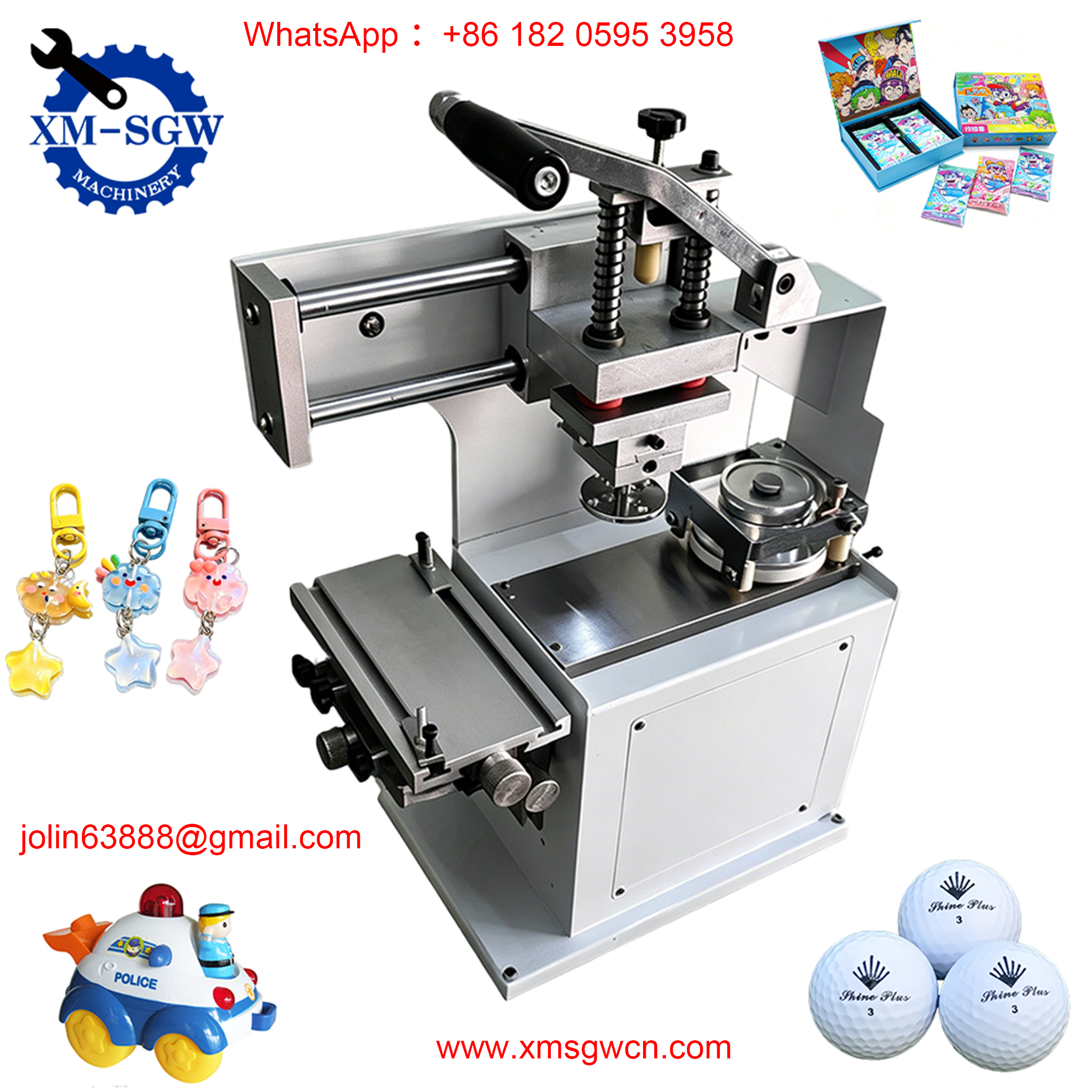
Manual units rely on the operator to actuate the print cycle. They are ultra-compact, require minimal power, and teach you the fundamentals of pad alignment, ink viscosity control, and part positioning. While not designed for bulk production, they are the lowest-risk way to enter the market and validate customer demand.
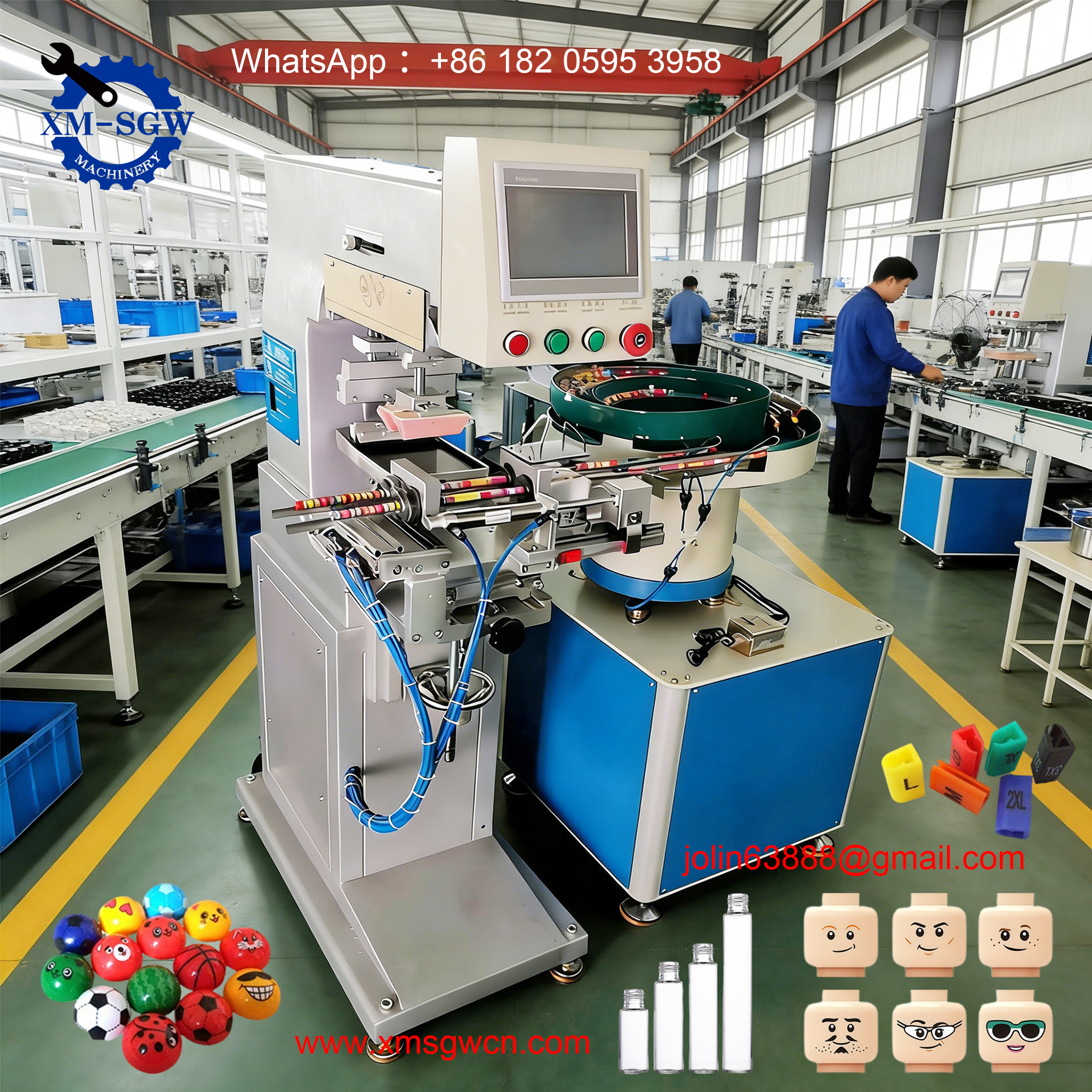
2. Semi-Automatic Pad Printing Machines
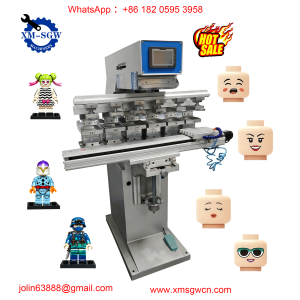
- Production speed: 1200 – 1,500 pieces per hour
- Registration accuracy: ±0.02 – 0.05mm
- Best for: Established small businesses with steady daily orders, promotional product companies, and industrial part decorators
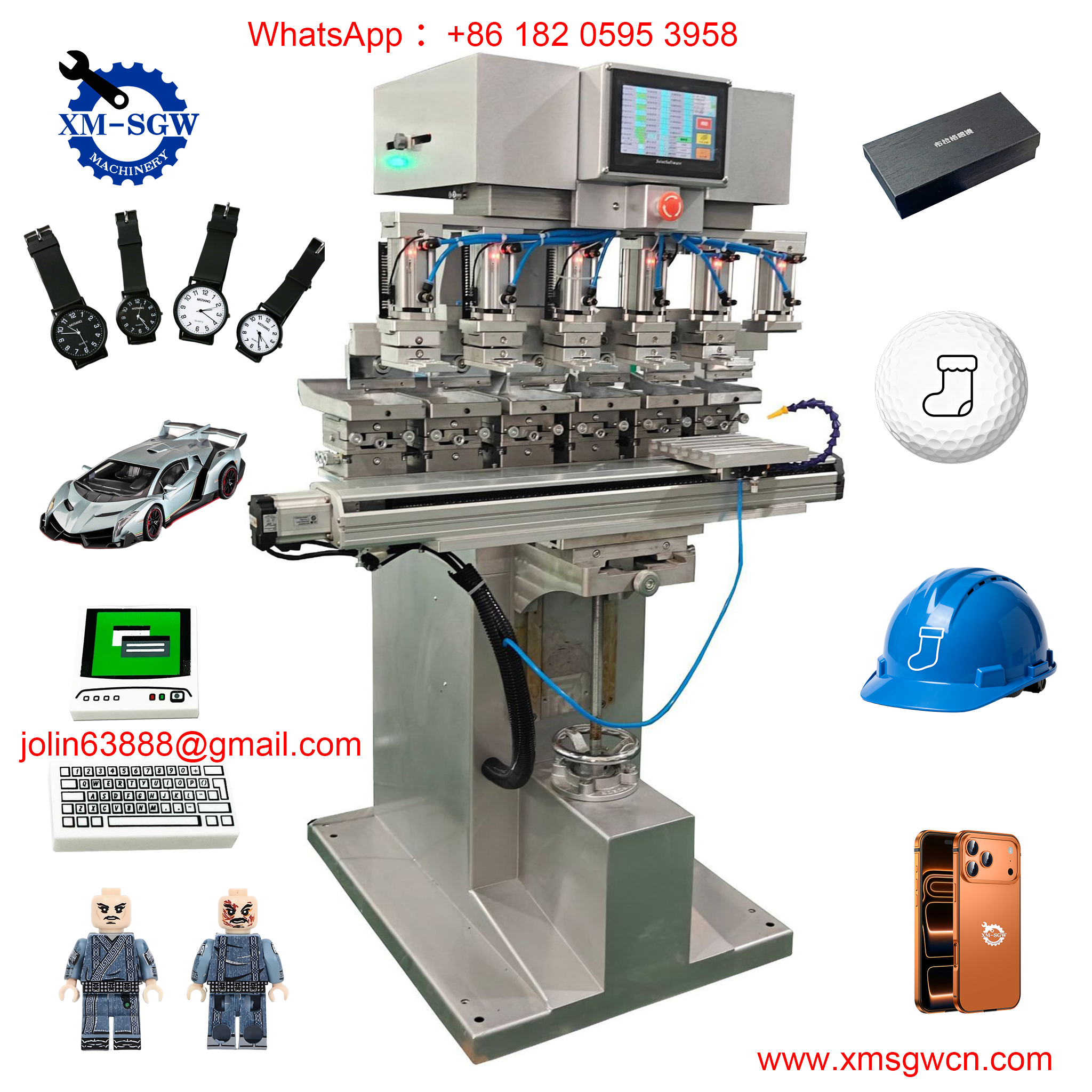
Semi-automatic machines use pneumatic or servo drives to execute the print cycle automatically; the operator only loads and unloads parts. This is the workhorse configuration for most small pad printing businesses, delivering consistent print quality, low defect rates, and reliable all-day performance. Servo-driven models, while slightly more expensive, offer better precision, quieter operation, and lower long-term maintenance.
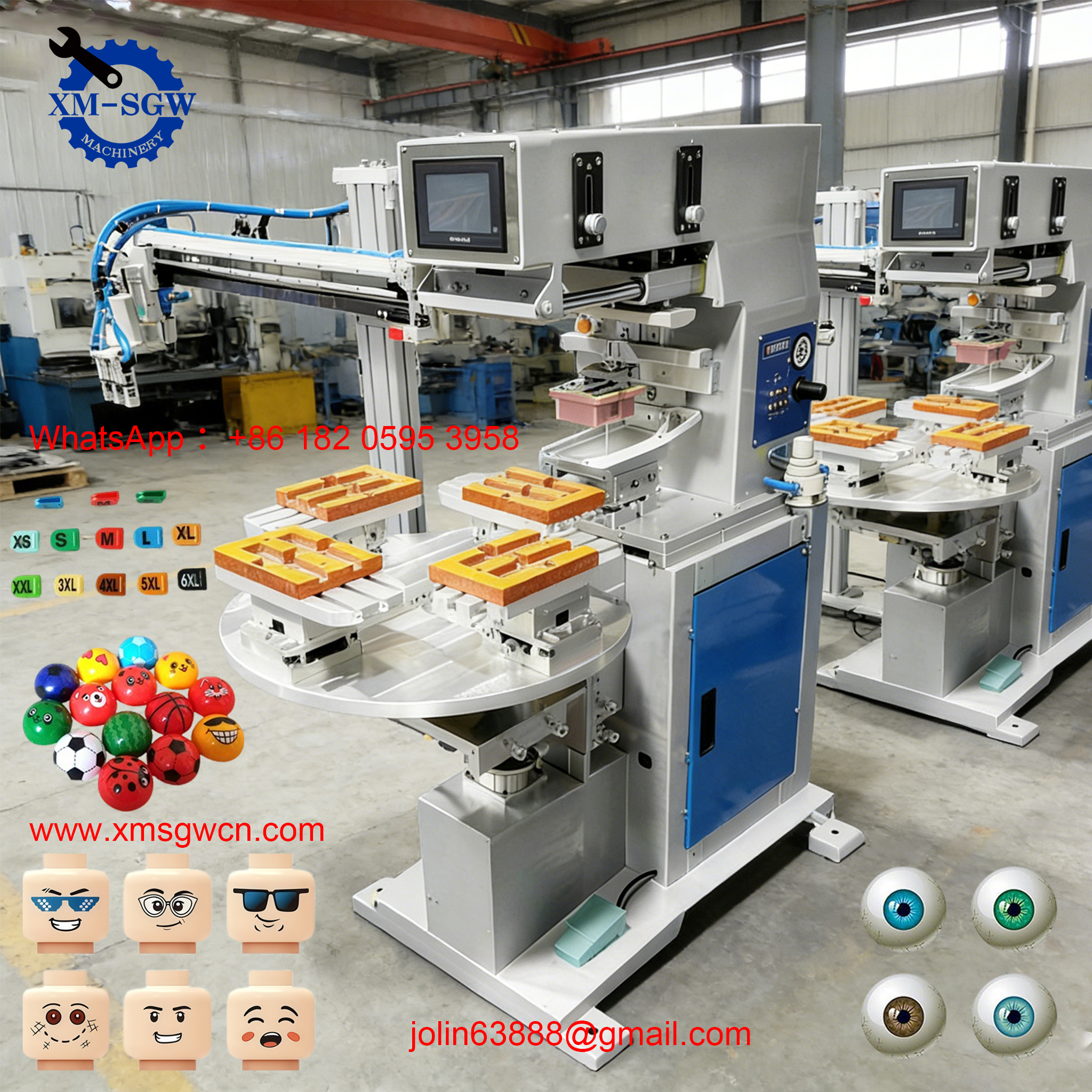
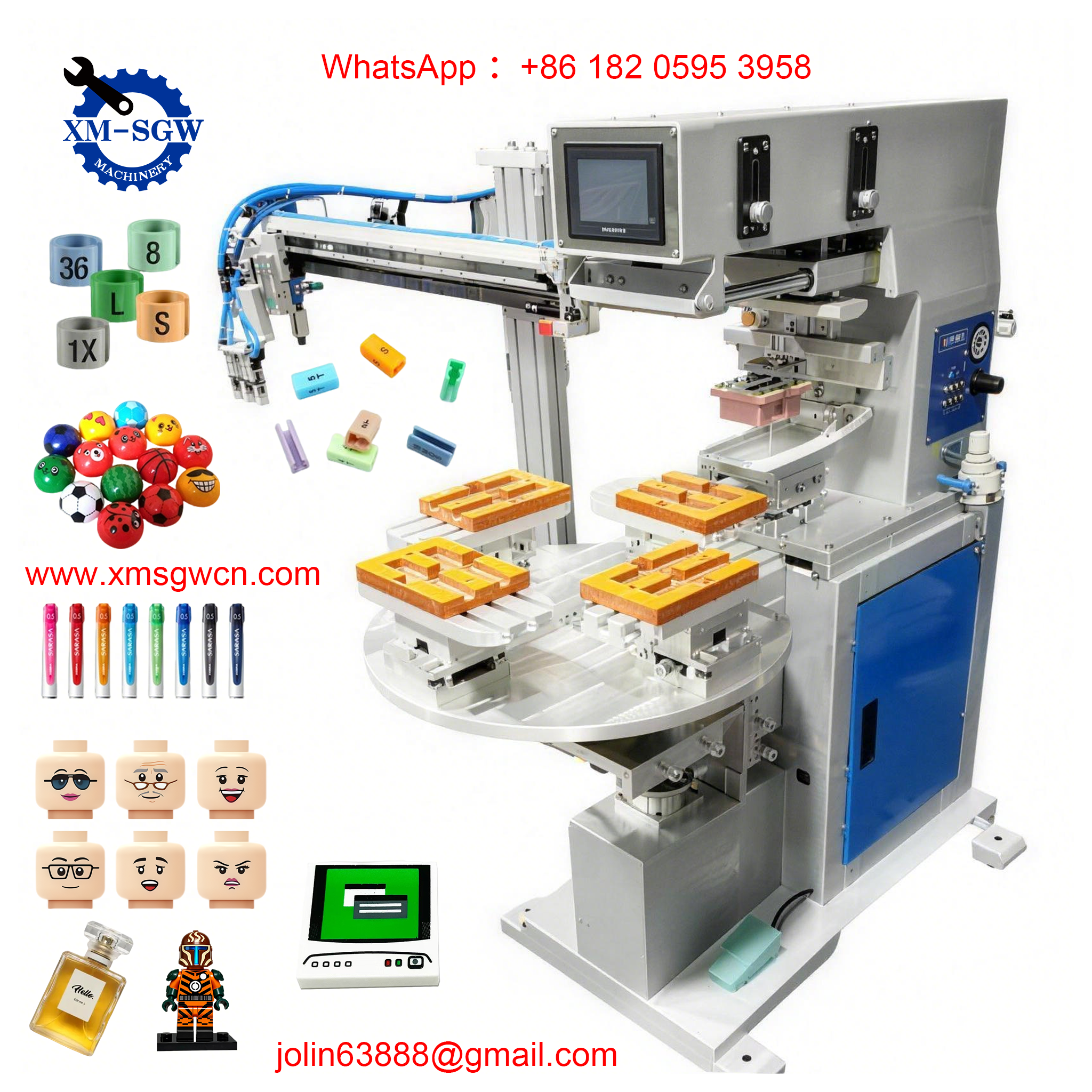
3. Rotary Indexing Multi-Color Pad Printers
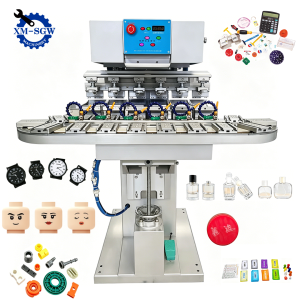
- Production speed: 1,500 – 2,500 pieces per hour
- Registration accuracy: ±0.01 – 0.03mm
- Best for: High-volume small shops, contract decorators, and businesses focused exclusively on pad printing
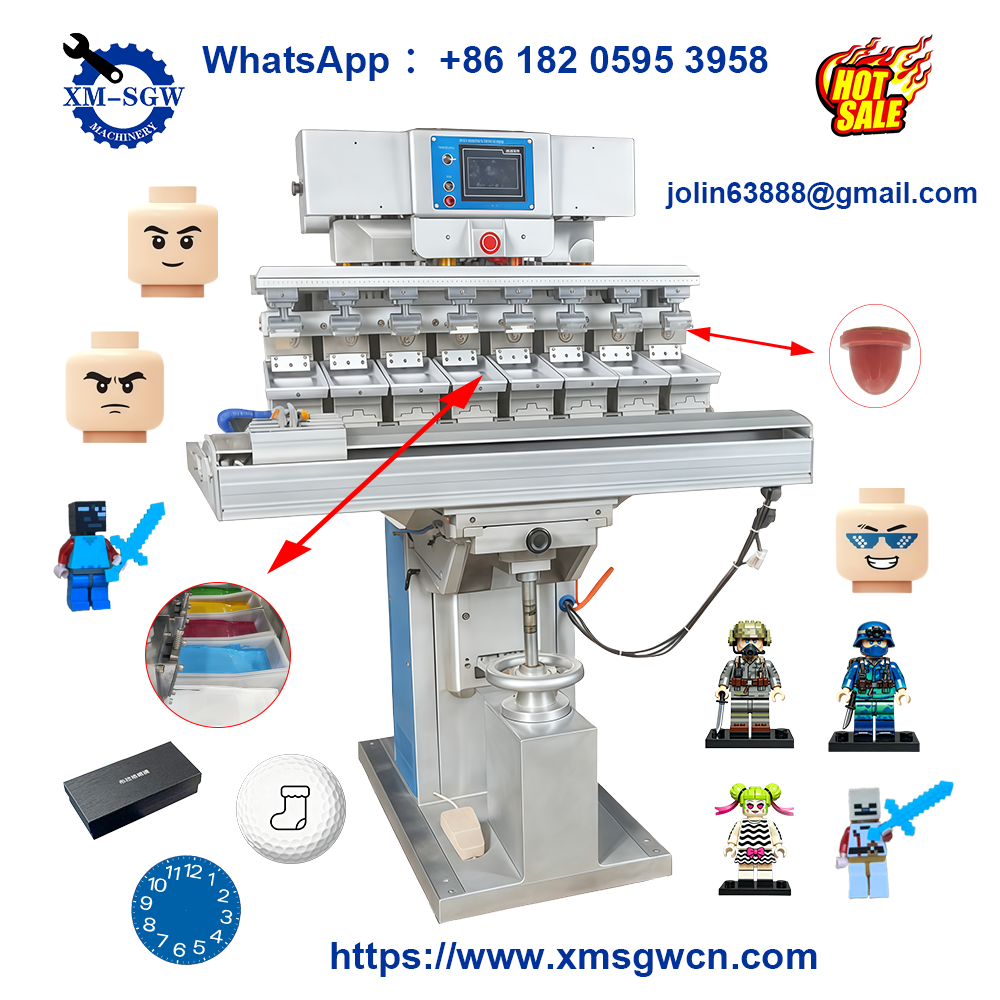
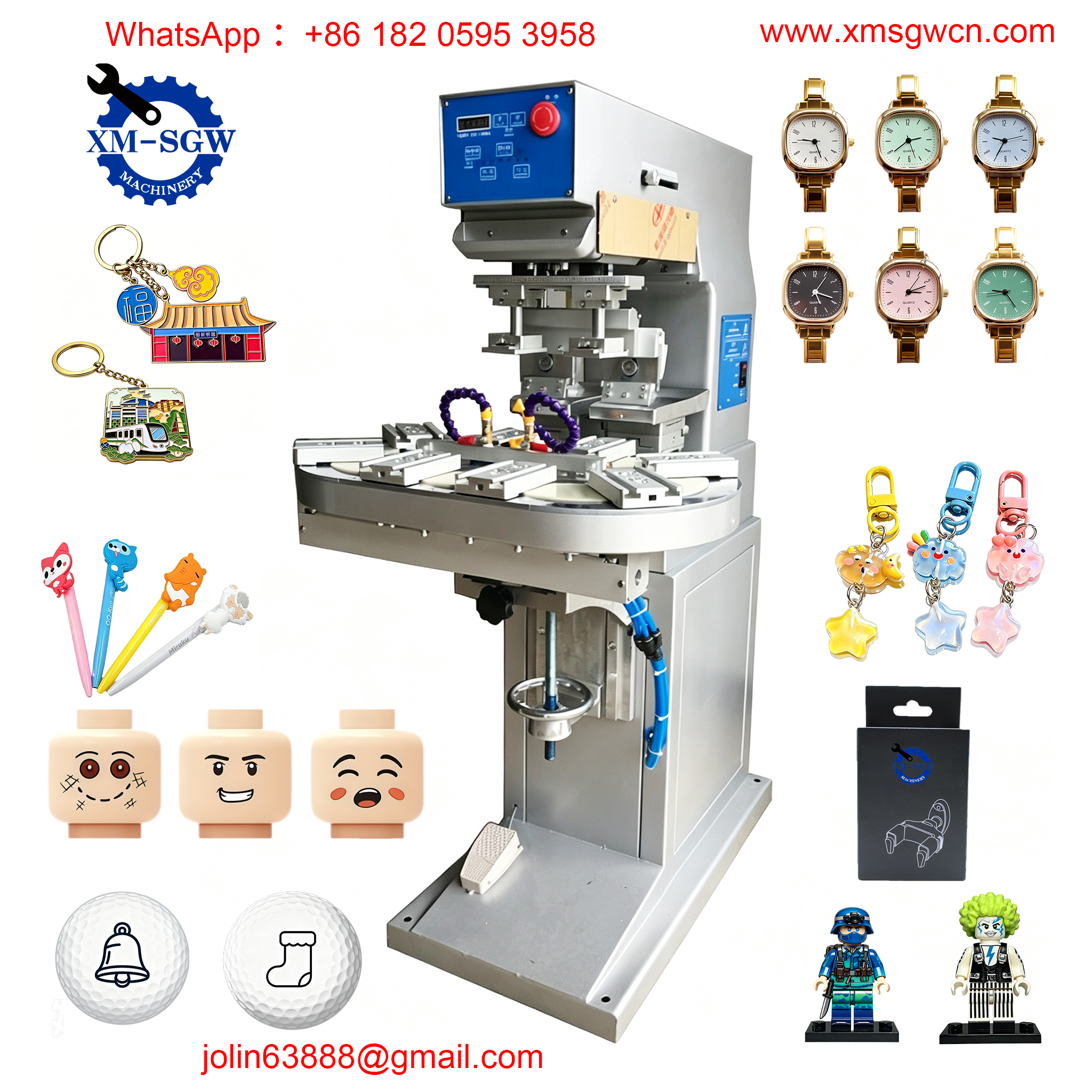
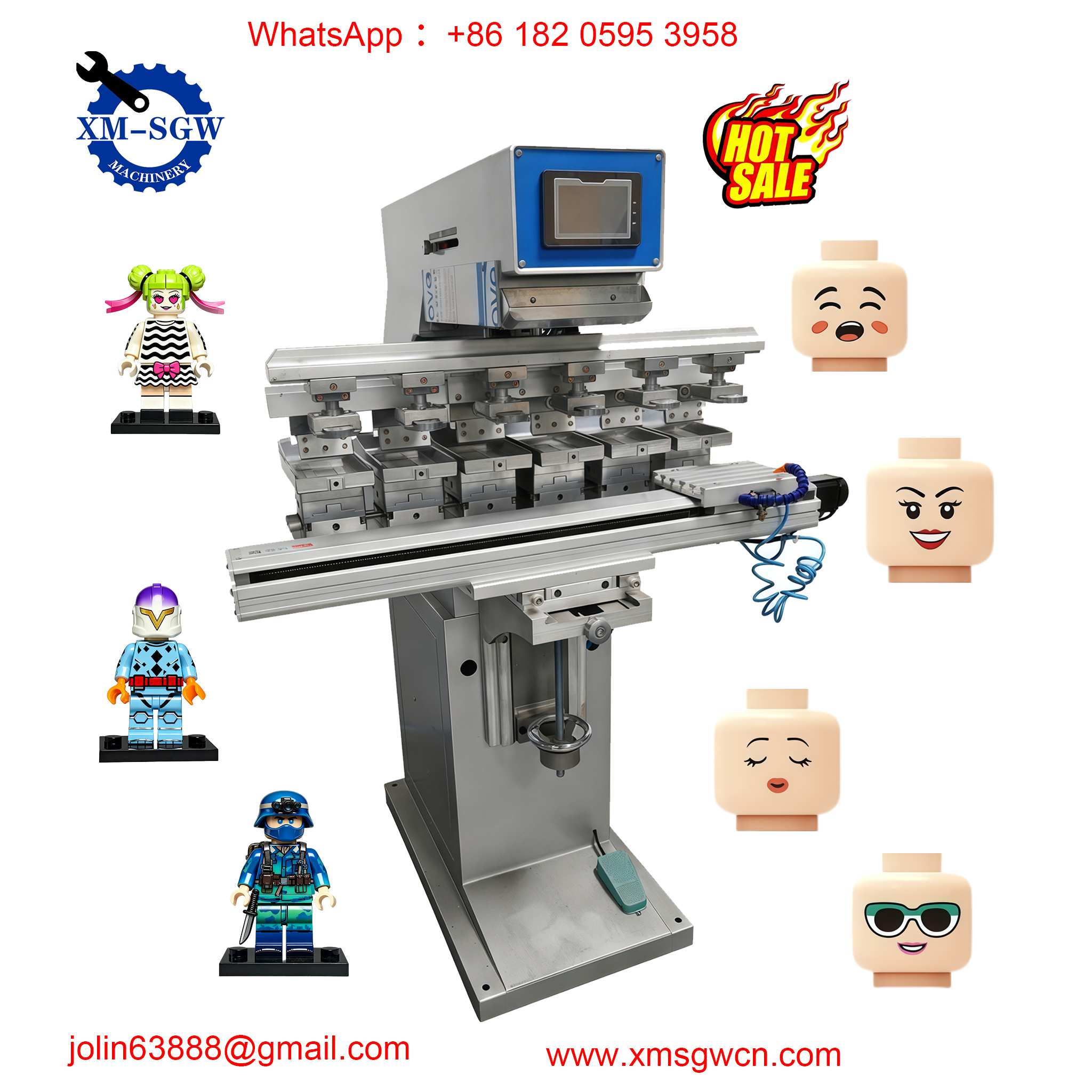
Multi-color indexing machines use a rotating carousel to move parts between print stations, enabling 2, 3, or 4-color registered printing in a single cycle. While a larger investment, they dramatically increase output for repeat bulk orders and allow you to compete for larger client accounts that single-color machines cannot win.
Recommended Equipment Packages for Small Businesses
Below are three field-proven equipment configurations for small businesses at different growth stages, including all supporting tools required for actual production.
1. Entry-Level Startup Package (1–2 Operators)
Best for: New market testing, existing print shops adding pad printing as a secondary service
| Category |
Equipment |
Purpose |
| Core printer |
Single-color manual pad printing machine |
Prints on small curved/irregular parts with up to 100mm print area |
| Pre-press |
Compact LED UV exposure unit + 10 steel cliché plates |
Produce custom printing plates in-house for fast turnaround |
| Ink & supplies |
Starter ink set, silicone pads in 3 durometers, cleaning solvents |
Core consumables for daily production |
| Curing |
Small UV curing box or forced-air drying cabinet |
Ensures full ink cure and long-term adhesion |
| Tooling |
Universal part fixtures for common product shapes |
Holds parts steady during the print cycle |
| Supporting |
Small clean air compressor (for pneumatic models) |
Powers machine operation |
2. Growing Small Business Package (2–3 Operators)
Best for: Businesses with consistent daily orders, promotional product suppliers, and industrial component decorators
| Category |
Equipment |
Purpose |
| Core printer |
Single-color servo-driven semi-automatic pad printer |
Commercial-grade precision (±0.05mm) and reliable all-day performance |
| Pre-press |
Vacuum LED exposure unit + plate etching supplies + 30+ cliché plates |
Fast, high-precision plate making for frequent job changes |
| Pre-treatment |
Benchtop flame treatment gun or corona treater |
Improves ink adhesion on low-surface-energy plastics (PP, PE) |
| Curing |
Desktop UV LED curing conveyor |
Inline fast curing matched to production speed |
| Tooling |
Custom jigs for your top 5 product SKUs + assorted silicone pads |
Optimized production for your core product range |
| Supporting |
Clean air compressor, pad cleaning station, basic spare parts kit |
Minimizes downtime and keeps daily operations smooth |
3. High-Volume Small Shop Package (3–5 Operators)
Best for: Contract printers, high-volume promotional product companies, and dedicated pad printing operation
| Category |
Equipment |
Purpose |
| Core printer |
2-color rotary indexing pad printing machine |
Multi-color registered printing with carousel indexing for bulk orders |
| Pre-press |
High-precision exposure unit + automatic plate coater |
Sharp, repeatable plates for fine detail and tight multi-color registration |
| Pre-treatment |
In-line flame treatment station |
Automated, consistent pre-treatment for batch production |
| Curing |
Industrial UV curing conveyor |
Full production-speed curing with adjustable power |
| Automation |
Part loading aids + rotary worktable |
Reduces operator fatigue and boosts throughput |
| Supporting |
Bulk ink supply system, full spare parts kit, fume extraction system |
Safe, efficient long-run production |
Key Selection Criteria for Small Business Buyers
Not all pad printers are built the same. Prioritize these factors when comparing models to avoid costly mistakes:
1. Print area & part size range
Confirm the machine’s maximum print diameter and stroke length matches the products you plan to decorate. Most small business work falls in the 10–120mm print range; buying a machine with excessive capacity wastes money and floor space.
2. Ink system type
Sealed ink cup systems are strongly recommended for small businesses. They reduce ink waste by 30–40% compared to open ink trays, minimize solvent evaporation, and require less frequent ink adjustment during production runs.
3. Ease of maintenance
Small teams rarely have dedicated technical staff. Look for machines with simple mechanical designs, readily available wear parts, and clear documentation. Avoid overly complex proprietary systems that require factory service for basic repairs.
4. Total cost of ownership
Look beyond the sticker price. Calculate ongoing costs for clichés, silicone pads, ink, and replacement parts. A slightly more expensive machine with low consumable costs will almost always deliver better long-term value than a cheap unit with high ongoing expenses.
5. Supplier support & spare parts availability
Fast access to spare parts and technical support is critical for small businesses — a single day of downtime can cost you a client. Prioritize suppliers that stock common wear parts locally and offer responsive after-sales support.
Space-Saving Layout & Cost-Saving Tips
Small businesses operate with limited space and budget. Use these strategies to maximize efficiency without cutting corners on quality:
-
Follow a linear workflow
Arrange your station in production order: Pre-press → Printing → Curing → Inspection → Packaging. This minimizes back-and-forth movement and speeds up every order.
-
Use vertical storage
Mount pad and fixture racks on walls, store consumables on shelving units, and keep only active tools on the workbench. Floor space should be reserved for production, not storage.
-
Buy core equipment new, consumables in bulk
Invest in a new printer where precision matters most. Purchase ink, clichés, and cleaning supplies in larger quantities to reduce per-unit costs by 20–30%.
-
Start with universal fixtures, add custom ones later
You don’t need custom jigs for every product on day one. Start with adjustable universal fixtures, then order custom tooling only when you have recurring orders for a specific part.
-
Extend pad and cliché lifespan
Proper cleaning and storage will double or triple the life of silicone pads and printing plates. Establish a simple daily cleaning routine to reduce consumable costs dramatically.
Common Mistakes Small Businesses Should Avoid
-
Buying the cheapest machine without verifying precision
Low-cost machines often have poor registration consistency, leading to high defect rates and rework that eat into profits. What you save on the purchase you will lose many times over in wasted materials and lost clients.
-
Skipping surface pre-treatment
Most plastics (especially PP and PE) require flame or corona treatment before printing for reliable ink adhesion. Skipping this step leads to prints that scratch off easily — and damaged business reputation.
-
Taking multi-color orders before mastering single-color
Multi-color pad printing requires precise setup and operator experience. Master single-color printing, ink control, and part positioning first before accepting registered multi-color jobs.
-
Ignoring ventilation and safety
Solvent-based inks release fumes. Even small setups need basic exhaust ventilation and personal protective equipment. A single workplace safety incident can shut down a small business.
-
Overbuying capacity too early
Do not start with a multi-color automatic machine unless you already have confirmed bulk orders. Most small businesses are far better off starting with a quality semi-automatic unit and upgrading when volume justifies it.
Frequently Asked Questions
Q: How much does it cost to start a small pad printing business?
A: A functional entry-level setup with a manual machine and essential supplies costs $3,000–$6,000. A professional semi-automatic setup for steady daily production typically ranges from $9,000 to $18,000 total.
Q: Is pad printing profitable for small businesses?
A: Yes. Gross margins for custom pad printing typically range from 50% to 75%, higher than most flat screen printing services. The niche market for irregular surface printing means less local competition and stronger pricing power.
Q: What’s the difference between pad printing and curved screen printing?
A: Pad printing uses a flexible silicone pad to transfer ink onto highly irregular, textured, or recessed surfaces. Curved screen printing works best on smooth cylindrical shapes with larger graphics. Pad printing offers higher precision for small images on complex shapes; curved screen printing is faster for larger graphics on simple round parts.
Q: How long does it take to learn to operate a pad printing machine?
A: Basic operation of a semi-automatic machine can be learned in 1–3 days. Mastering consistent multi-color registration and troubleshooting adhesion issues usually takes 2–4 weeks of regular practice.
Q: How much space do I need for a small pad printing setup?
A: A single-station manual or semi-automatic setup fits on a standard 6-foot workbench, requiring roughly 50–100 square feet total including supply storage. A small multi-color production line typically needs 150–300 square feet.
Conclusion
Pad printing is one of the highest-ROI equipment investments a small print or product decoration business can make in 2026. Its low entry cost, compact footprint, and premium pricing power make it an ideal way to diversify your service offering and attract higher-value clients.
For most small businesses, the best path forward is to start with a reliable single-color semi-automatic machine, build your customer base and operator skills, then expand to multi-color capacity when order volume justifies it. By choosing equipment matched to your current needs and scaling gradually, you can build a profitable pad printing operation with minimal upfront risk.