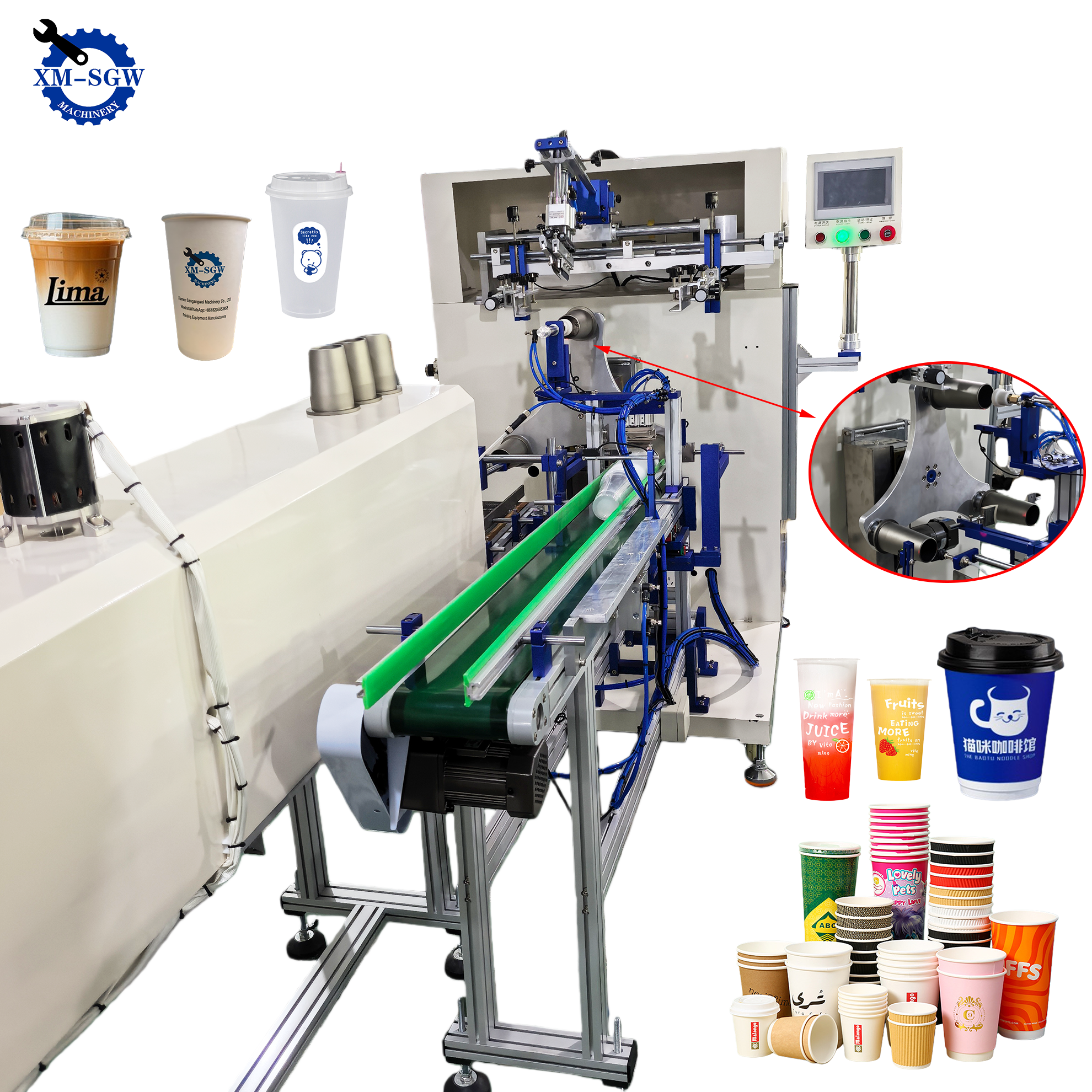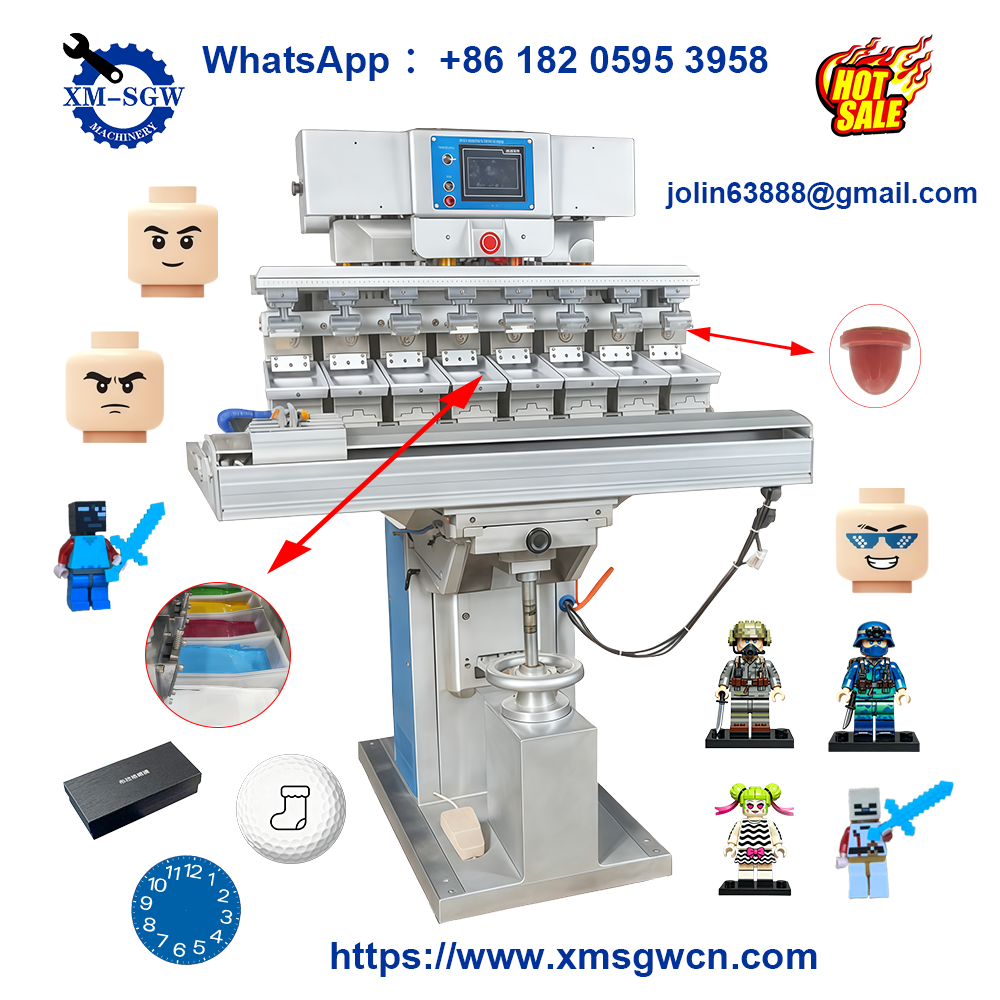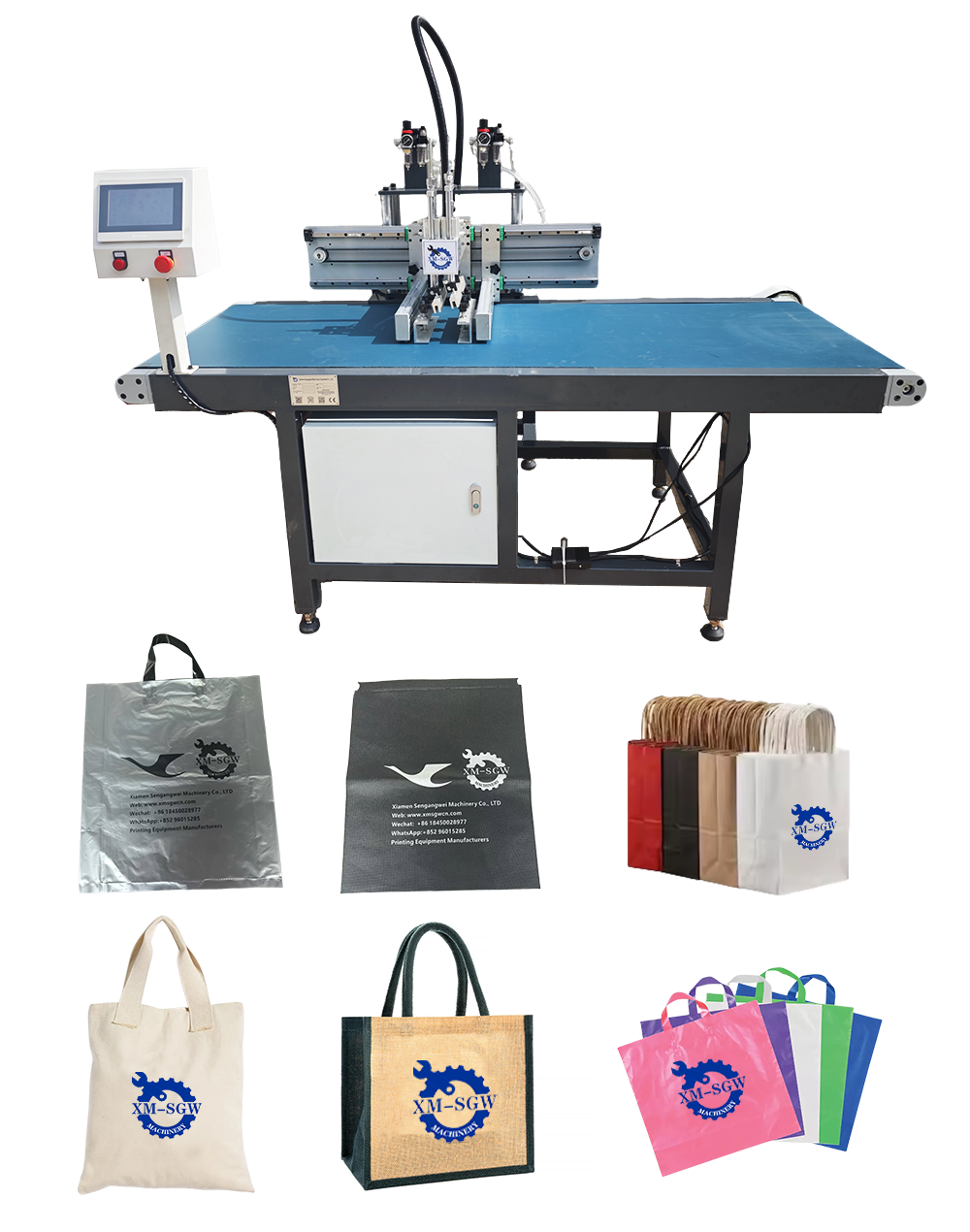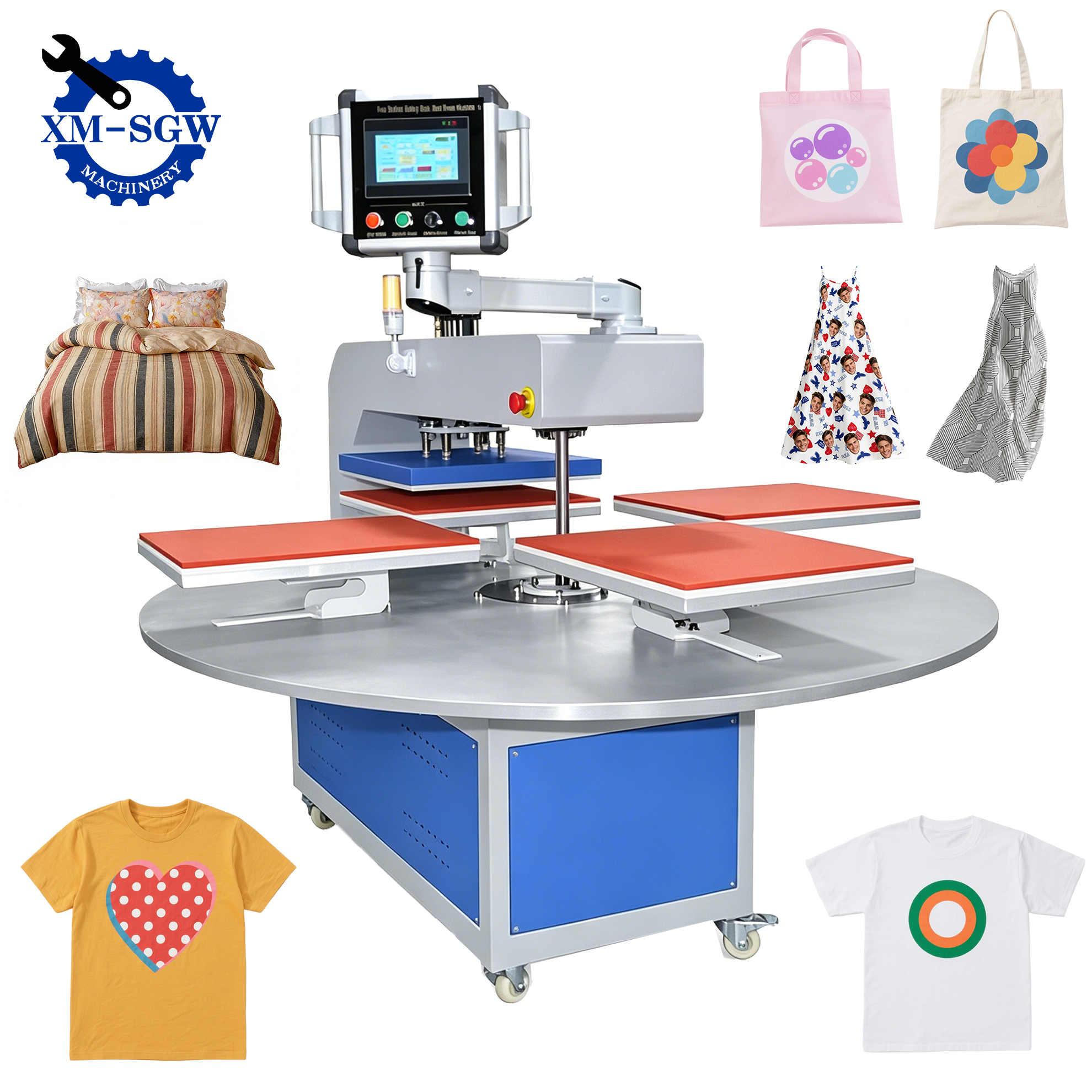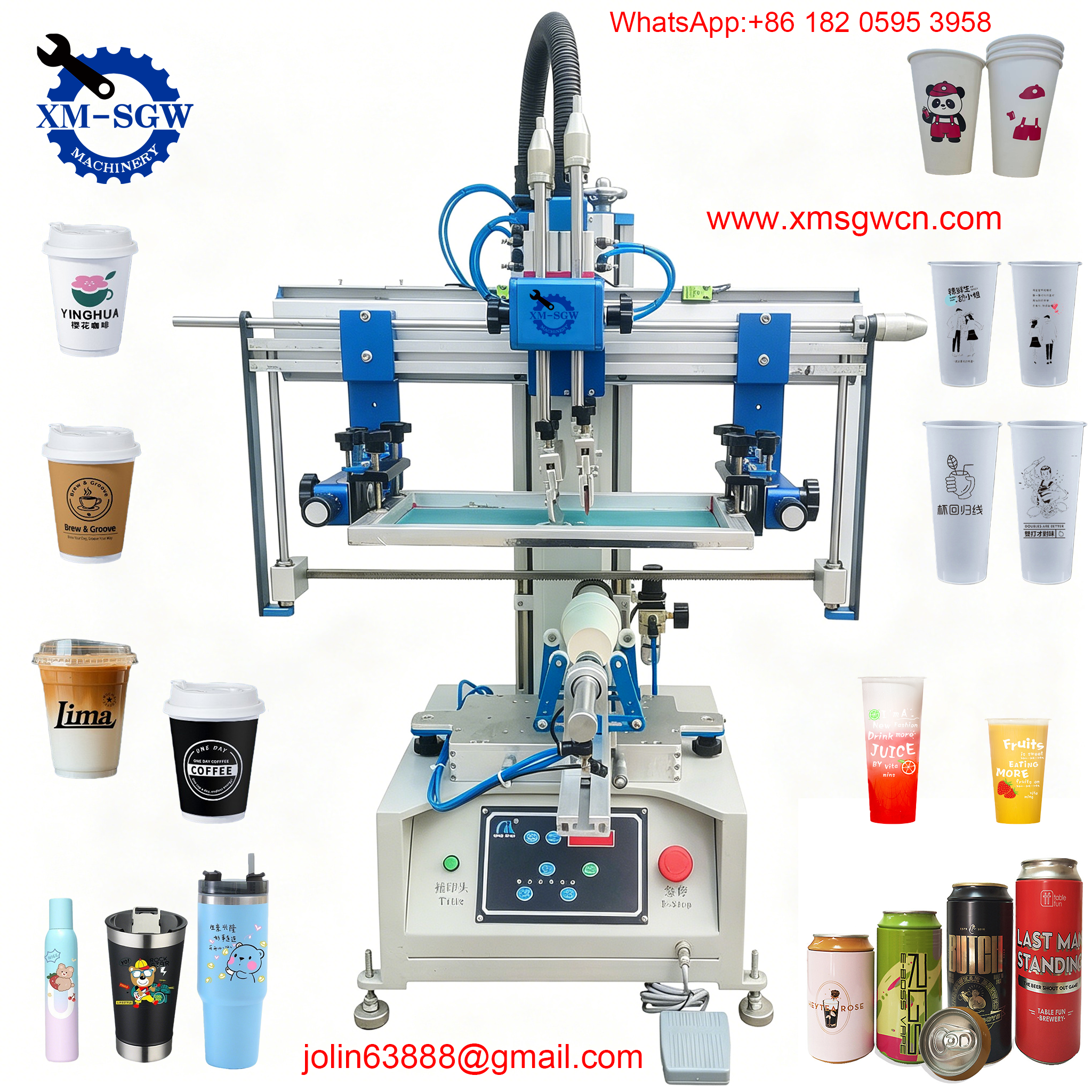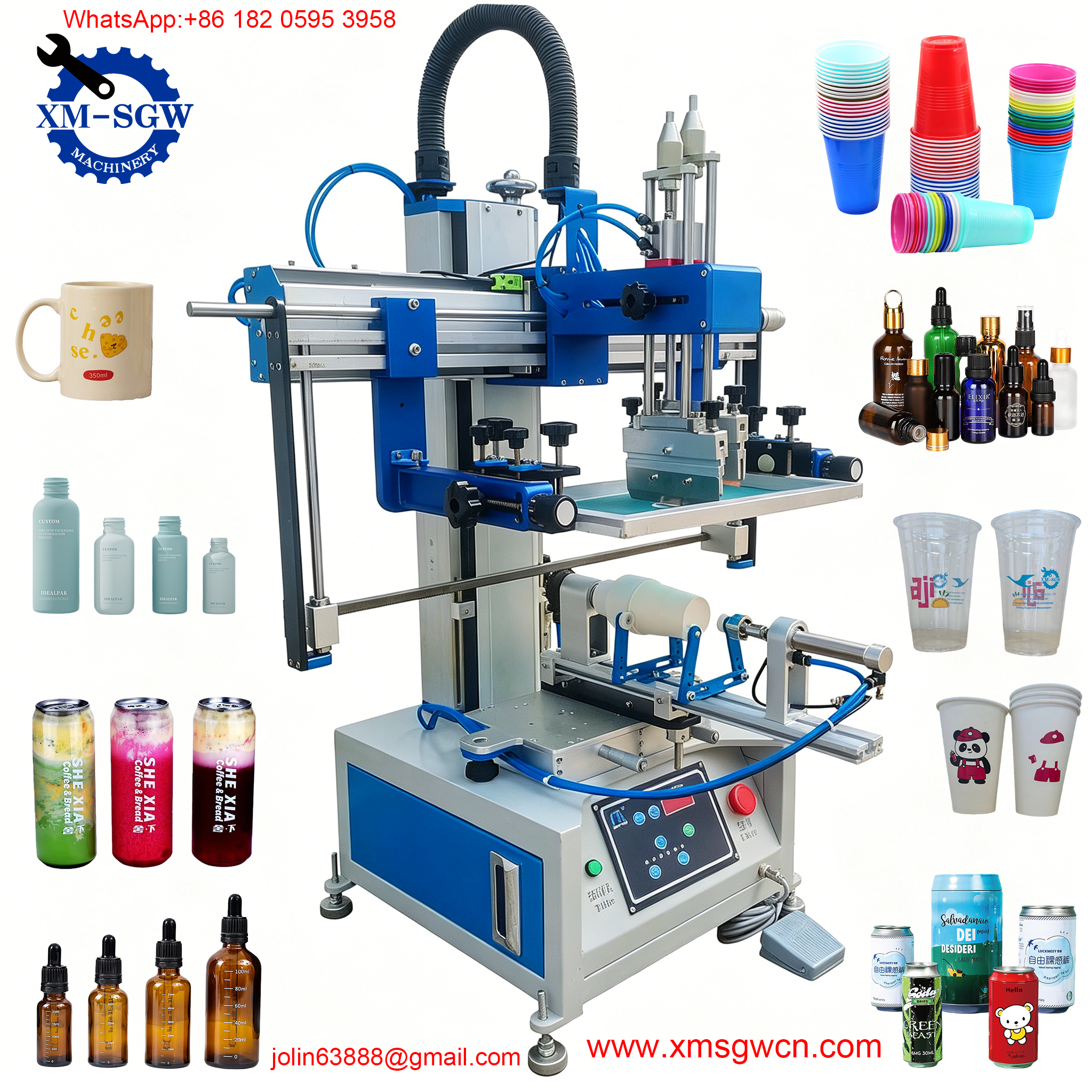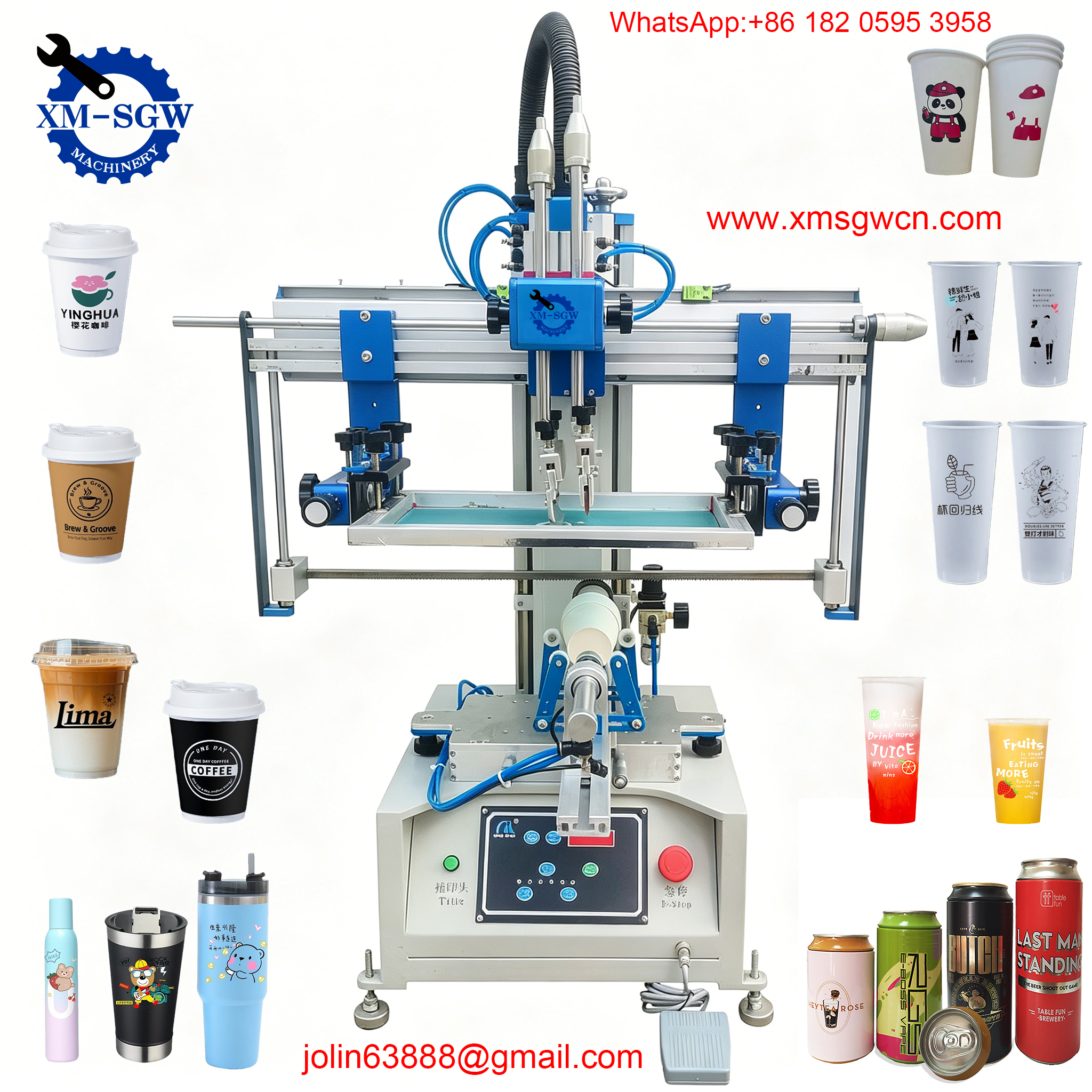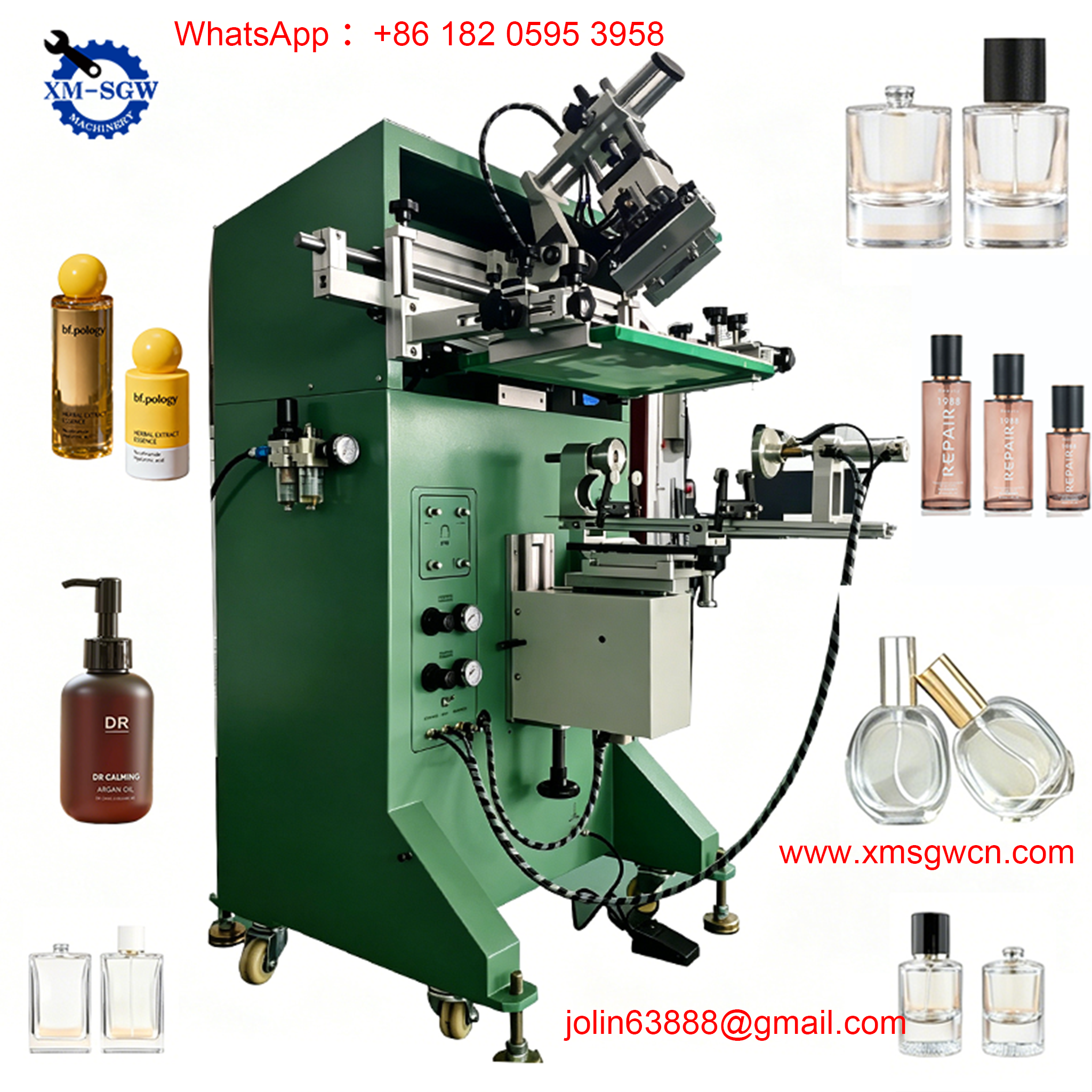
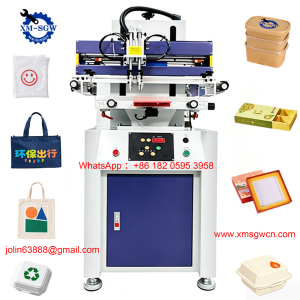
A screen printing machine is a versatile printing equipment that transfers patterns onto different substrates through mesh screen stencils. It is widely used for printing on textiles, plastics, glass, metal, stickers and promotional products due to its low cost, vivid color output and strong material adaptability.
The core working principle of screen printing is based onmesh infiltration and stencil shielding. The screen frame is stretched with a fine mesh fabric, and the required printing pattern is pre-exposed and cured on the screen. The patterned area allows ink to pass through the mesh holes, while the non-patterned area is blocked and impermeable to ink.
During operation, the workpiece is fixed on the printing table, and ink is poured evenly on the surface of the screen stencil. A squeegee moves horizontally with pressure, pushing the ink through the transparent pattern mesh and directly transferring it onto the surface of the substrate below. After the squeegee passes, the screen rebounds quickly to avoid ink blurring.
For multi-color printing, separate screen stencils are used for each color. Each color is printed and dried layer by layer to achieve clear, layered and saturated color effects.
In summary, screen printing machines realize fast and stable pattern printing through simple mesh penetration and squeegee extrusion. They are ideal choices for small-batch customization and large-scale industrial mass production.