Introduction
- 3 tiered equipment packages matched to business size and budget
- Core machine selection criteria for small operations
- Space-optimized shop layout ideas
- Cost-saving strategies that don’t sacrifice print quality
- Common pitfalls to avoid as you grow
Core Principles for Small Business Screen Printing Equipment
-
Scalability first
Choose modular equipment that can be upgraded or expanded as orders grow. Avoid fully custom, non-upgradable systems that lock you into a fixed capacity.
-
Multi-use capability
Prioritize machines that handle multiple product types — apparel, signage, promotional goods — so you can serve a broader customer base without buying separate equipment lines.
-
Low maintenance & easy operation
Small teams rarely have dedicated technical staff. Look for mechanically simple, well-documented machines with readily available spare parts.
-
Total cost of ownership matters more than sticker price
Factor in consumable costs, energy use, repair frequency, and labor requirements. A slightly pricier machine that cuts downtime and waste will save you money long-term.
Recommended Equipment Packages by Business Size
1. Micro Startup Kit (1–2 People, Garage / Home Studio)
Daily production capacity: 4000 – 15000 pieces
Best for: Side hustles, brand owners printing in-house, and new businesses testing the market
| Category | Equipment | Purpose |
|---|---|---|
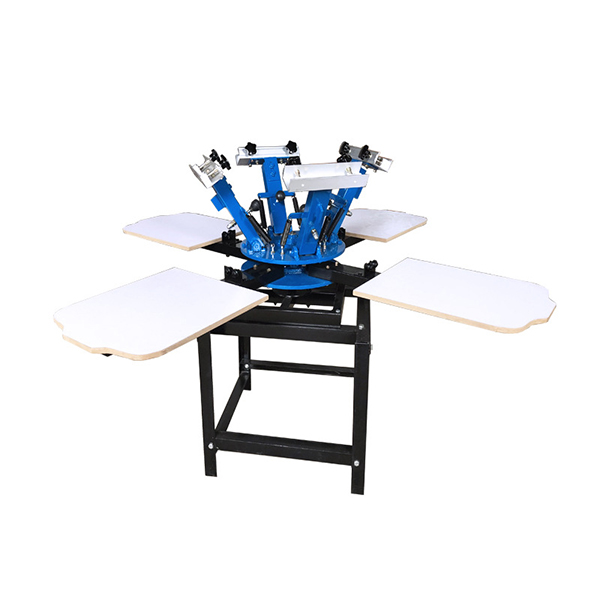
| Core press | 4-color 4-station manual tabletop screen printing press | Handles single and multi-color apparel and flat goods |
| Pre-press | 20″×24″ LED UV exposure unit | Burns high-quality screens with consistent results |
| Curing | Portable flash dryer (16″×16″) | Cures ink between colors and finishes garments |
| Screen prep | Washout booth with pressure washer + 5 aluminum screen frames | Screen cleaning and production inventory |
| Tools | 3 squeegees (60/70/80 durometer), emulsion, ink starter set, registration tape | Day-to-day production supplies |
2. Growing Small Shop Kit (3–5 People, Professional Studio)
Daily production capacity: 6000 – 24000 pieces
Best for: Established local print shops, promotional product companies, and brands with steady order volume
| Category | Equipment | Purpose |
|---|---|---|
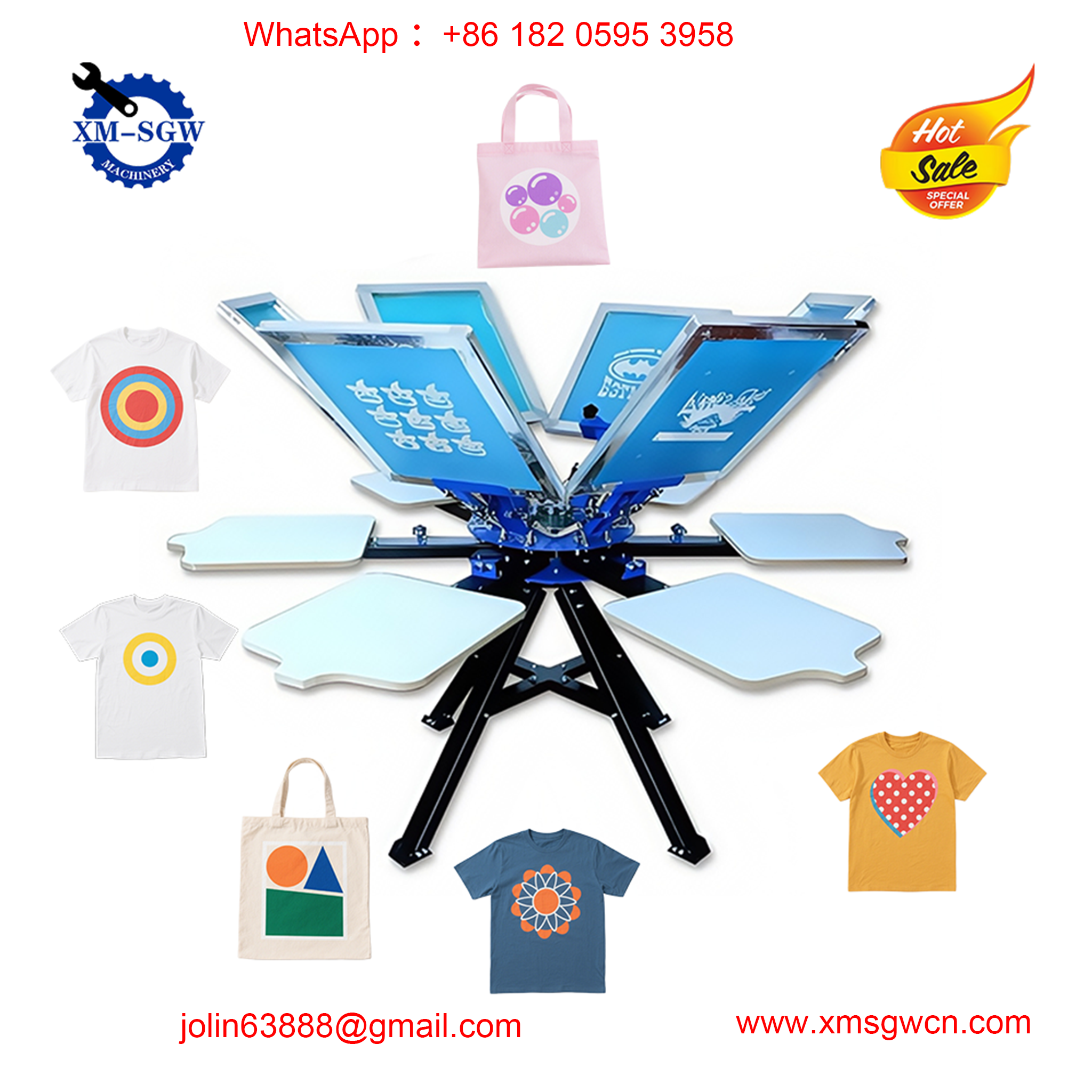
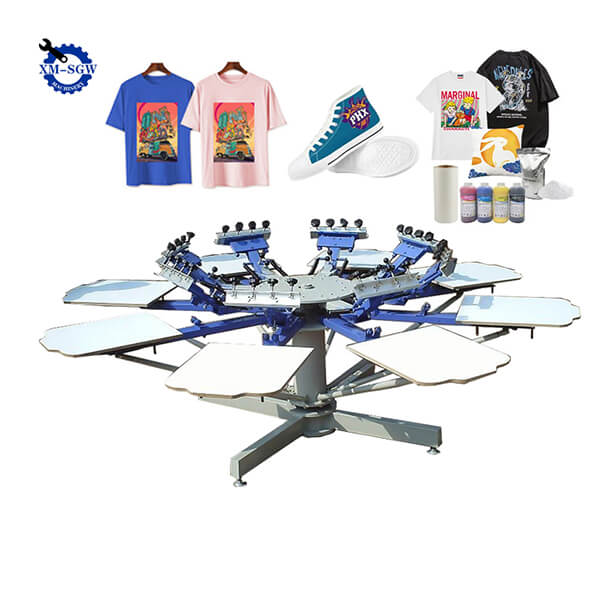
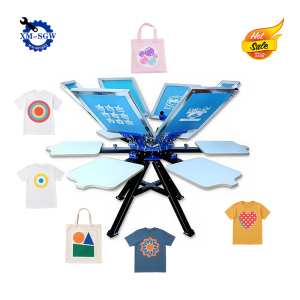
| Core press | 6-color 6-station manual carousel press with micro-registration | Faster multi-color production, higher accuracy, room for growth |
| Pre-press | 25″×36″ vacuum LED exposure unit + screen drying cabinet | Faster screen making, sharper detail, consistent output |
| Curing | Conveyor belt dryer (24″ belt width) | Continuous curing for bulk orders, consistent ink cure |
| Screen prep | Heavy-duty washout booth + screen reclaim system | Extends screen life and reduces consumable cost |
| Extras | Flash cure unit, platens for multiple garment sizes, inventory of 15+ screens | Supports higher volume and broader product range |
Essential Equipment Deep Dive for Small Operations
Screen Printing Press
- Manual vs. semi-automatic: Stick with manual for under 200 pieces per day. Upgrade to semi-automatic when labor costs or physical fatigue become a bottleneck.
- Color and station count: For small businesses, 6 colors and 4 stations is the practical sweet spot — it handles 95% of customer orders while leaving room to grow.
- Micro-registration: Non-negotiable for commercial work. Micro-adjustment knobs let you align multi-color designs with precision.
- Build quality: Look for steel frames and solid construction. Flimsy presses drift out of alignment and cause costly reprints.
Exposure Unit
- LED vs. fluorescent: LED units are now the standard for small businesses — they last longer, use less energy, and expose screens faster and more evenly.
- Vacuum top: Worth the upgrade for consistent, sharp exposures with no light bleed.
- Size rule: Buy an exposure unit at least 2 inches larger than your largest screen frame.
Curing Equipment
- Flash dryer: Required for any multi-color apparel printing. Get one with adjustable height and temperature control.
- Conveyor dryer: The single best upgrade for a growing shop. Consistent curing eliminates the #1 cause of customer returns (washed-out prints). For small operations, a 24-inch electric belt dryer is usually sufficient.
Screen Reclaim & Prep
- Reclaiming and reusing screens cuts long-term consumable costs by 60% or more.
- Even small shops benefit from a dedicated washout booth with proper ventilation and a dip tank for emulsion remover.
Space-Saving Layout Tips for Small Print Shops
-
Follow the production workflow
Arrange equipment in the order jobs flow through the shop:
Artwork → Screen making → Printing → Curing → Finishing → Packaging
This minimizes back-and-forth movement and speeds up every order.
-
Use vertical space
Mount screen racks on walls, store supplies on shelving units, and hang squeegees and tools on pegboards. Floor space should be reserved for production equipment only.
-
Dedicate separate zones
Even in a small space, keep ink mixing, screen washing, and printing physically separated. This prevents cross-contamination and keeps your workspace cleaner.
-
Plan for ventilation
Install exhaust fans near the washout booth and curing area. Proper ventilation is not just a comfort issue — it’s an occupational safety requirement.
Smart Cost-Saving Strategies for Small Budgets
-
Buy core equipment new, accessories used
Invest in a new press and exposure unit where precision matters most. Screens, squeegees, tables, and storage can be purchased used at significant savings.
-
Start with standard platens and add specialty options later
You don’t need sleeve, leg, or oversized platens on day one. Add them only when you start getting regular orders for those products.
-
Buy consumables in bulk
Ink, emulsion, and cleaning chemicals cost 20–30% less when purchased in larger quantities. Split bulk orders with other local print shops if storage is limited.
-
Prioritize upgrades that speed up bottlenecks
Invest in equipment that makes your slowest step faster. For most shops, that means upgrading curing first, then prepress, then the press itself.
Mistakes Small Business Owners Should Avoid
-
Overbuying capacity on day one
A fully automatic press sounds impressive, but it ties up capital and requires higher volume to justify. Grow into automation gradually.
-
Skipping proper curing equipment
Trying to save money by using a heat gun or cheap flash dryer for final curing leads to returns, rework, and damaged reputation.
-
Ignoring safety and compliance
Ventilation, eye protection, and proper chemical handling are not optional. A single workplace incident can shut down a small business.
-
Not accounting for downtime
Keep common wear parts — squeegee blades, bearings, springs — in stock. Waiting weeks for replacement parts kills production momentum.
-
Choosing the cheapest supplier
Low upfront cost rarely equals low total cost. Prioritize suppliers with local spare parts, clear documentation, and responsive technical support.