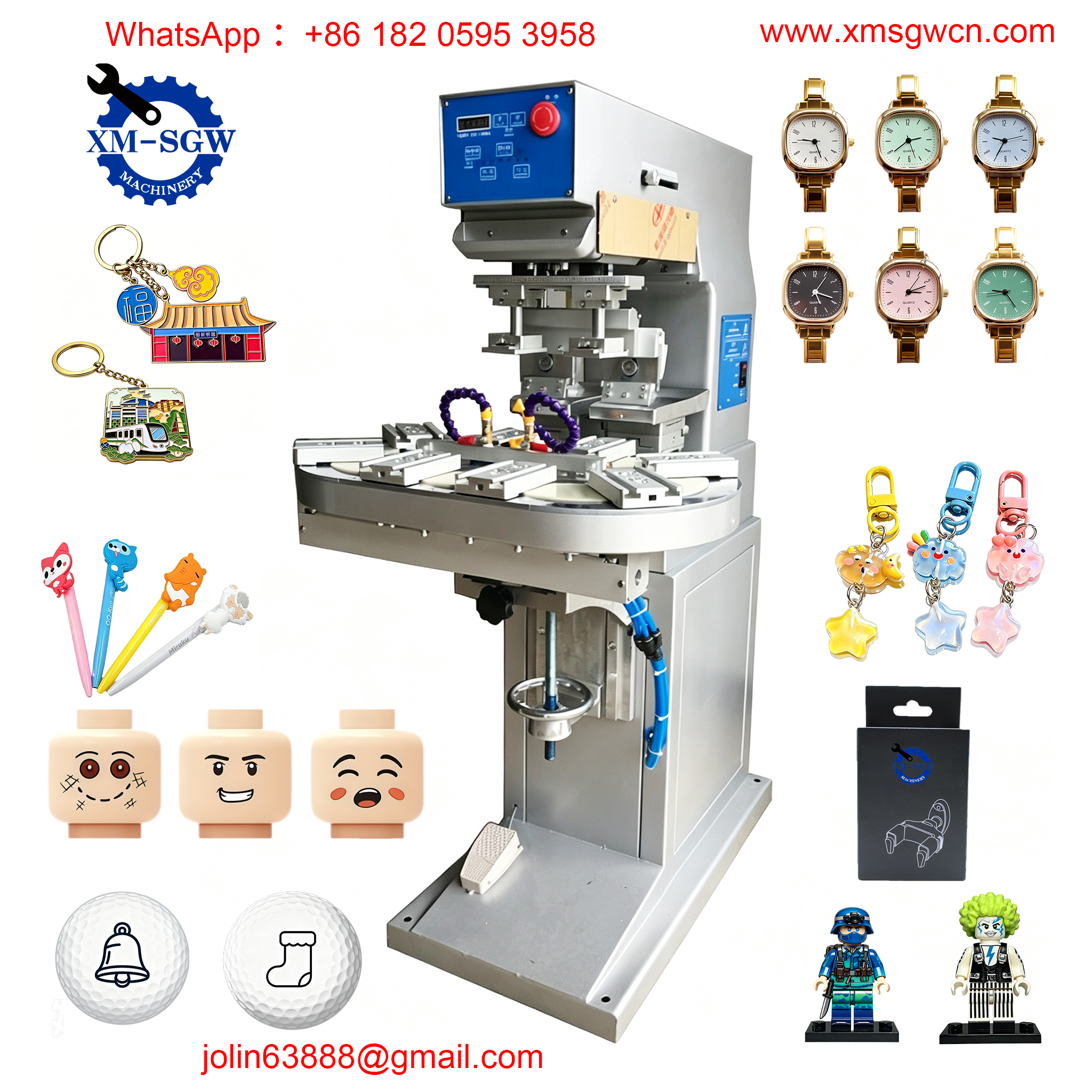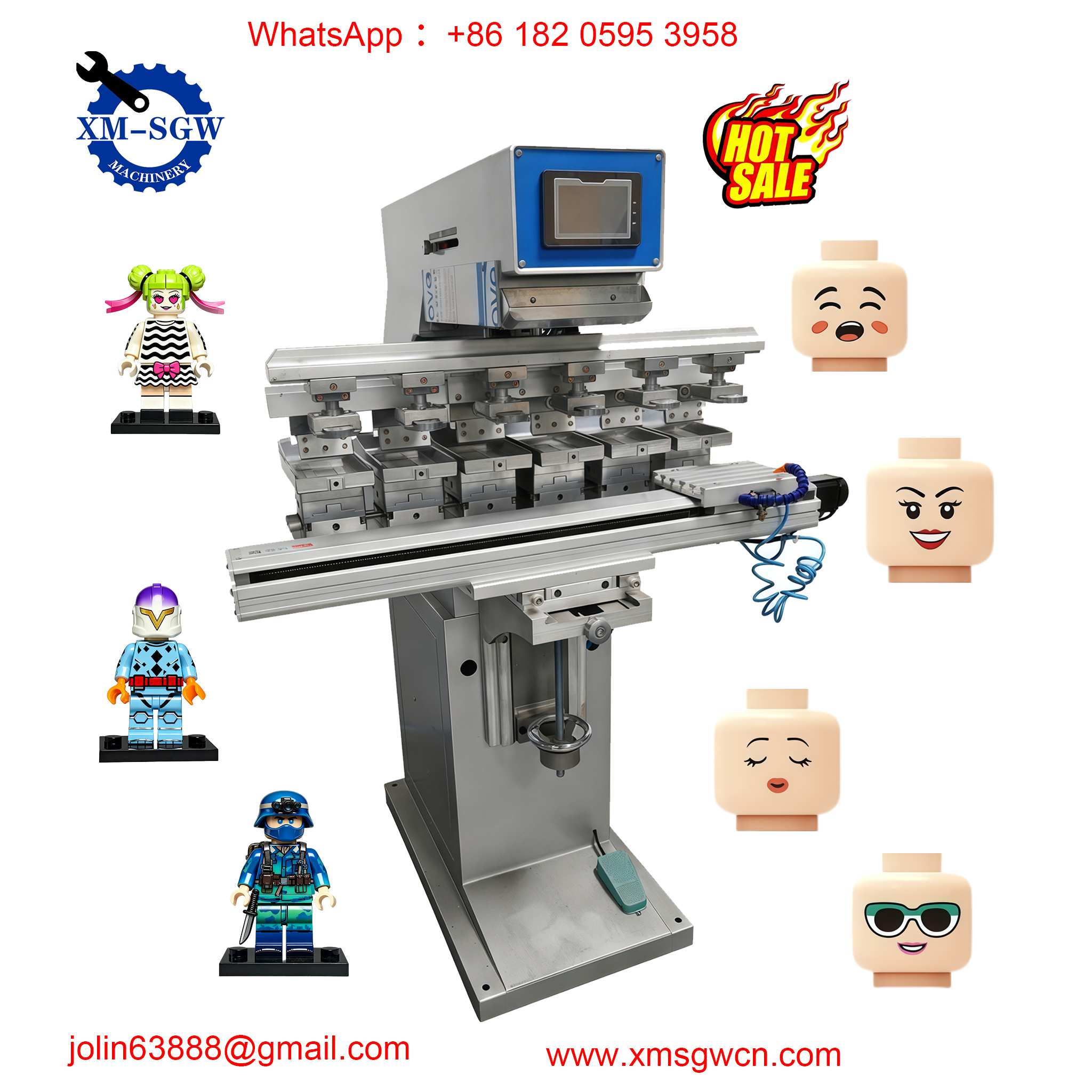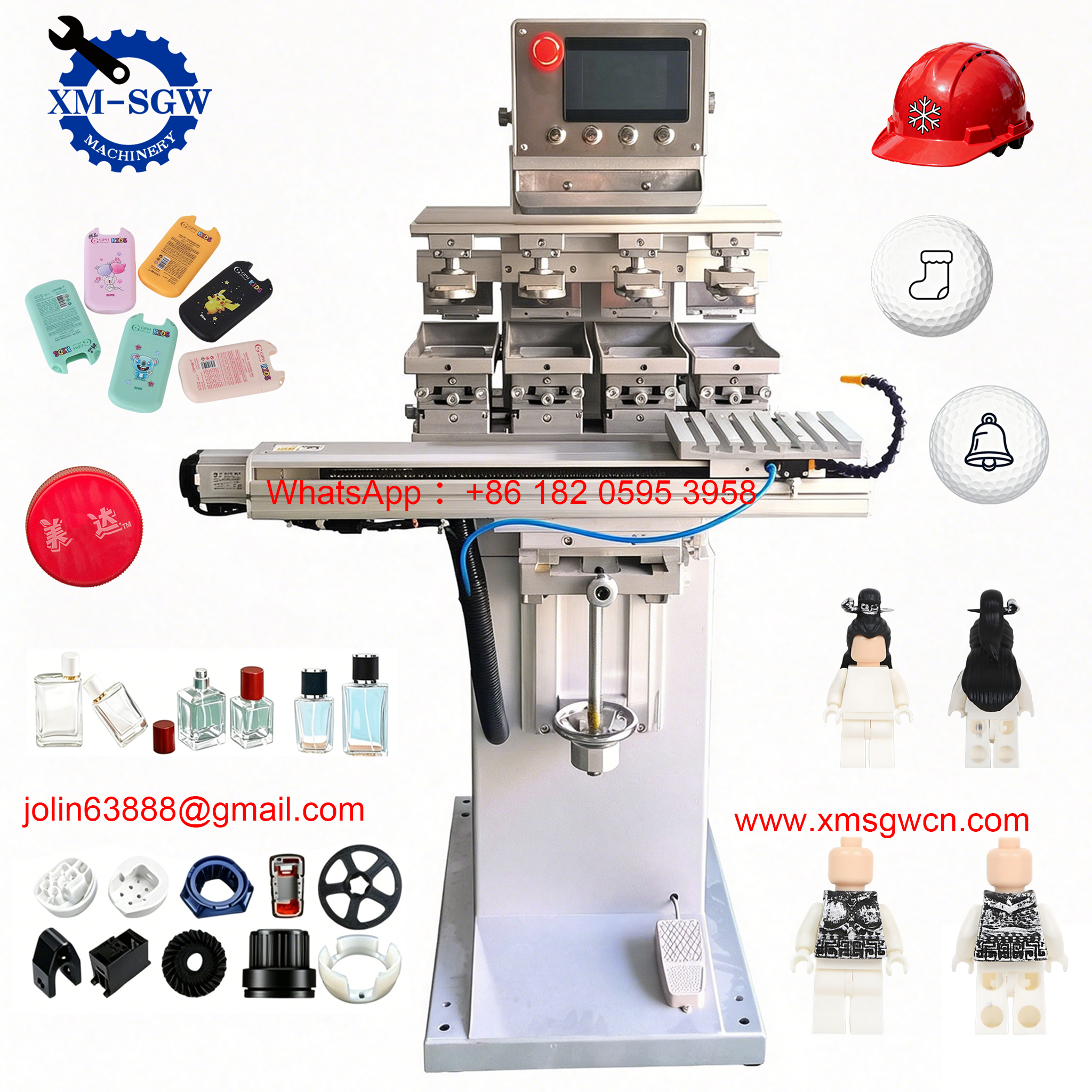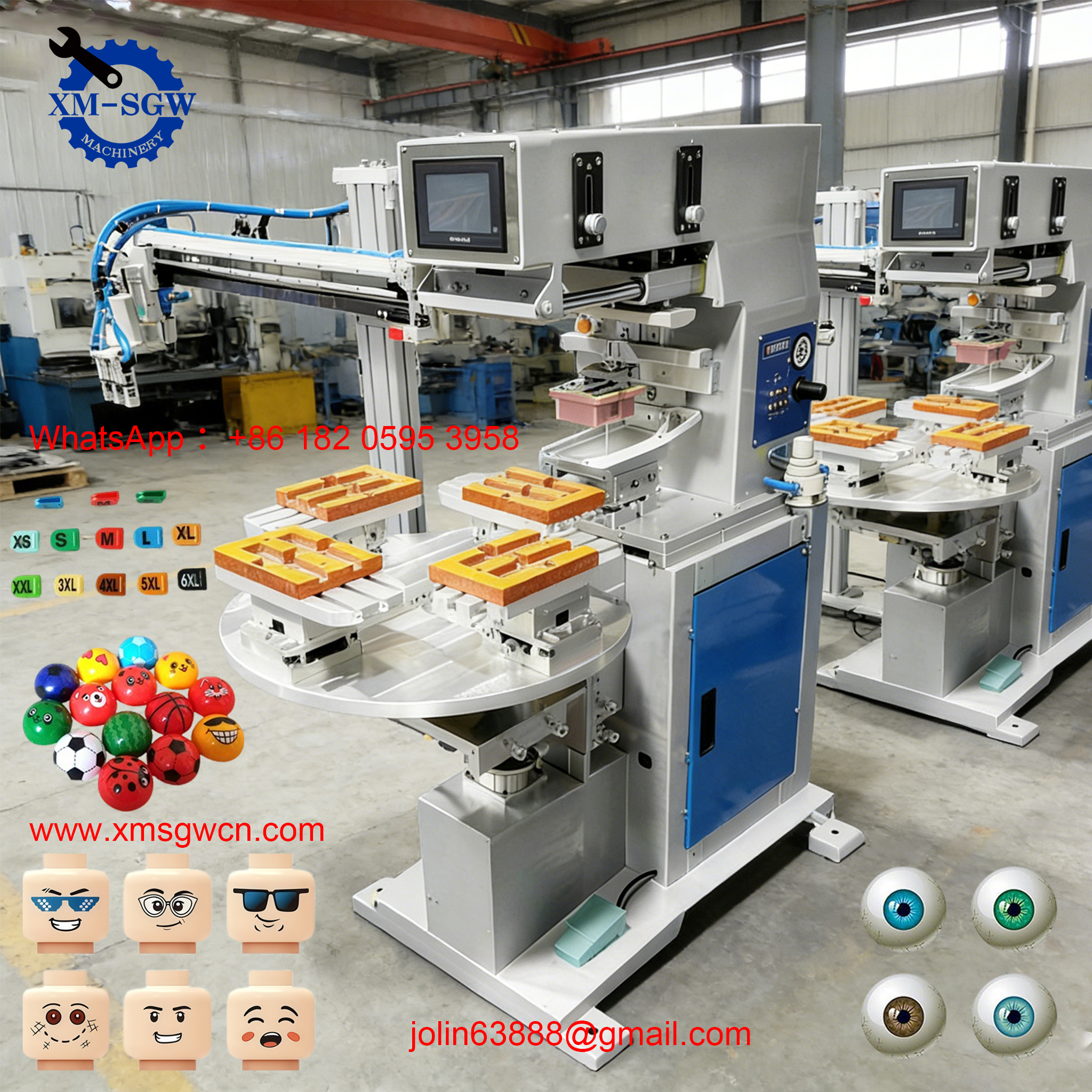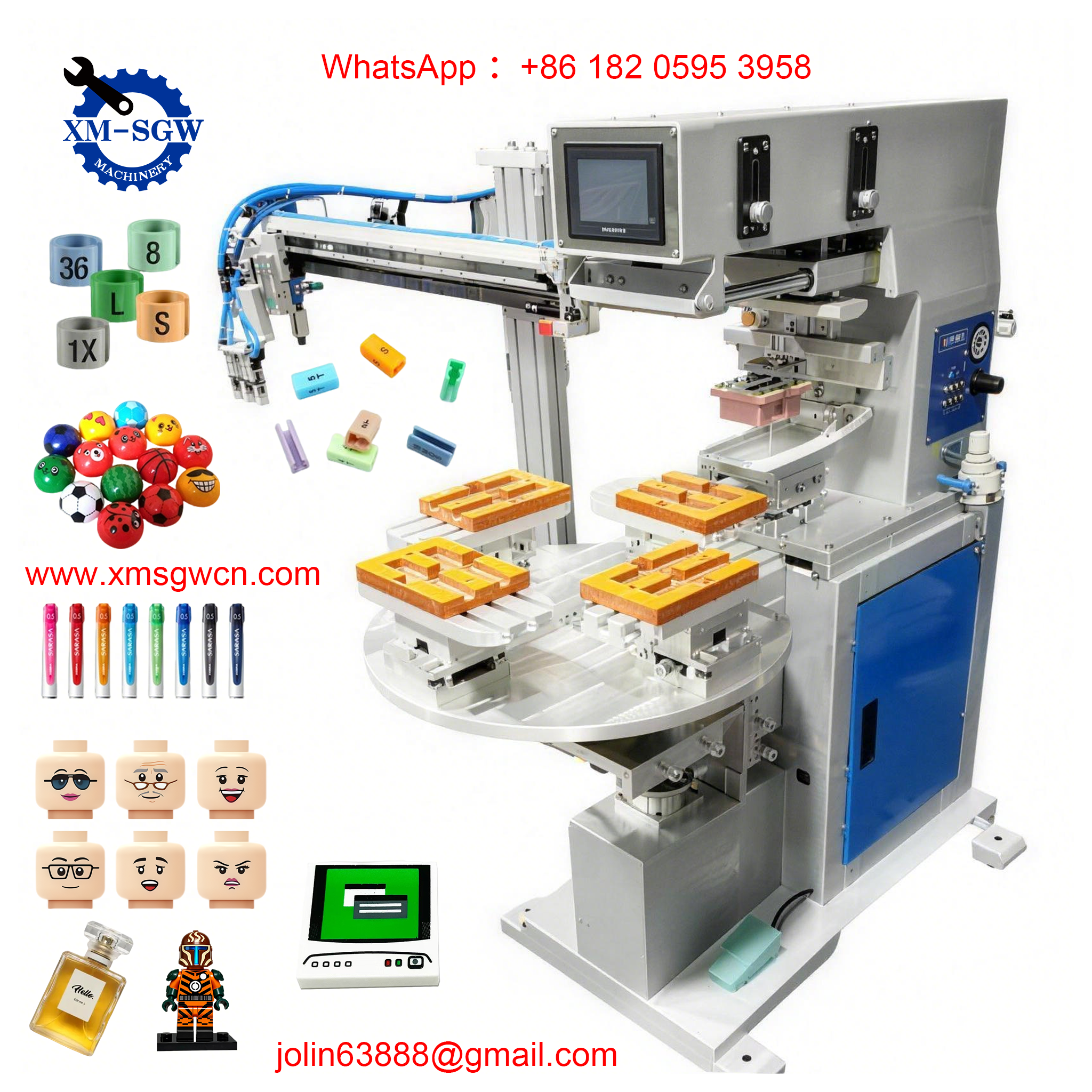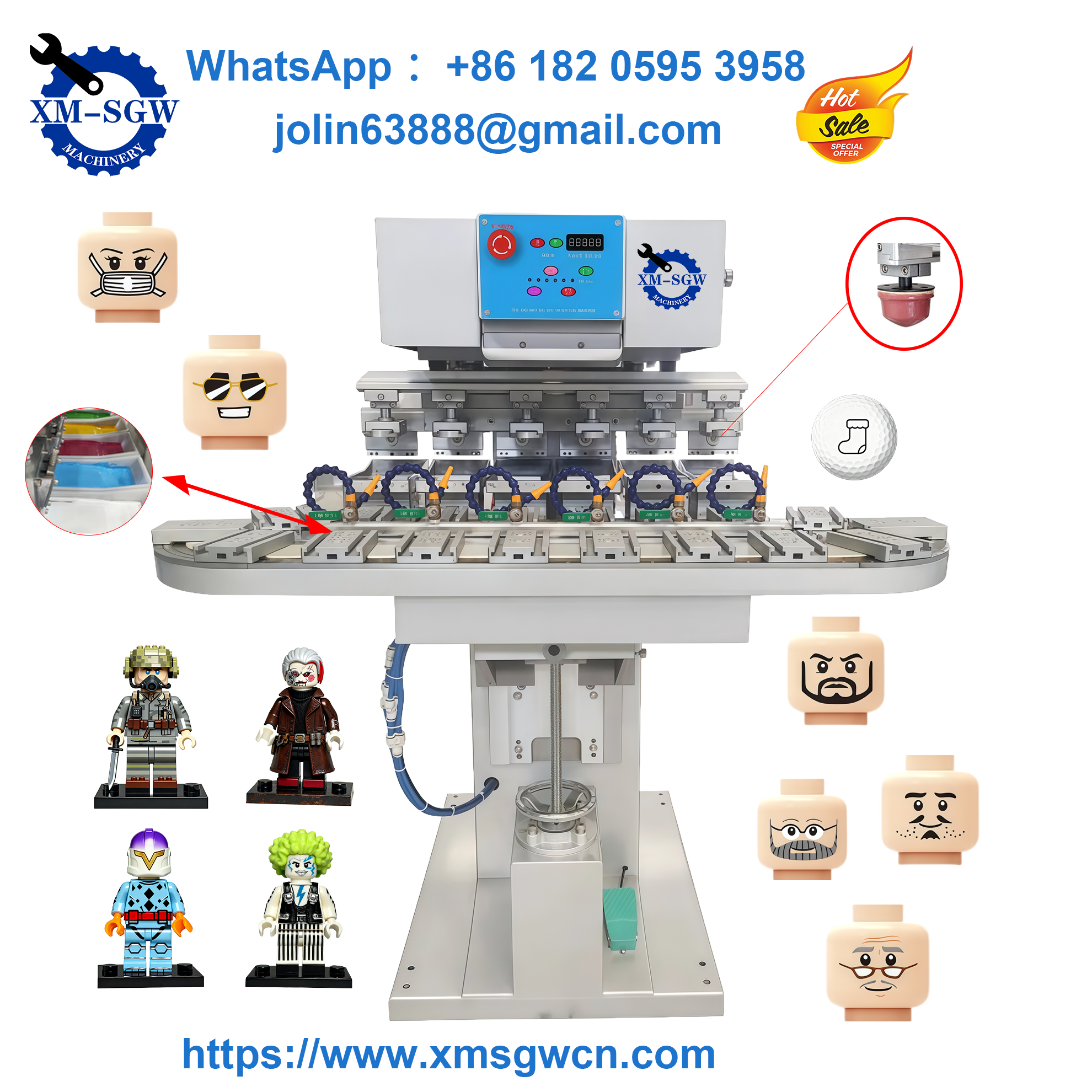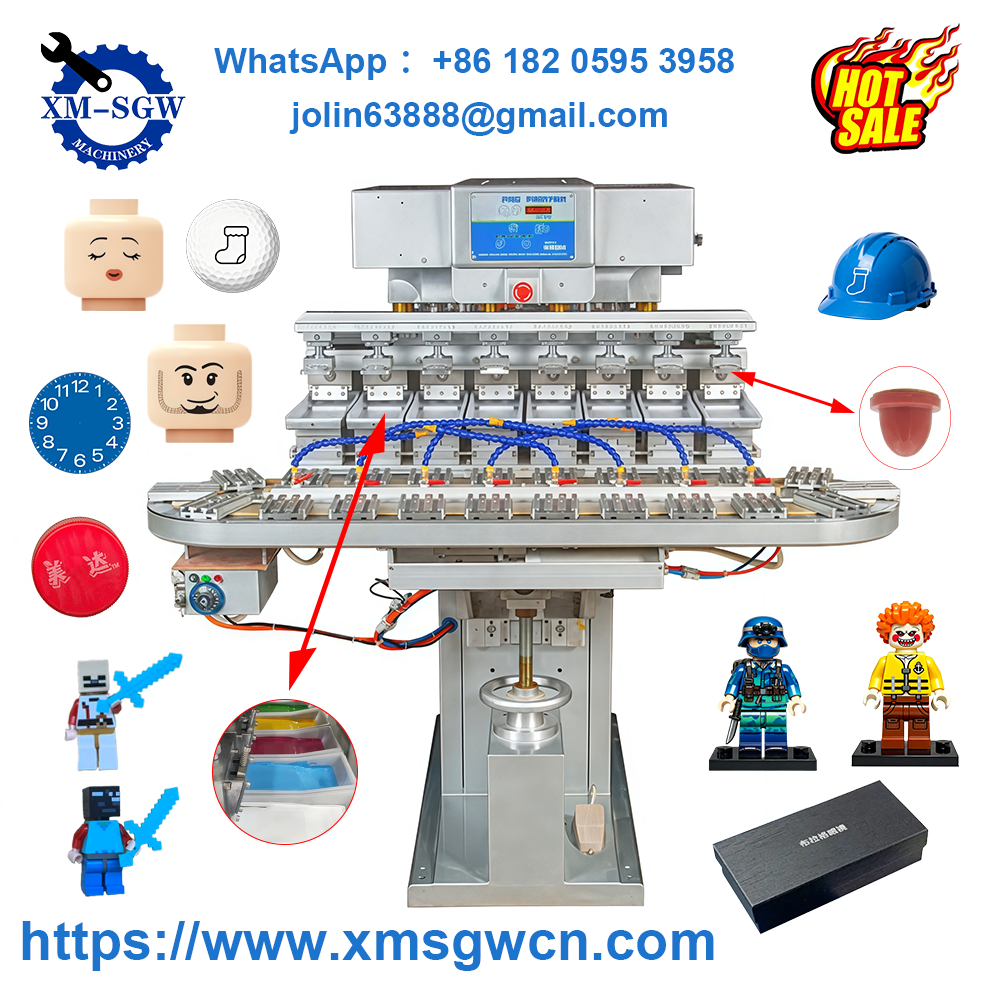
The custom Lego aftermarket has exploded into a multi-million dollar global industry by 2026, driven by booming demand for MOC (My Own Creation) parts, third-party minifigures, branded corporate gifts, and limited-edition collectible sets. Among all decoration methods, pad printing remains the industry-standard technology used by official Lego factories and premium custom studios alike — delivering unmatched detail, durability, and color consistency on small, curved plastic parts.
Unlike stickers that peel, or digital UV prints that wear off with handling, pad printing bonds ink directly to the ABS plastic surface, producing professional-grade results that withstand years of play and display. For small businesses, MOC studios, and toy customizers, a dedicated Lego pad printer is the foundation of a high-margin, low-competition revenue stream.
In this guide, we break down everything you need to know about Lego-specific pad printing equipment:
- Why pad printing is the gold standard for custom Lego parts
- Machine types matched to different business sizes and production volumes
- Core technical features that determine print quality and reliability
- Real-world applications and profit opportunities
- Toy safety compliance requirements and quality control best practices
- How to select the right machine for your business goals
Whether you are launching a custom minifigure brand, adding branded Lego gifts to your product line, or scaling an existing toy decoration business, this guide will help you make an informed equipment investment.
What Is a Lego-Specific Pad Printing Machine?
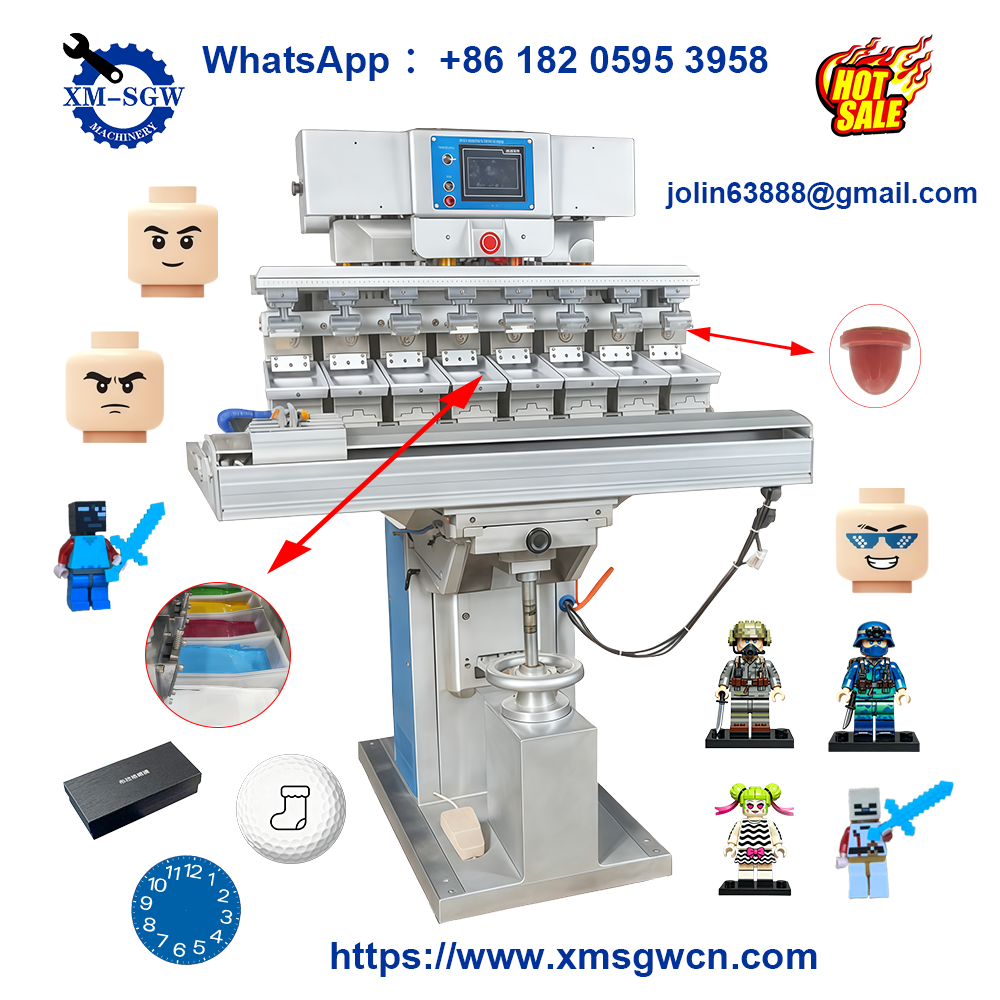
A Lego pad printing machine is a precision tampography system optimized for printing tiny, highly detailed graphics onto small, irregularly shaped ABS plastic parts — including minifigure heads, torsos, limbs, standard bricks, tiles, slopes, and accessory pieces.
Like standard pad printers, it uses a flexible silicone pad to transfer ink from an etched steel cliché plate onto the substrate. What makes Lego-dedicated machines unique is their ultra-fine registration control, custom part-holding fixtures, and ability to consistently reproduce tiny details like facial features, insignias, and fine text on curved and stepped surfaces.
Official Lego factories have used this exact technology for decades, and modern entry-level and mid-tier machines now bring the same print quality within reach of small independent businesses and studios.
Why Pad Printing Is the Gold Standard for Custom Lego Parts
For professional Lego customization, pad printing outperforms stickers, UV printing, and heat transfer in every critical metric:
1. Unmatched Detail & Registration Precision
High-quality Lego pad printers achieve registration tolerances as tight as ±0.02mm on multi-color designs — accurate enough to print individual eye pupils, uniform facial expressions, and tiny insignias that align perfectly across minifigure body parts. This level of precision is what separates collectible-grade custom parts from hobbyist work.
2. Superior Durability & Wear Resistance
Pad printed ink bonds with the top layer of the ABS plastic, rather than sitting on top of the surface like a sticker or UV ink. The result is prints that resist scratching, rubbing, and fading even with frequent handling and play. Premium custom studios routinely pass 50+ rub tests with zero ink loss — a standard expected by serious collectors.
3. Toy-Grade Safety Compliance
Reputable Lego pad printing systems use non-toxic inks certified to EN71, ASTM F963, REACH and RoHS standards. This is non-negotiable for products that may be handled by children, and a legal requirement for selling into the EU, US, and most global markets.
4. Cost Efficiency for Production Runs
For batches of 100 pieces or more, pad printing has a far lower per-unit cost than digital UV printing. Once the cliché plate is made, ink consumption per piece is minimal, and production speed scales efficiently — making it ideal for bulk orders, wholesale supply, and limited-edition releases.
5. Perfect Adaptability to Complex Surfaces
The flexible silicone pad conforms seamlessly to curved minifigure heads, stepped brick surfaces, recessed tile areas, and irregular accessory shapes — something flatbed screen printing and digital UV printers cannot do without specialized fixtures and multiple print passes.
Comparison: Pad Printing vs. Other Lego Decoration Methods
| Feature | Pad Printing | UV Digital Printing | Stickers / Waterslide Decals |
|---|---|---|---|
| Detail precision | Excellent (±0.02mm) | Good | Poor (edge bleed) |
| Durability / wear resistance | Excellent (plastic-bonded) | Moderate | Very poor (peels off) |
| Toy safety compliance | Full certified options | Varies by ink | Often non-compliant |
| Per-unit cost (bulk) | Lowest | High | Lowest short-term |
| Best for | Production runs, collectible grade | Ultra-short runs, full-color art | Hobby use only |
| Setup time per design | Moderate (plate making) | Instant | Minimal |
Types of Lego Pad Printing Machines for Every Business Scale
Lego pad printers are available at three tier levels, matched to different production volumes and business stages.
1. Entry-Level Desktop Manual & Semi-Automatic Printers
- Production speed: 200 – 500 pieces per hour
- Registration accuracy: ±0.05mm
- Color capacity: 1–2 colors
- Best for: MOC studios, startup custom brands, small-batch makers, and hobbyists turning pro
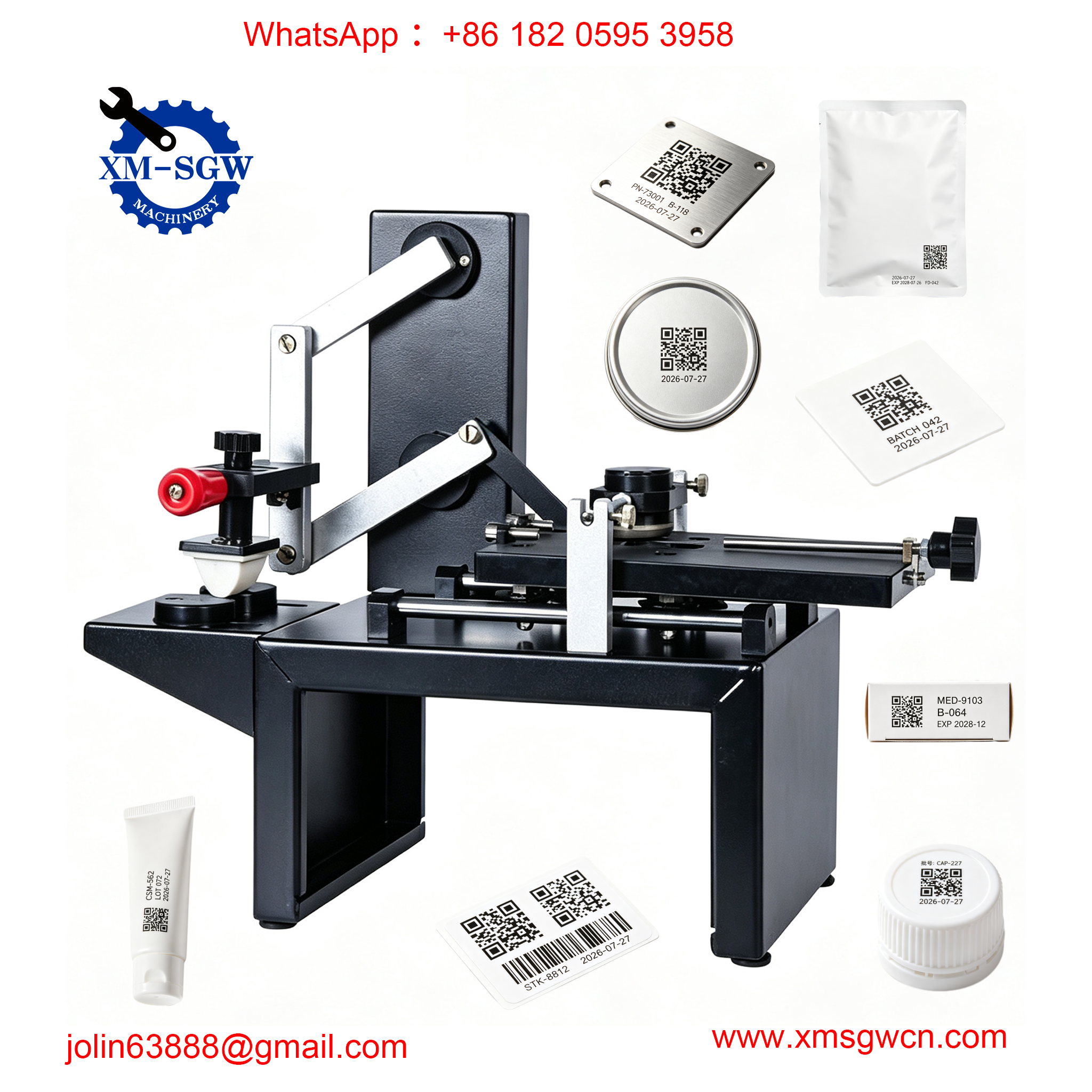
These compact tabletop machines fit on a standard workbench and require minimal floor space. Manual models are fully mechanical with no power requirement for the print stroke; entry-level semi-automatic models use pneumatic or light servo drive for more consistent pressure. They are the lowest-risk way to enter the market and validate product demand before scaling up.
2. Mid-Tier Semi-Automatic Multi-Color Printers
- Production speed: 500 – 1,200 pieces per hour
- Registration accuracy: ±0.02 – 0.03mm
- Color capacity: 2–4 colors
- Best for: Established custom minifigure brands, promotional product companies, and mid-volume toy decorators
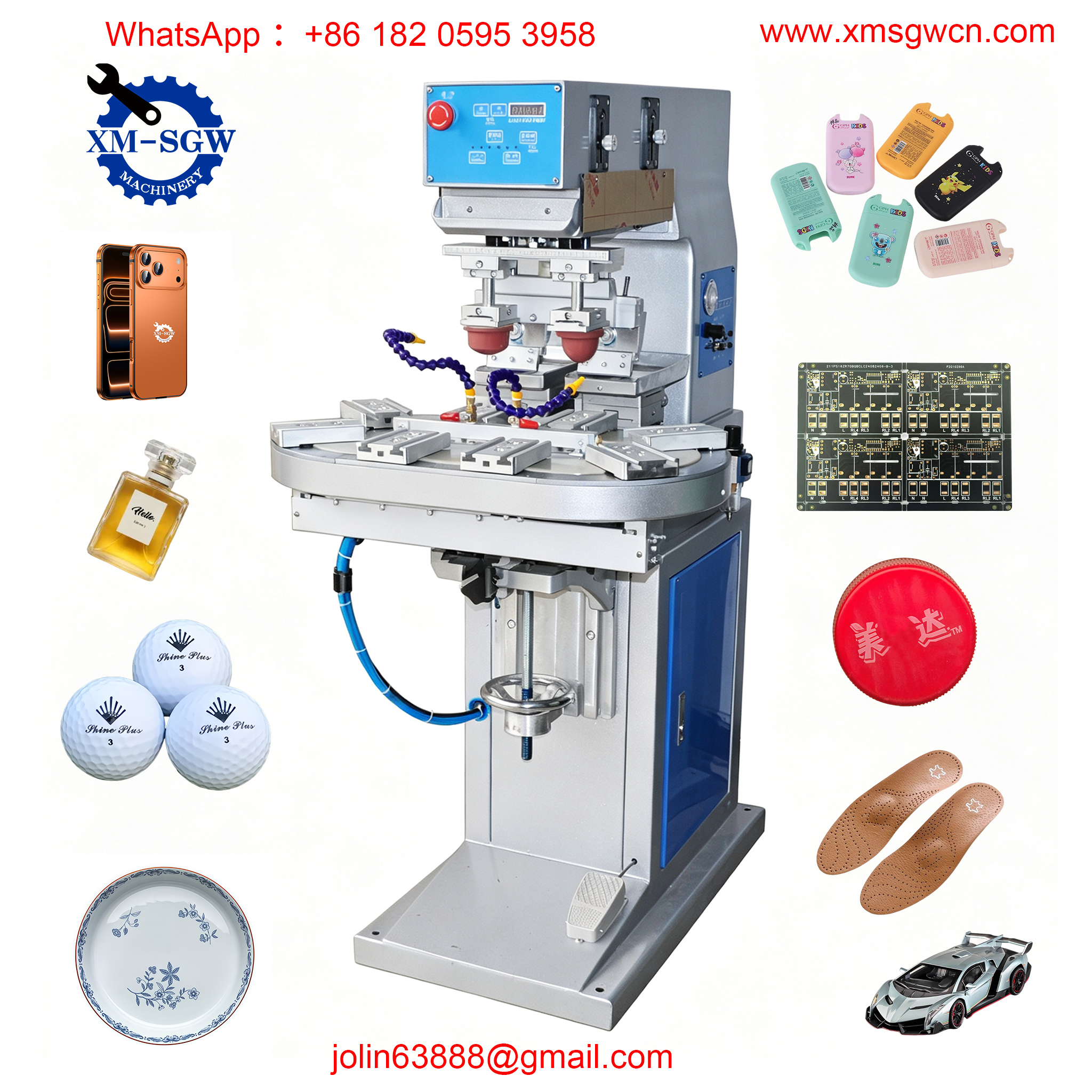
This is the workhorse configuration for most professional Lego customization businesses. Most models feature sealed ink cup systems for minimal waste, micro-registration controls for precise multi-color alignment, and optional conveyor feed for faster throughput. Servo-driven models deliver the most consistent print quality across long production runs.
3. Fully Automatic Rotary Production Lines
- Production speed: 1,500 – 3,000+ pieces per hour
- Registration accuracy: ±0.01mm
- Color capacity: 4+ colors
- Best for: Large contract toy manufacturers, high-volume third-party brands, and dedicated Lego decoration factories
Fully automatic rotary indexing machines feature automated part loading/unloading, in-line curing, and multi-station carousel printing. They are designed for 24/7 production of large repeat orders and deliver the highest throughput and tightest tolerances of any configuration.
Core Technical Features for Professional Lego Printing
Not all pad printers can deliver collectible-quality results on Lego parts. Prioritize these features when comparing models:
1. Micro-Registration Adjustment
Fine-tuneable X/Y/Z and rotational alignment with micrometer-level control is non-negotiable for multi-color minifigure printing. Without it, you cannot consistently align eyes, facial features, and design elements across different color layers.
2. Sealed Magnetic Ink Cup System
Sealed ink cups reduce ink waste by 30–40%, prevent solvent evaporation, and maintain consistent ink viscosity across long runs. This is especially valuable for small-batch Lego printing, where jobs are frequently changed and ink may sit between runs.
3. Custom Lego Part Fixturing
Look for suppliers that offer dedicated fixtures for common Lego parts: minifigure heads, torsos, 1×1 tiles, 2×4 bricks, and accessory pieces. Generic universal fixtures will not hold small parts securely enough for consistent registration.
4. Servo-Driven Print Mechanism
Servo-driven machines deliver far more uniform pressure and repeatability than pneumatic models. This is critical for printing on small, delicate parts where even slight pressure variation causes blurring or misalignment.
5. Toy-Safe Ink Compatibility
Ensure the machine is compatible with certified EN71/ASTM-compliant ABS inks. The best suppliers include ink recommendations and can provide material safety data sheets for all recommended consumables.
Business Applications & Profit Opportunities
A Lego pad printing machine unlocks multiple high-margin revenue streams:
Custom Collectible Minifigures
Print original character designs, military figures, historical figures, and pop-culture inspired minifigures for the collector market. This is the highest-margin segment, with premium pricing for detailed multi-color designs.
Branded Promotional Lego Tiles & Bricks
Produce custom logo tiles, branded brick sets, and corporate giveaway items for businesses, events, trade shows, and marketing campaigns. Corporate clients often place large repeat orders for promotional merchandise.
MOC Accessory Printing
Supply printed detail parts — license plates, control panels, signs, weapon decals, and decorative tiles — to the MOC builder community. These small parts have high perceived value and low production cost.
Educational & Event Custom Sets
Print custom parts for school programs, team building events, museum gift shops, and themed attractions. Bulk set orders deliver large, predictable revenue.
Replacement & Aftermarket Parts
Print hard-to-find or discontinued printed parts for collectors and repair services. The vintage Lego repair market is a steady, low-competition niche.
How to Choose the Right Machine for Your Business
Step 1: Match Capacity to Your Order Volume
If you are just starting and testing the market, an entry-level 1–2 color desktop machine gives you professional capability with minimal upfront risk. Upgrade to a multi-color semi-automatic once you have consistent weekly orders.
Step 2: Count Your Average Color Layers
- 1–2 color simple logos: Entry-level machine is sufficient
- 2–3 color minifigure faces and bodies: Mid-tier semi-automatic is recommended
- 4+ color detailed collectibles: High-end semi-automatic or automatic rotary machine
Step 3: Prioritize Registration Accuracy
If your business focuses on minifigures and fine-detail parts, accuracy is the single most important spec. A machine with poor registration will produce high defect rates that eat into your profits.
Step 4: Verify Toy Safety Compliance
Never cut corners on ink safety. Selling non-compliant printed toys can result in product recalls, legal penalties, and permanent damage to your brand reputation. Always use certified inks from reputable suppliers.
Step 5: Evaluate Supplier Support
You will need a steady supply of consumables: steel cliché plates, silicone pads, replacement doctor rings, and certified inks. Choose a supplier that stocks standard Lego-sized parts and offers responsive technical support for setup and troubleshooting.
Quality Control Best Practices
Follow these standards to deliver professional, collectible-grade results:
- Always test print on scrap production bricks before starting a full run to verify color, position, and adhesion
- Target registration tolerance of ≤0.05mm for general parts and ≤0.03mm for minifigure facial features
- Perform rub tests on every new ink/material combination to confirm durability
- Cure ink fully according to ink manufacturer specifications — under-curing is the #1 cause of peeling prints
- Maintain clean pads and ink cups between jobs to avoid dust contamination and print defects
- Keep detailed records of successful settings for repeat designs
Frequently Asked Questions
Q: Can pad printing match official Lego factory print quality?
A: Yes. Official Lego factories use industrial pad printing technology for all their printed parts. High-quality modern semi-automatic pad printers can achieve comparable detail, color opacity, and durability — which is why premium third-party custom studios use this exact process.
Q: What Lego parts can be printed with a pad printer?
A: Virtually all rigid plastic Lego parts can be pad printed, including minifigure heads, torsos, legs and arms, standard bricks, tiles, slopes, plates, and small accessories. The only limitation is maximum print area, which ranges from 70×70mm to 100×150mm depending on machine size.
Q: Is pad printing better than UV printing for Lego customization?
A: For production runs, solid-color designs, and collectible-grade durability, yes — pad printing is the clear industry standard. UV digital printing has advantages for ultra-short runs and full-color photorealistic art, but it produces thinner ink layers that wear faster with handling. Most serious custom Lego businesses use pad printing as their primary production method.
Q: Do I need special ink for printing on Lego bricks?
A: Yes. You need ink specifically formulated for ABS plastic, and it must meet toy safety standards (EN71, ASTM F963) if you sell to consumers. General-purpose pad printing inks will not adhere properly to ABS and will rub off easily.
Q: How much does a complete Lego pad printing setup cost?
A: An entry-level desktop setup with machine, basic fixtures, exposure unit, starter inks and supplies costs $1,500 – $5,500. A professional 2–4 color semi-automatic setup for full-time production typically ranges from $9,000 to $20,000 total.
Conclusion
Pad printing is the foundation of any professional custom Lego business. It delivers the durability, precision, and safety that collectors and corporate clients expect, with cost structure that scales profitably from small batches to full production runs.
For most new businesses, the best path is to start with a reliable 1–2 color desktop semi-automatic machine, build your customer base and operator skills, then upgrade to multi-color capacity as order volume grows. By investing in a precision machine built for small plastic parts and using only certified toy-safe inks, you can build a reputable, high-margin business in the fast-growing custom Lego market.